Ancient imperial site rises from the ruins







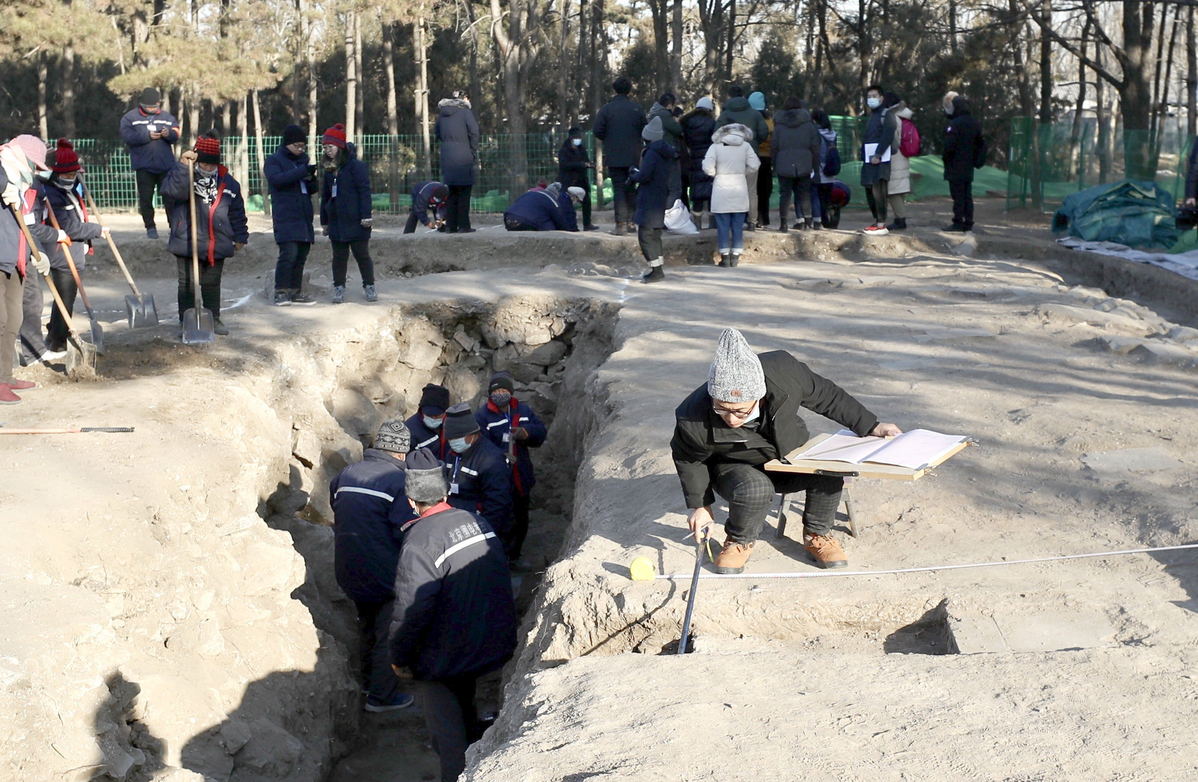
More than a century and a half after its destruction, a site in the ruins of Yuanmingyuan - the Qing Dynasty (1644-1911) royal resort also known as the Old Summer Palace - has been unearthed in Beijing.
New findings were announced on Tuesday by an archaeological team working on the site, which comprises researchers from the Beijing Archaeological Research Institute, Peking University and the administration of the Yuanmingyuan Ruins Park.
Built in 1727 during the reign of Yongzheng (1723-35), the site covers about 26,000 square meters and was where Qing emperors held farming ceremonies.
It was called Danbo Ningjing, literally "to live in serenity and without many desires", which comes from a famous line of Zhuge Liang (181-234), a master strategist and a prime minister.
Zhang Zhonghua from the Beijing Archaeological Research Institute, the lead archaeologist of the program, said the excavation, which began last month, has unveiled the foundations of a hall whose layout resembles the Chinese character tian for a farming field.
"This place showed that the emperors pursued inner peace and a comfortable life," Zhang explained. "They wanted a broader horizon, without an obsession about gains and losses."
Floors and column cornerstones of the hall were unearthed about a meter underground. Previous investigations and studies of historical files showed the courtyard featured 33 square rooms with sides of about 4.5 meters and columns about 3.7 meters high.
According to the excavation plan, this year's research will cover 500 square meters. Through analysis of soils, researchers were able to find field ridges of the former royal farmlands near the architectural ruins, matching historical records.
"Qing emperors not only lived in a house which is in the shape of a field," Zhang said. "They also joined in farm work in person here to show their emphasis on agriculture."
He added that such a ritual was a tradition for ancient Chinese rulers, indicating fundamental Chinese values and highlighting the importance of agriculture for the country's stability.
Yuanmingyuan, composed of numerous gardens, temples, palaces and pavilions, once spread over 350 hectares in the capital's northwest. Its construction began in 1707 and it was expanded and renovated until the mid-19th century. In 1860, invading Anglo-French forces looted and burned the royal resort, after which Yuanmingyuan gradually fell into ruin.
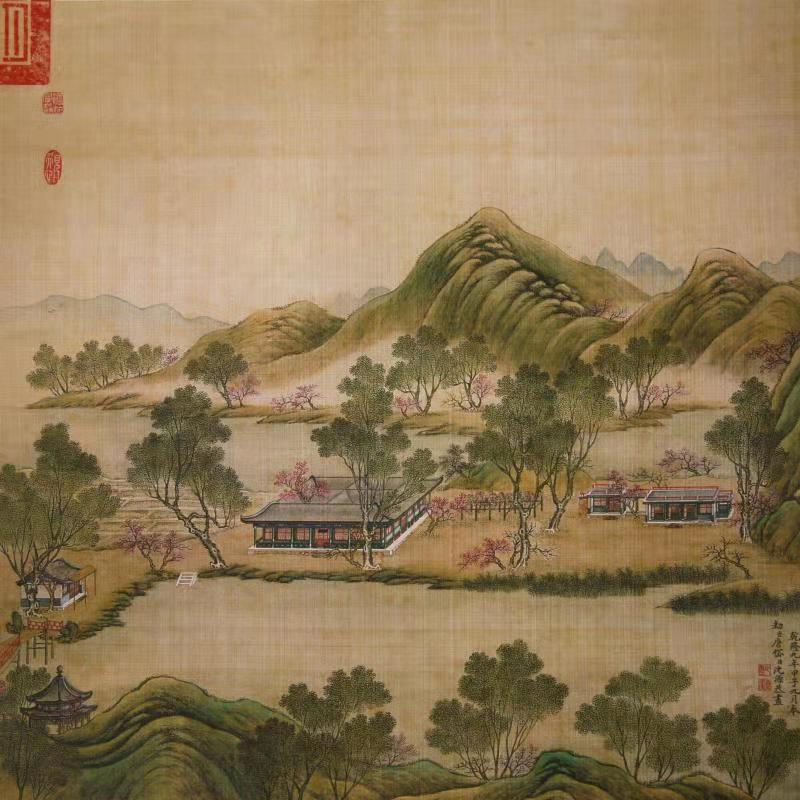
Though no direct historical records show that Danbo Ningjing was burned to the ground in 1860, Zhang said its absence from later records suggested it was destroyed then, like most of the other sites in "the 40 scenes of Yuanmingyuan".
The 40 scenes were depicted in paintings - now housed in France - by Qing court artists around 1744 during the reign of Qianlong (1736-95). Emperors Yongzheng and Qianlong also left hymns for Danbo Ningjing.
This phase of field research will last until the end of the month, but Zhang said much longer follow-up studies will be done in the laboratory, looking, for example, into the varieties of rice seeds that could be found in the soil.
According to the historical record, Emperor Kangxi (1654-1722) once participated in breeding a new rice variety. It was exclusively used to feed the royal family throughout the reigns of the next emperors before it appeared on the general public's dinner tables in modern times.
Only about 2 percent of architectural ruins in Yuanmingyuan remain visible above ground. In the past decade, archaeological excavations have helped to gradually redisplay the glamorous appearance of the former royal resort and indisputable apogee of Chinese gardening art.
Last year, a research center for Yuanmingyuan studies was established at Peking University, which is home to China's top archaeology and museology school.
"Relevant archaeological work will be taken step by step with well-planned and thematic research," Zhang said. "A more important job is how to publicly display and explain the values of these ruins."
Chen Hui, a park administration director in charge of archaeology, said the site was key for the public to nurture patriotism and admiration for fine traditional Chinese culture. Consequently, all archaeological processes will be accessible to visitors to the park.



- China records 40.6m foreign arrivals in first year of 240-hour visa-free transit policy
- China to enhance capabilities in coping with extreme weather
- Govt funding eases access to healthcare
- Taiwan enterprises enthused by mainland's development
- Intl Macao meet urges sustained dialogue
- Tests cut to reduce pressure on students