BRI cooperation will drive economic recovery post-COVID-19: experts







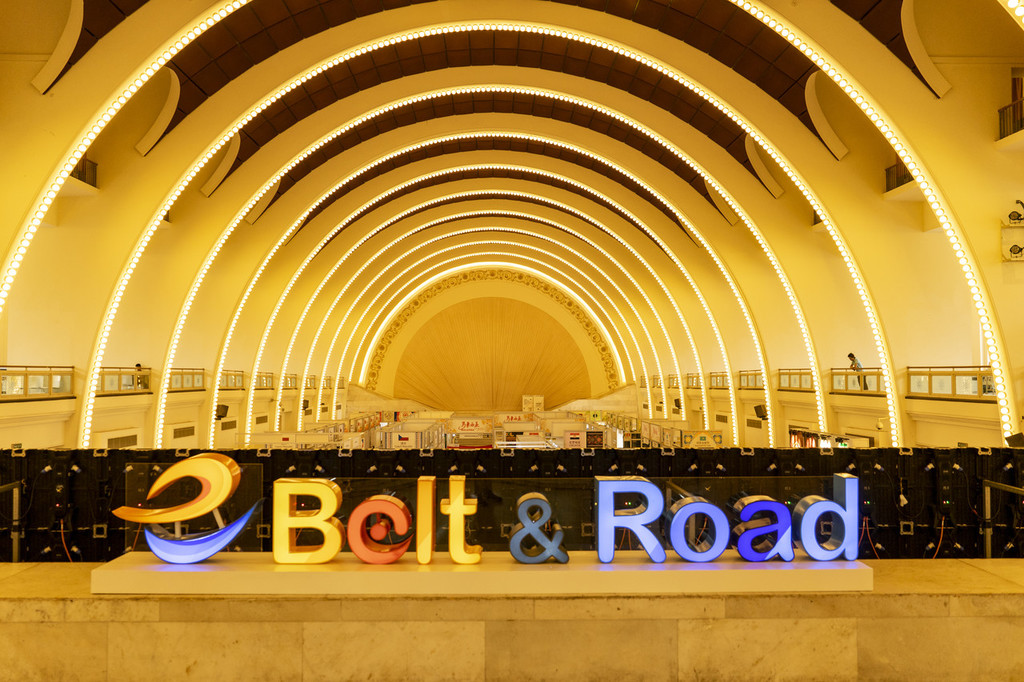
KUALA LUMPUR - The China-proposed Belt and Road Initiative (BRI) will play a key role in post-COVID-19 economic recovery, according to academics participating in the International Forum on New Inclusive Asia 2020 (IFNIA 2020) on Thursday.
In his opening remarks, Ong Tee Keat, founding chairman of the Center for New Inclusive Asia, a think tank based in Kuala Lumpur, said the BRI offered hope for the continuity of multilateralism and free trade which had been under assault in recent years.
Ong said even though many countries, including Malaysia, are still grappling with the effects of COVID-19, opportunities for recovery are present especially through the BRI and China's efforts at bolstering international trade through the recently concluded Regional Comprehensive Economic Partnership (RCEP), a large free trade agreement covers the Association of Southeast Asian Nations (ASEAN) and its trading partners including China.
"With China ushering in a new economic paradigm of dual circulation and the RCEP coming into fruition, it is widely perceived that the waning multilateral trading system under the onslaught of unilateralism and protectionism has been given a fresh shot in its arm," he said.
"The BRI which was once stalled by the economic fallout in many participating countries impacted by the contagion is now given a new lease of life, possibly with new paradigm, configuration and orientations," he added.
For his part, Charge d'Affaires at the Chinese embassy in Malaysia Tang Rui said the BRI has proven to be resilient, connecting people and participating countries by providing a platform for continued industrial capacity cooperation.
"At the same time, we should also take advantage of the early results of the BRI transportation infrastructure projects and secure a tighter, safer and steadier industry and supply chain across the BRI countries that are embedded deeply in our common interests," he said.
"By doing so, we would have enough measures and resources to defend against the volatility of the global economy in the post-COVID-19 era and speed up our economic recovery as a whole," he said.
IFNIA 2020 is co-organized by the Centre for New Inclusive Asia, Malaysia, the Centre for Global and Strategic Studies (CGSS) of Pakistan, and Verite Research of Sri Lanka in partnership with the Institute of the Belt and Road Initiative, Tsinghua University, China, according to the organizer.
The forum is supported by the Belt and Road Studies Network (BRSN), an international network of more than 100 BRI think tanks worldwide, launched at the Second Belt and Road Forum held in Beijing last year.
The virtually-held forum gathered experts from China and several other countries with the theme "BRI - Impact of the COVID-19 Pandemic, Changing Reality and the Way Forward."
Hassan Daud Butt, chief executive officer of the Board of Investment and Trade of Pakistan's northwest Khyber Pakhtunkhwa province, said the BRI offered hope for recovery and better things to come after the challenges seen worldwide in 2020.
"We are seeing countries within BRI getting closer and this is great because of the beacon of hope that we have through (the) Belt and Road Initiative. This is one initiative that is bringing people closer. This is bringing health closer. This promises a great future for humanity, for Asia in general and the world at large," he said.
Sourabh Gupta, a senior fellow at the Washington-based Institute for China-America Studies, explained that the BRI is the ideal platform to facilitate Chinese investments and expertise into developing countries, helping fire up their economic activities and boosting exports to China.
Proposed in 2013, the Belt and Road Initiative refers to the Silk Road Economic Belt and the 21st century Maritime Silk Road, which aims at building trade and infrastructure networks connecting Asia with Europe and Africa along the ancient trade routes of the Silk Road.
- Central companies stoke BRI cooperation
- Ensuring food security via win-win trade
- Central firms roll up sleeves for BRI future
- China's sticking to opening-up amid pandemic boon to global recovery: Cambodian officials, experts
- BRI holds promise for post-pandemic infrastructure cooperation, forum hears