Stability remains watchword for monetary policy in 2021







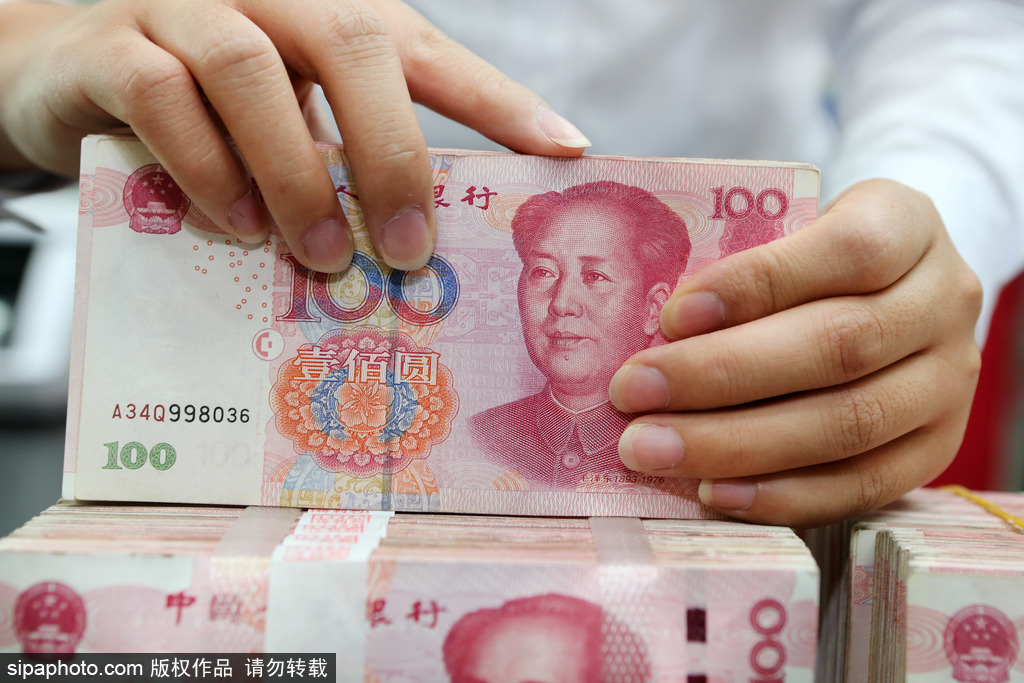
China's monetary authorities will maintain consistent policies and ensure financial stability in 2021, leaving space for conventional measures to fuel robust economic growth, analysts said on Sunday.
Their comments came after stability was highlighted as the priority of China's monetary policy in 2021 by Yi Gang, governor of the People's Bank of China, in an interview with Xinhua News Agency on Friday.
Experts expect neither a sharp tightening of financial conditions nor the introduction of unconventional measures in the short term, with policymakers focusing on ensuring sufficient liquidity injections to avoid financial risks.
Yi said the central bank is committed to using various tools to keep liquidity at a reasonable and adequate level, and measures should ensure that the growth of money supply and aggregate financing generally matches China's nominal economic growth rate.
Helped by containment efforts and swift policy actions to mitigate the impact of the COVID-19 pandemic last year, China's economy is projected to grow by 7.9 percent in 2021, following 1.9 percent growth in 2020, the International Monetary Fund said on Friday.
The IMF concluded that "moderately supportive" fiscal and monetary policies should continue until the economic recovery is on firm footing.
Yi said the central bank has so far neither adopted subzero interest rates nor quantitative monetary easing, meaning that China is one of the few major economies to continue to use normal monetary measures.
But given the rapid growth of credit to mitigate the impact of COVID-19 on companies, China's leverage level has grown rapidly, especially in the first half of 2020. Policymakers vowed to stabilize the macro leverage ratio, or the debt-to-GDP ratio, which accounts for all borrowing by the government, companies and households.
"Since the third quarter of last year, the growth rate of the macro leverage ratio has been moderated," said Yi, adding that the ratio is projected to retreat to a stable level this year.
Yan Se, an associate professor of economics at Peking University's Guanghua School of Management, said the monetary policy stance should remain accommodative and prevent the excessive tightening of financial conditions, considering the recent increase in COVID-19 infections.
Monetary policy should become more effective in its long-term support for small, micro and labor-intensive businesses, given the uneven economic recovery. Maintaining financial relief will help to secure employment, and the central bank may continue to use the relending and rediscounting facilities, said Yan.
Support for firms
According to the central bank governor, China will continue to promote market-based reform of the interest rate and exchange rate systems, as well as keep the real lending rates at a relatively low level. The flexibility of the RMB's exchange rate will be enhanced. Financial support will concentrate on technological innovation, small and micro enterprises and green development projects.
Some economists said the central bank should focus on conventional interest rate instruments, including the seven-day reverse repo and one-year medium-term lending facility, and ensure that short-term interbank rates remain near policy rate levels, including by ensuring sufficient liquidity injections.
"Despite the need to add liquidity, it is unlikely that the central bank will use reserve requirement ratio cuts, as the growth recovery in China currently appears strong and Beijing does not want to signal an increase in policy easing to markets by using high-profile RRR cuts," said Lu Ting, chief economist in China at Nomura Securities.
The new benchmark lending rate, the loan prime rate, is likely to play a more important role in influencing the overall interest rate level, to further guide a market-based deposit rate.
Yi also highlighted the need to contain financial stability risks with proactive efforts and to address financial risks by strengthening regulatory and supervisory frameworks.
In 2021, China will maintain a managed floating exchange rate regime, guide market expectations and keep the RMB exchange rate stable at a reasonable and balanced level, Yi said. He attributed the appreciation of the RMB since last year to the robust domestic economic recovery and the weaker US dollar.
In addition, the central bank will continually boost the opening-up of the financial sector, and "fully implement" the management system based on pre-establishment national treatment and the negative list, Yi said.