


Porcelain artifacts on plateau testament to integration of ethnic groups







LHASA-Zhou Huayong, 45, has been running a porcelain shop in Southwest China's Xizang autonomous region for 15 years. He surely knows the importance of porcelain in Tibetans' daily lives.
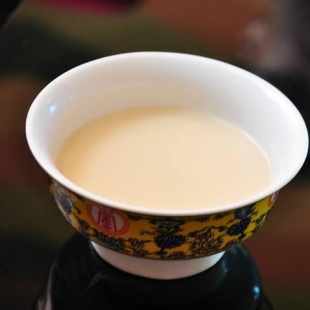
"The cups for drinking buttered tea are the most popular products, and those for drinking sweet tea are becoming more and more delicate," said Zhou, who is from Jingdezhen, an eastern Chinese city known as the "porcelain capital".
Since ancient times, batches of porcelain transported along the ancient Tea Horse Road to the Tibetan plateau have become a strong witness to the ever-increasing cultural exchanges between the Han and Tibetan ethnic groups. In the seventh century, Tibetan King Songtsen Gampo married Princess Wencheng of the Tang Dynasty (618-907), starting a new chapter of integration among different ethnic groups.
"The exchanges of porcelain products have never been interrupted since the Tang Dynasty," said Liu Wei of the Palace Museum in Beijing, in an article.
Currently, there are more than 10,000 pieces of ancient porcelain in Xizang, mainly from the central governments of past dynasties, the special orders by the upper strata in Xizang, as well as the trade between inland areas and Xizang in history.
Such treasures are now mainly preserved in the Potala Palace, Norbulingka, the Xizang Museum and major monasteries in Xizang.
A delicate multicolor bowl made during the Ming Dynasty (1368-1644), now kept in the Sakya Monastery, is the hitherto earliest and best preserved among its kind. It was gifted by the authorities of the Ming Dynasty to the monastery.
Sakya Monastery, dating back nearly 1,000 years, boasts a wealth of cultural relics. It has nearly 2,000 pieces of porcelain from Jingdezhen's imperial kiln.
As cultural exchanges deepened, the porcelain from Jingdezhen's imperial kiln had showcased Tibetan traditional aesthetics, and a number of new wares with apparent elements of Tibetan traditional culture and Tibetan Buddhism emerged.
Meanwhile, more modern porcelain has entered all households in Xizang and become a part of Tibetan people's daily lives.
"Now, apart from ancient porcelain, porcelain products are widely used by every household in Xizang, and they are very exquisite," said Tamdrin, associate researcher of Norbulingka management office. "Tibetans are very fond of porcelain. Every household uses porcelain for festivals, daily receptions and drinking tea."
"Jingdezhen porcelain is not only the carrier of cultural exchanges, but also witness to the unity between the Han and Tibetan ethnic groups and national unity," she said.
Over the years, Zhou Huayong has made a handsome profit from the porcelain business.
"I am a businessman and a cultural messenger in the new era. I not only promote porcelain culture, but also witness and promote exchanges among different Chinese ethnic groups," he said.
Xinhua