Blueprint offers peek into future of China's sci-tech







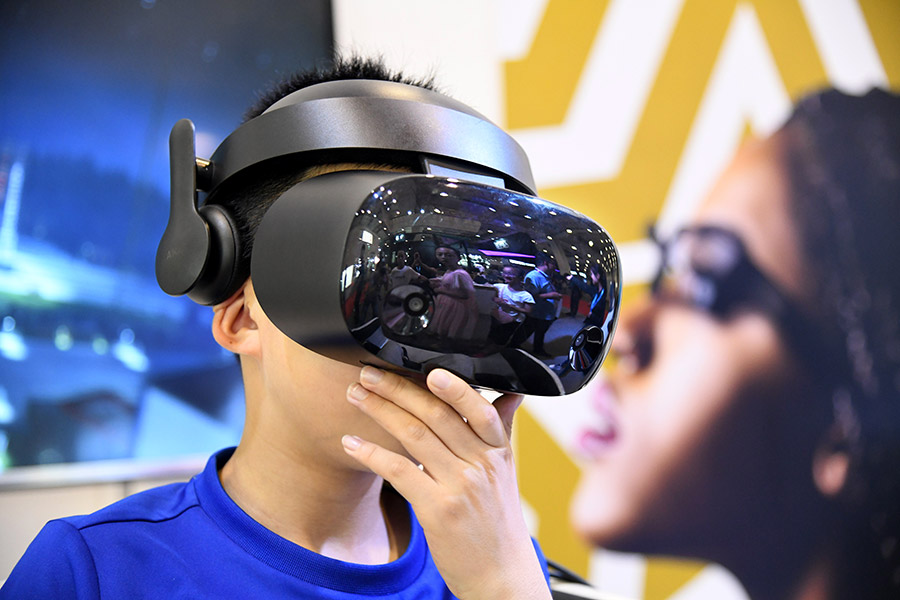
BEIJING-A newly-passed blueprint for China's development in the next five to 15 years has garnered wide attention as it offers a glimpse into the country's innovation path and future sci-tech scenes.
China will uphold the central role of innovation in its modernization drive and make greater efforts to achieve breakthroughs in key and core technologies, according to the newly-adopted outline of the 14th Five-Year Plan (2021-25) for national economic and social development and the long-range objectives through the year 2035.
The outline, which was reviewed by lawmakers and political advisors at the annual "two sessions" that concluded earlier this month, shed light on a future where people lead a more digitalized life, and scientists blaze new trails in frontier areas such as next-generation artificial intelligence and gene technology.
"We need to strengthen sci-tech innovation in key areas related to the country's long-term competitiveness," said Hao Yue, an academician with the Chinese Academy of Sciences who is also a national political advisor.
The outline listed several sci-tech frontier areas that China will boost, including new-generation AI, quantum information, integrated circuits and brain sciences.
"Like water and electricity, AI will enter almost every aspect of life in the next five to 10 years," said Liu Qingfeng, a deputy to the 13th National People's Congress and board chairman of iFlytek, a leading Chinese AI firm.
Liu depicted AI teachers, AI assistants, AI doctors and a rise in "smarter" elderly care services empowered by AI technologies.
Yao Dezhong, another NPC deputy and a professor at the University of Electronic Science and Technology of China, said he was greatly encouraged to find that brain sciences, which he is engaged in, is among the frontier areas included in the blueprint.
"It will facilitate the diagnosis and treatment of brain diseases, inspire the research of brain-like intelligence technology and promote the development of a new-generation AI industry," Yao said.
The outline also emphasized deep-space, deep-sea projects and polar exploration. China's Mars probe Tianwen 1 is expected to land on the red planet in May or June this year, and the country is expected to complete the construction of its space station by around 2022. China will also conduct other interstellar explorations during the next five years.
China will take self-reliance in science and technology as a strategic underpinning for national development, according to the outline.
However, there are still weak links in China's drive to build an innovative country, although it has made a series of sci-tech achievements, said Minister of Science and Technology Wang Zhigang.
"China is not yet self-reliant in some key and core technologies," Wang said, noting that self-reliance is the prerequisite and foundation for further opening up and cooperation based on equality and mutual respect.
Zhou Yumei, a national political advisor and a researcher at the Institute of Microelectronics of the Chinese Academy of Sciences, called for more support for the IC industry. China's self-developed chips have been widely used in the Beidou Navigation Satellite System and supercomputers, but there is still a gap compared with the world's most advanced technologies in the area, Zhou said.
According to the five-year plan, China will strengthen its original sci-tech innovation and pool resources to develop key technologies in fields including biosafety, medical equipment, core components and basic materials, among others.
China will invest more in basic research over the next five years, with such funding expected to reach over 8 percent of all research and development expenditure, according to the outline. It will also formulate a 10-year action plan for basic research.
Xinhua