False claims aim to hurt prosperity of Xinjiang







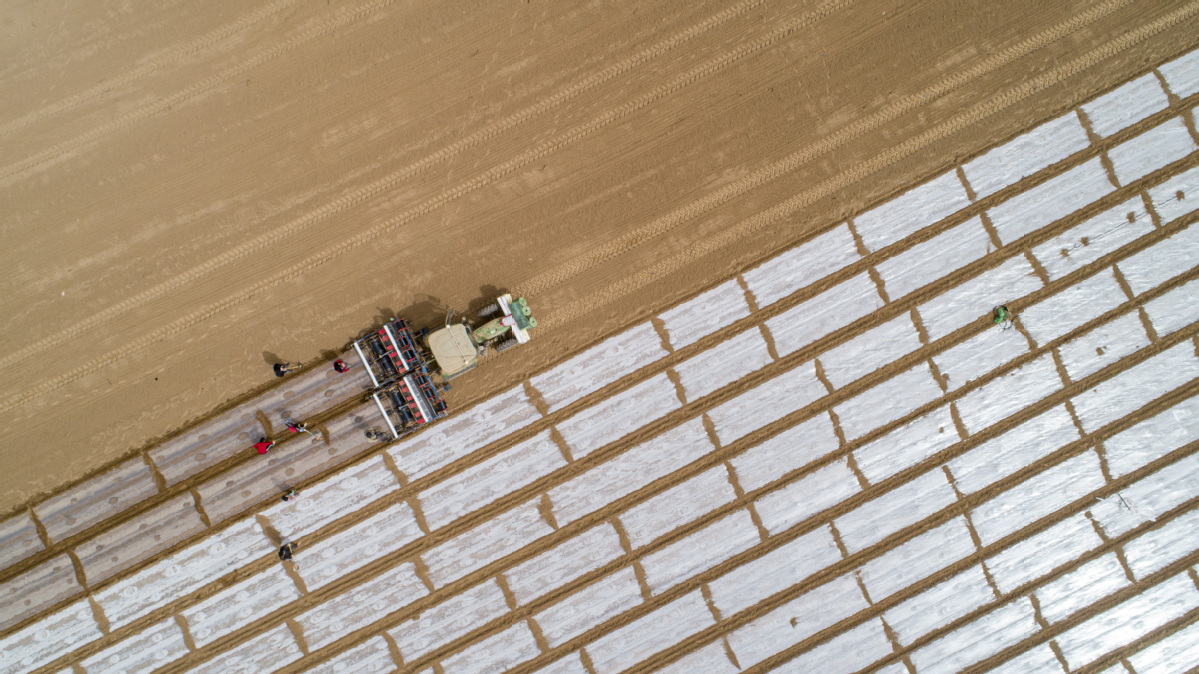
It has become clearer than ever that using fabrications to accuse the Xinjiang Uygur autonomous region of tolerating "forced labor" is just the first step for anti-China forces in Western countries to curb the development of the region's cotton and textile industry, as well as to inflict a heavy blow to the development of the region and the entire country, industry officials said.
Ultimately, the large number of vulnerable cotton growers and textile workers in Xinjiang, many from ethnic groups including the Uygur, Kazak and Uzbek, are the real victims. Many of them, particularly those from less developed southern Xinjiang, have just escaped from poverty as the labor-intensive textile industry has thrived in the region in recent years, the officials said over the weekend.
"We're considering laying off some workers because of poor sales of cotton yarn after some big international retail brands have chosen not to source cotton and yarn from Xinjiang over the so-called forced labor concerns," said a human resource officer with a cotton yarn factory near Korla, in southern Xinjiang's Bayingolin Mongol autonomous prefecture.
The chain of effects is obvious and happening now, said the officer, who would give only his surname, Ma."The suppliers of the retail brands no longer place orders with us. We then have to reduce production, which means many workers will be laid off," he said, adding that most of the workers are from rural areas.
"Also, factories like ours will purchase less cotton, which will cause the price of cotton to fall. Then the cotton farmers will suffer," he added.
Ma's factory is located in Tarim Basin, one of the largest cotton growing areas in China. Xinjiang manufactures more than 5 million metric tons of cotton annually-about 80 percent of the nation's total production. By the end of 2019, there were 808 cotton processing companies in Xinjiang, accounting for 84 percent of the country's total, according to the China Cotton Association.
The cotton textile industry has created jobs for more than 600,000 local people in Xinjiang. More than 50 percent of farmers in Xinjiang grow cotton, and over 70 percent of these farmers are members of ethnic minority groups including the Uygur, Kazak and Uzbek in southern Xinjiang. About 80 percent of their income comes from growing cotton, the association said.
"Such wrong acts (of excluding Xinjiang cotton and associated products from the supply chain) harm the legitimate rights of local farmers and workers who are entitled to improve their living standards by hard work," it said in a statement.
"It actually harms the human rights of Xinjiang people in the name of supply chain compliance," the association said.
Over the weekend, the Chinese public has continued voicing outrage on social media or in some cases staged protests starting on Wednesday after finding out that some big international retail brands, including H&M and Nike, had once issued statements saying they wouldn't work with any Xinjiang garment manufacturing factories, nor would they source cotton from the region.
The companies claimed that they were concerned about some Western media reports of "forced labor" in the region-an accusation that the Chinese central and local governments, as well as industry officials and local farmers in Xinjiang, have rebutted as groundless.
Dozens of Chinese entertainment stars have declared they would end commercial ties with the brands involved, and the products of some brands have been pulled off large online Chinese shopping platforms.
Ma said the biggest blow for Xinjiang's cotton and textile industry is yet to come. "We're still manufacturing with the cotton picked in 2018 and 2019. All we need to do now is to find new buyers," he said."But the situation will become more complicated and difficult for us and cotton growers in the next couple of years if the region's cotton and textile industry remains a target."
Ma said his factory received many inspections from national and local labor protection bodies in 2020 after some Western countries, especially the United States, constantly accused the region of using "forced labor". But no irregularity has been found.
"At first I thought the claim is only about politics, but now it has become clearer than ever that it was just their first step. Their true intention, to curb Xinjiang's development, has now been fully revealed," Ma said.
"The whole thing must be carefully orchestrated because they know how important the cotton and textile industry is to Xinjiang and how many people would be affected."
- US up to old tricks in trying to influence Xinjiang cotton industries
- Hyping lies about Xinjiang will always exact a price: China Daily editorial
- No forced cotton production labor in Xinjiang: lawmaker
- Boycott set to severely harm global supply chain
- Tech makes things easier in northwest cotton fields



- Courts target child abuse done under guise of 'strict parenting'
- Shenzhou XXI astronauts conduct first spacewalk
- Openness, cooperation highlighted at dialogue
- Cold wave to bring snow risks across northern China
- Reform, human rights protection go hand-in-hand for China, report finds
- China sends remote-sensing satellite into orbit