Ban on Xinjiang cotton called anti-China ploy







Peace activists say US action on Uygur rights pretext aimed at destabilization
The United States' ban on Xinjiang-grown cotton over allegations of "forced labor" is aimed at destabilizing China, said some peace activists who also accuse the US government of failing to address its own human rights violations.
The administration of then-US president Donald Trump imposed an import ban on all cotton products from the Xinjiang Uygur autonomous region early this year over allegations that they are made with the forced labor of Uygur Muslims, which has been repeatedly denied by China.
"Forced labor, which means 'coercion to work through the use of violence or intimidation', has never been proved," said Julie Tang, co-founder of Pivot to Peace, an organization dedicated to advocating US-China peace."Even BBC, the media outlet that promulgates this 'forced labor' concept, admits it doesn't have the evidence.
"They show some empty buildings, some pictures of Uygurs traveling and working in factories. This speculative and non-corroborated information is not enough to sustain the forced labor allegations if tried in a law court," said Tang, a retired Superior Court judge in San Francisco.
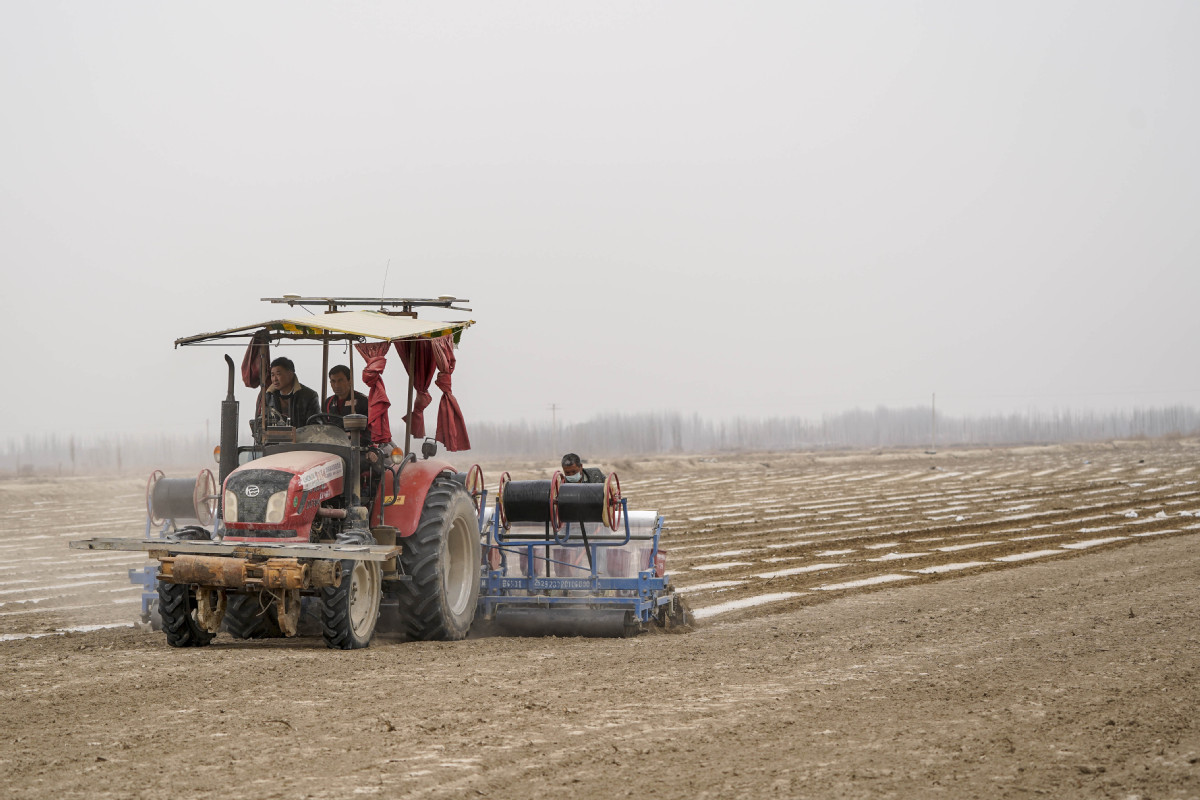
She said that 70 percent of the cotton in Xinjiang, which is in Northwest China, is picked by machines, and that the cotton industry provides "one of the most successful poverty-alleviation efforts in China-the same efforts were repeated throughout China to alleviate 800 million people from poverty".
However, the so-called forced labor allegations have created an emotional reaction in the West against China to justify a massive call for a boycott against Xinjiang cotton, said Tang. The actions of Western countries have thrown the Chinese textile industry into turmoil and hurt the Uygurs, the very people they claim to protect.
Sameena Rahman, a Los Angeles-based peace activist, said that, in contrast to the "mechanized cotton-picking" in Xinjiang, prisoners in the Angola Prison in Louisiana were compelled to handpick cotton and paid 4 cents an hour in 2016.
Systemic discrimination
"If anything, industries using and exploiting prison labor with incredibly low wages in the US should be the ones being boycotted," she said.
The US has been criticized for failing to comply with international human rights obligations, by committing systemic discrimination and racial bias. It has the highest child-poverty rate among developed countries, and the highest criminal incarceration rate in the world.
"The US has a poor record on human rights violations-think Black Lives Matter, anti-Asian violence, Indian genocides, incarceration of Japanese Americans during World War II, and even less of a human rights record on Muslims," said Tang.
"We have killed hundreds of thousands of Muslims after 9/11 and imprisoned hundreds of Muslims in Guantanamo. There, the Muslims are subjected to a separate system of justice that makes it easier for the US to utilize tactics, such as torture, because the US laws do not apply to prisons outside of the US mainland."
Rahman, who is a Muslim, said her community has faced increased racial profiling, suspicion, verbal assault and massive surveillance since the Sept 11, 2001, attacks.
That the treatment of Uygurs in Xinjiang gets more attention than the treatment of American Muslims in the US is partly due to the "concerted effort" by the "corporate mainstream media" in Western countries without proper investigation into the credibility of sources, said Rahman.
It's part of the "US propaganda campaign to interfere in Xinjiang to destabilize China", she said.
Tang warned that the US is creating "a dangerous confrontation with China. China's leadership enjoys favorable support from 90 percent of its people. The efforts to destabilize China through Xinjiang so far have only been relegated to public relations ploys that do nothing to hurt China's internal social structures," she said.
Just like "Iraq's weapons of mass destruction" and "Kuwait's incubator babies", which helped "manufacture consent from the public for the US to go to war with Iraq in 2003","Xinjiang cotton" is now used to "prime the US public in the direction of war with China", Tang said.
"Is the US trying to help or protect the Muslims? Or is Xinjiang the catalyst to contain China's economic progress?" she said."I don't think the American people want the US to exhaust our resources to contain China, if they knew the price ordinary citizens have to pay for US hegemony."