Trans-China Railway presents golden opportunity







Following the COVID-19 outbreak, the global market and supply chain at large have been faced with a lot of challenges. It has been over a year since the initial outbreak, and there remains a lot of uncertainty on when the world will regain normalcy. Several researchers, scholars, and analysts indicate the need for the world to prepare and adapt to a "new normal" with tolerance to the prescribed measures in dealing with the pandemic. In response, many enterprises have already rolled out new supply chain models, with various sustained response strategies underway.
Contrary to expectations, the scale of global trade and consumption continues to increase despite lockdowns across the world and minimized personal exchange. Therefore, the importance of global logistics becomes clear, with a challenge to the global market to explore new strategic values. According to Fitch Ratings, the container shipping industry has gone through a radical consolidation through mergers, acquisitions and alliances in a few decades to avoid overcapacity. Eventually, shipping capacity has been reduced, but the container ship order book has shrunk in a situation where trade volume is increasing. Currently the container order book as a percentage of the existing fleet has sharply reduced, with its current value being approximately below 10 percent, as opposed to its value in 2007 which was at 57 percent.
Port congestions and lockdowns due to pandemic-related operational disruptions at origins and destinations have extended container ships' turnaround times, curtailing services on specific routes or canceling port calls, leading to container box shortages and further increasing freight rates.
According to the Freightos Baltic Index, the cost of shipping one 40-foot container from China to Europe or the west coast of the United States has heightened from about $2,000 a year ago to the current fee of $8,000 and $4,000 respectively. Asia-Europe sea freight rates have increased four times compared to their values in November 2020. The situation has resulted in financial challenges for Asia-based exporters, and delays in export shipments.
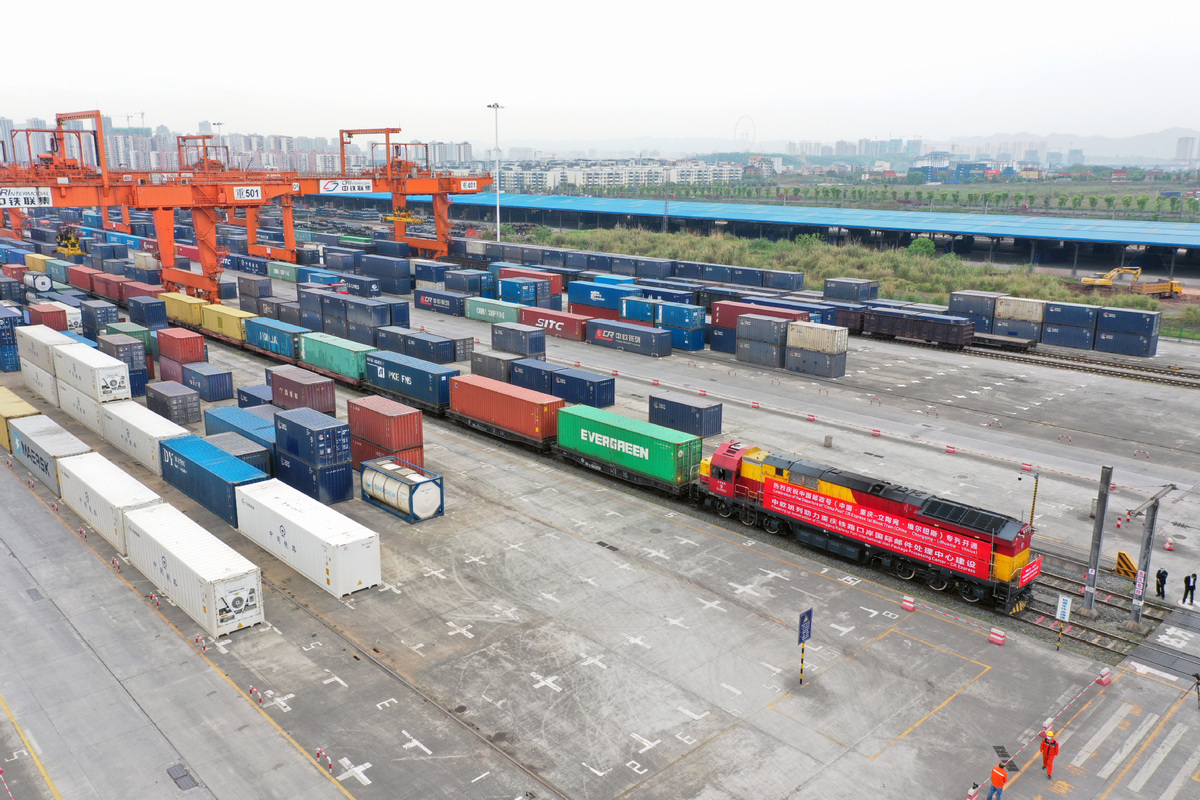
The Trans-China Railway has constantly evolved since the launching of its first direct freight railway from Chongqing to Duisburg, Germany in March 2011, which enhanced the China-Europe connection. Following the emergence of the pandemic, TCR volume dropped to 315 Ton mn in February 2020, due to the closure of the European border. But as of January 2021, volume has risen to 408Ton mn, which was much higher than before the pandemic. It is surmised the rise increased TCR traffic not only from China, but several Asian exporting countries. TCR transit time is around 1/4 of sea transport and 1/5 of air transport cost.
While sea transport takes more than 50 days, the departure of a shipment from East Asia takes about 23 days to arrive in Poland, thus making the TCR a realistic and economical means of transport.
Generally, in a situation where sea transportation is a challenge, TCR has made it possible to transport Asian goods to Europe through a more convenient and faster means. This means not only a broad choice of transportation for the Asian exporters, but it could also allow shipping lines to focus on an Asia-US route, which would result in reduced freight rates and efficient supply chain operations. Furthermore, following the Suez Canal accident, there is a great need for an alternative sea transport route to avoid global supply chain threats attached to full reliance on a single maritime transport system.
As the global supply chain needs improvement and efficiency, I hope TCR continues to develop its advantages, becoming an axis of improvement and efficiency for the global supply chain.
Janghyuk Lim is associate professor with Business School of Shantou University.
The opinions expressed here are those of the writer and do not represent the views of China Daily and China Daily website.
If you have a specific expertise and would like to contribute to China Daily, please contact us at opinion@chinadaily.com.cn , and comment@chinadaily.com.cn