Time to cherish precious food security







Editor's note: The passing away of Yuan Longping, the "father of hybrid rice", has reminded the Chinese people his great contribution to China and even the world's food security. Fan Shenggen, chair professor at China Agricultural University, and former director-general of the International Food Policy Research Institute, shares his views with China Daily's Sun Xiaoyu on how to further safeguard food security and reduce poverty. Excerpts follow:
Q1: How do you evaluate the achievement of Yuan in safeguarding China's food security and his contribution to the global fight against starvation?
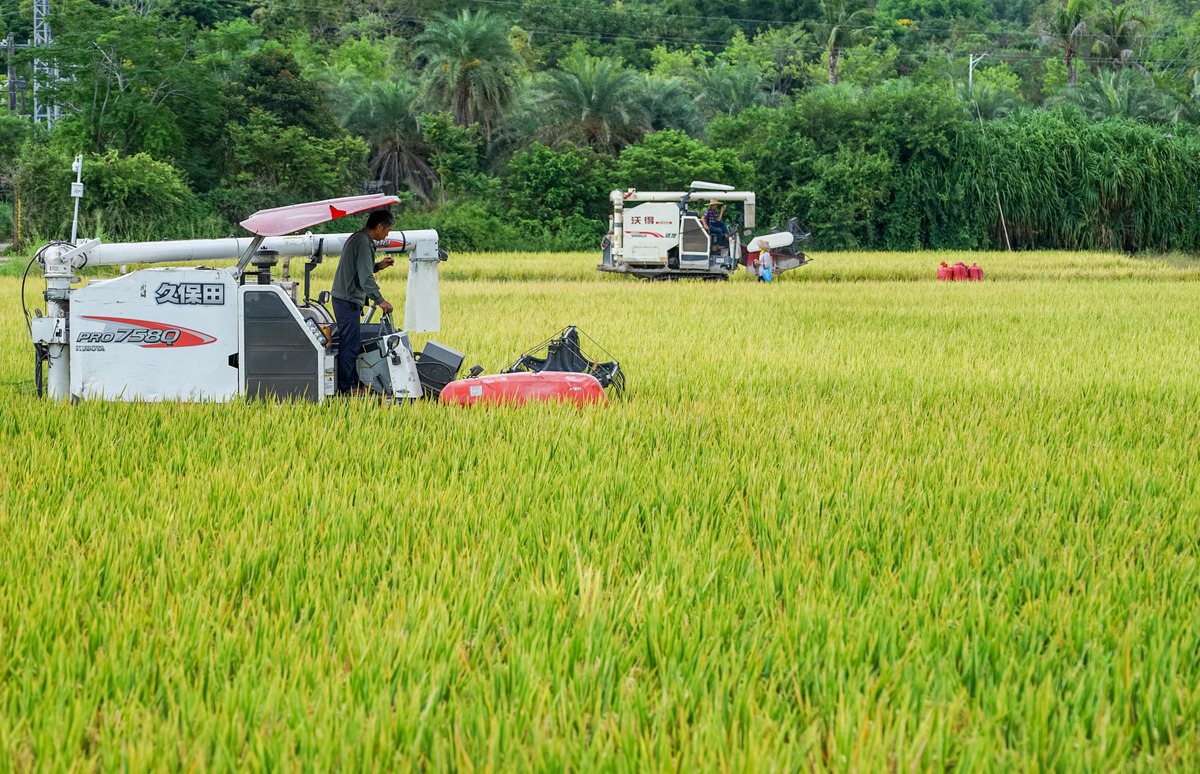
A: Professor Yuan is one of the most important agricultural scientists who was committed his whole life in developing high-yielding hybrid rice. Due to his and many other scientists' work, China's rice production has increased significantly, helping maintaining China's self-sufficiency rate of cereal grains.
Due to the increased rice yield (production per unit of land), land area can be saved for other uses, water and carbon emissions per unit of rice output has also been reduced. Farmers benefited from more rice output and consumers benefitted from lower rice price. Professor Yuan's hybrid rice production technology has also been adopted in Africa and South Asia, contributing to global food security and poverty reduction.
Q2: The passing away of the Yuan has reminded people the painful chapter of starvation in the history. Why did China make food security and poverty alleviation as top priorities?
A: Eliminating hunger means improvement of basic human rights, access to income, access to food, access to shelter.
All of these are basic human rights we need to tackle. So this is a great achievement by eliminating poverty, hunger and reducing malnutrition.
And also equally important, the poverty elimination is a foundation of modernizing a country, modernizing society and modernizing economy.
Q3: China has successfully embarked on a path of poverty alleviation since its reform and opening-up. What experiences can China offer in poverty alleviation, and how significant is it for global poverty alleviation?
A: There are several important lessons we can learn from Chinese experience, and the number one is starting from agriculture.
So agricultural land reform, which helped to improve farmers' income, everybody's income, and help them to improve access to food.
So this is a great lesson every country should really know, to start from agriculture. Obviously, when the farmers had incentives to produce more to sell the products to the market.
When they have enough to eat, the next question is how they can increase their income.
The migration of the non-farming employment after the initial agricultural reform will become very critical. Later on, when all economic growth has helped its large scale of poverty reduction
Then the question is, how can the poverty reduction become very precise to target villages, to target individual households, even individuals.
So precision poverty alleviation, after 2000, even more so in the last 10 years, have been very critical to make sure that nobody is left behind.
Q4: In your opinion, how can China combine increasing agricultural income, ensuring food security with consolidating its achievements in poverty alleviation?
A: The agriculture needs to be further reshaped or restructured to make sure that in rural areas, the rural residents continue to raise income through agricultural and rural development.
I want to bring another dimension called a food system approach.
The food system includes all the activities, actors or players from inputs, technologies, production, harvesting, processing, retailing, wholesaling to the house of consumption, to every element of that system.
And then also the food production involves massive externalities. It has impact on natural resources that can be changed on our health.
All this together forms a food system approach. We need to use a food system approach to make sure that everybody in the food system will benefit from the changes.
And next phase of the reform that is to use a food system approach to make sure that everybody in rural areas benefits from the food system transformation.
Q5: China has vowed to achieve rural revitalization. But the rural areas are facing problems of a shrinking population and ageing, etc. What measures should China take to achieve the goal step by step?
A: Right now, many challenges or problems we face in rural areas are coming from food systems, such as overuse of water and overuse of fertilizer and pesticides and the environmental pollution and so on. Most of these came from our food production and agriculture production.
To solve these, now we need to shift or reshape our food system to make sure that the rural area environment is protected.
So green mountain or blue water in rural areas, and the food system transformation can help the youth to come back to return to rural areas to engage high efficient business enterprises. So they can make money as much as the residents in the cities.
And equally important is the employment. If all these food system enterprises can help to employ large number of returned rural residents of migrants to make sure that the income is as high as urban residents.
I think you can see food system can help to address some of environmental challenges and help to improve our food quality for everybody, can help to increase income of the enterprise owners as well as employers of these enterprises.
I want to emphasize one more thing. The carbon neutrality. I think the food system, agriculture must embrace the 2060 carbon neutrality. Food system and agriculture can also be reshaped or reformed to contribute to carbon neutrality
So when you eat, don't just look at the impact on our nutrition and health, but also on our environment.
If we reduce food waste and loss, it also helps to reduce carbon emissions, reduce water use, land use and to help achieve the carbon neutrality by 2060.