Successful program ignited by modest spark of an idea







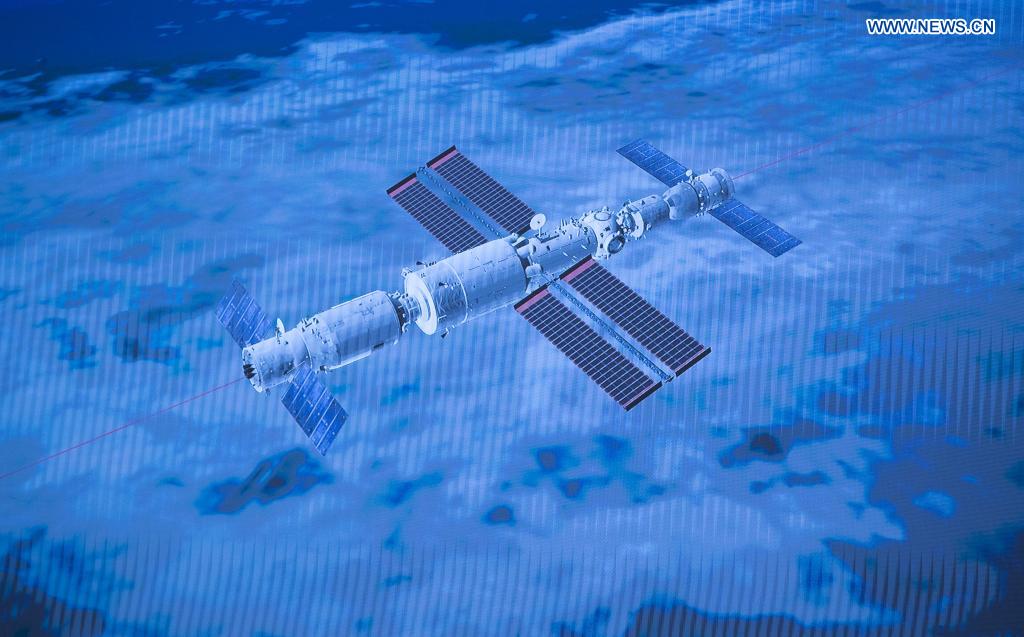
It was in August 1958 that Chinese scientists started to float the idea of sending Chinese astronauts to space.
At that time, the Chinese Academy of Sciences, the country's top scientific body, had formed a panel of distinguished scientists to discuss the research and development of satellites. Whether and how China should start a manned space program was also included on the agenda, three years before the Soviet Union's Yuri Gagarin undertook mankind's first space journey.
During a workshop at the academy's Institute of Mechanics in Beijing in late August, Zhao Jiuzhang, a preeminent geophysicist, became the first Chinese scientist to suggest the government consider developing and building spaceships for manned missions.
Meanwhile, a handful of Chinese institutes had also begun to carry out preliminary research into fields related to manned spaceflights, such as life-support technologies.
With a mountain of difficulties facing the young People's Republic of China, the government and the scientific community soon found that they could not afford the resources required for a manned space program, and would have to bide their time.
In February 1963, the CAS established a "space travel commission" to make theoretical preparations for robotic and manned spaceflights.
In the next three years, several remarkable advances were made: Two institutes were founded to prepare for manned space missions; specific schedules were produced; and scientists launched several carrier rockets to ferry animals, including dogs and monkeys, into and back from space.
Although endeavors by mission planners and scientists slowed down during the period of the "cultural revolution" (1966-76), they did not abandon their aspirations to send Chinese into space and continued trying to persuade the government to approve and fund a manned spaceflight.
In February 1968, the government set up the People's Liberation Army Fifth Academy, which later became the China Academy of Space Technology, to design and manufacture satellites and also to explore manned spaceship technologies.
In the meantime, more researchers from around the country began to take part in discussions and planning for China's first manned spacecraft, which was named by State leaders Shuguang 1, or Dawn Light 1.
In July 1970, Chairman Mao Zedong and other top leaders formally approved China's first manned space program. Three months later, the PLA started to select 20 astronaut candidates from Air Force pilots and train them at a highly classified complex in Beijing.
The government had also chosen a remote valley in Xichang, Sichuan province, as the location of a new space launch facility to serve manned spaceflights. The facility's construction started in the winter of 1970.
Due to the nation's poor technological and industrial capabilities as well as the absence of institutes and factories capable of making certain components, China's manned spaceflight program halted in the mid-1970s.
About 10 years later, space authorities and scientists urged the government to reopen the program and add a new objective: to build a permanent space station.
In the 1980s, their suggestion became reality as the government launched what later became known as Project 863.
In August 1992, a special committee decided that China would use manned spacecraft to assemble a space station in the near future. The plan was approved in September that year by the top leadership, officially kicking off the nation's manned space exploration program.



- 'Book of Songs' from Chinese imperial tomb proves oldest complete copy ever found
- Exhibition highlighting the 'Two Airlines Incident' opens in Tianjin
- Average life expectancy in Beijing rises to 83.93 years
- Energy drink overdose sends delivery worker to hospital
- GBA and Hainan deepening cooperation to boost innovation and sustainable growth
- Beijing mulls including the costs of embryo freezing and preservation in medical insurance