Financing reforms key to tech vitality







Data from the Ministry of Science and Technology showed that China's R&D investment reached 2.4 trillion yuan ($372.5 billion) in 2020, while the figure was 1.42 trillion yuan in 2015. The number of high-tech companies amounted to over 275,000 last year, up 260 percent from the number recorded in 2015. Up to 60 percent of the country's GDP growth was driven by technology advancement.
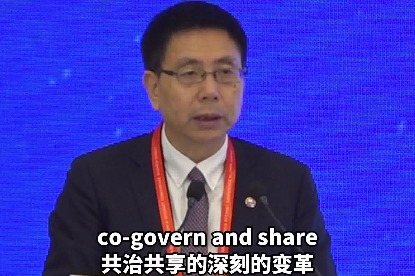
The technology-focused STAR Market launched two years ago has played an important role in supporting the development of growth enterprises. By the end of May, there were 282 STAR Market listed companies, with their total market cap reaching 4.1 trillion yuan, according to Yi Huiman, chairman of China Securities Regulatory Commission.
"Hard technology" has become a highlight of the tech-focused board by attracting a number of integrated circuit, biomedicine and high-end equipment startups, Yi said. In broad terms, R&D investment took up 9 percent of STAR Market companies' sales revenue last year. Over 28 percent of companies' employees were R&D staff and each company had 104 patents on average.
Thanks to the more inclusive and tolerant listing requirements, up to 19 companies that did not report profits before listing have successfully gone public on the STAR Market. Meanwhile, 116 companies have come up with stock incentive plans that effectively motivated tech talent and creativity, Yi added.
Shanghai-based National Silicon Industry Group Co Ltd has benefited from its debut on the STAR Market last April. The company has been dedicated to the mass production of 300-milimeter silicon wafers. But high R&D investment and relatively longer investment periods have been huge obstacles to financing, according to NSIG Chairman Yu Yuehui.
"But the company started running smoothly and realized mass production shortly after our STAR Market listing. We were able to maintain a stable talent team after the IPO, which is crucial to IC companies. The STAR Market has become one of the best examples of the integration between technological innovation and finance," Yu said.
Bank of Shanghai Chairman Jin Yu said that direct equity financing may better address the financing needs of growth enterprises. According to past experience, up to 90 percent of the growth enterprises in the US chose to grow via equity financing as it provides precise pricing. China's STAR Market and the ChiNext in Shenzhen, Guangdong province-as well as the currently 11 trillion yuan worth of PE and industrial funds-have all propelled the growth of rising tech companies.
However, there is still a huge capital gap in the development trend of technologies, Jin said. The secondary market of PEs can help meet the huge demand. More research on related laws and regulations can be conducted in this regard, and more efforts can be made to lower costs and improve efficiency in equity transfers, he said.
While agreeing on the importance of equity financing for tech companies, Toshiyasu Iiyama, executive vice-president of Nomura Securities, also pointed out that investing in such startups can be quite risky at the same time. Therefore, individuals and commercial banks relying mainly on deposits should not devote excessive capital to such investments.
On the other hand, institutional investors-including pension funds and insurance companies-should play a bigger role, said Iiyama. By providing long-term capital, not only can tech startups better thrive, but the real economy in general can be more strongly supported, he said.
Luo Xi, chairman of the People's Insurance Co (Group) of China Ltd, said that insurance can help tech companies conduct more experiments and allow for mistakes. More technology credit can be injected and multiple financing channels will be explored with the help of insurance safeguards, he said.
In June 2020, PICC Suzhou signed agreements with Suzhou's science and technology bureau to carry out an experiment allowing insurance to target losses incurred in technology projects' research and development. To date, more than 46 million yuan involving such risk guarantees has been provided to 46 unicorn companies in Suzhou.
"The small and micro-sized technology companies are most concerned about R&D investment that may become sunk costs. The newly developed insurance policy in Suzhou can provide compensation to these companies when their R&D proves unfruitful due to specific reasons. Helping innovators to stand up again after one failure is more important than initial financing, as tolerance for failures is a prerequisite to stimulate innovation," Luo said.
- Old and young plan promotes better care
- Zheng Zeguang at 'the online exhibition of achievements of Chinese enterprises in the UK': Seize opportunities to forge ahead in China-UK economic and trade relations
- REITs make substantial debut
- Li inspects Jilin, urges opening-up
- Incomplete reforms threaten Nigeria's nascent recovery: Report