Nation's consumer market seen to boom as free trade flourishes







BEIJING-The Chinese market has been well positioned to soar, with new trends shaping its landscape and the government delivering greater openness and extending efforts to promote free trade.
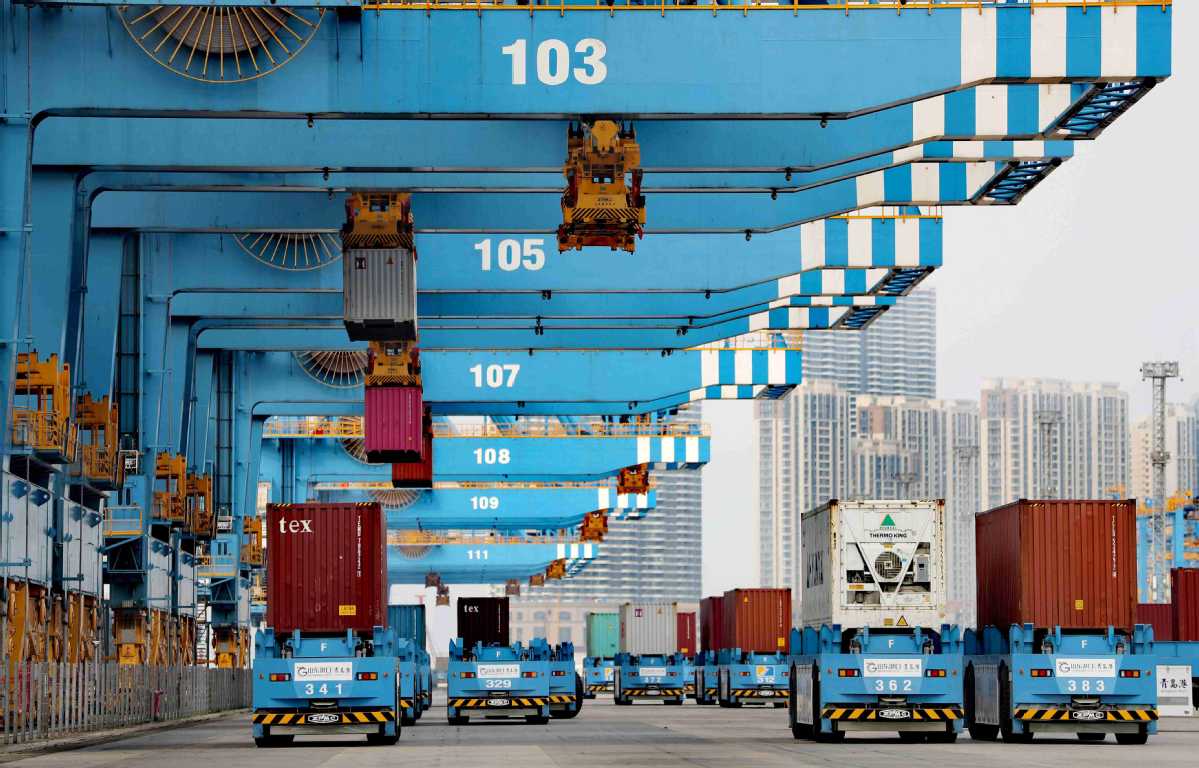
The vision set out by commerce officials at a news conference on Aug 23 testifies to the country's confidence in growing its consumer market, which is second only to the United States in terms of size, and enhancing its strength as the world's top trading nation.
"A historic transformation has been accomplished," said Commerce Minister Wang Wentao as he reviewed the country's achievements in terms of business and trade along the journey of building a well-off society.
Describing China's market as "unique" and boasting the advantage of a superlarge market, with a middle-income group of more than 400 million people making up about 29 percent of its total population, Wang said China has been continuously expanding domestic demand as a strategic basis to foster a strong domestic market.
Compared to 2012, when the country first announced its goal of completing the building of a moderately prosperous society in all respects, China's sales of consumer goods jumped from 20.6 trillion yuan ($3.19 trillion) to 39.2 trillion yuan last year, posting an annual average growth of 8.4 percent.
But the country's evolving business landscape cannot be explained simply in terms of the increased market size. Prominent structural changes have also taken place, reflecting a stronger consumer preference for better services and trading up.
Traditionally, a quarter of the country's annual retail sales came from household appliances, furniture, automobiles and catering consumption. Last year, services consumption, though worst hit by the COVID-19 pandemic, contributed 50.1 percent to the country's consumption, as new businesses such as contactless sales and smart shops continued to emerge.
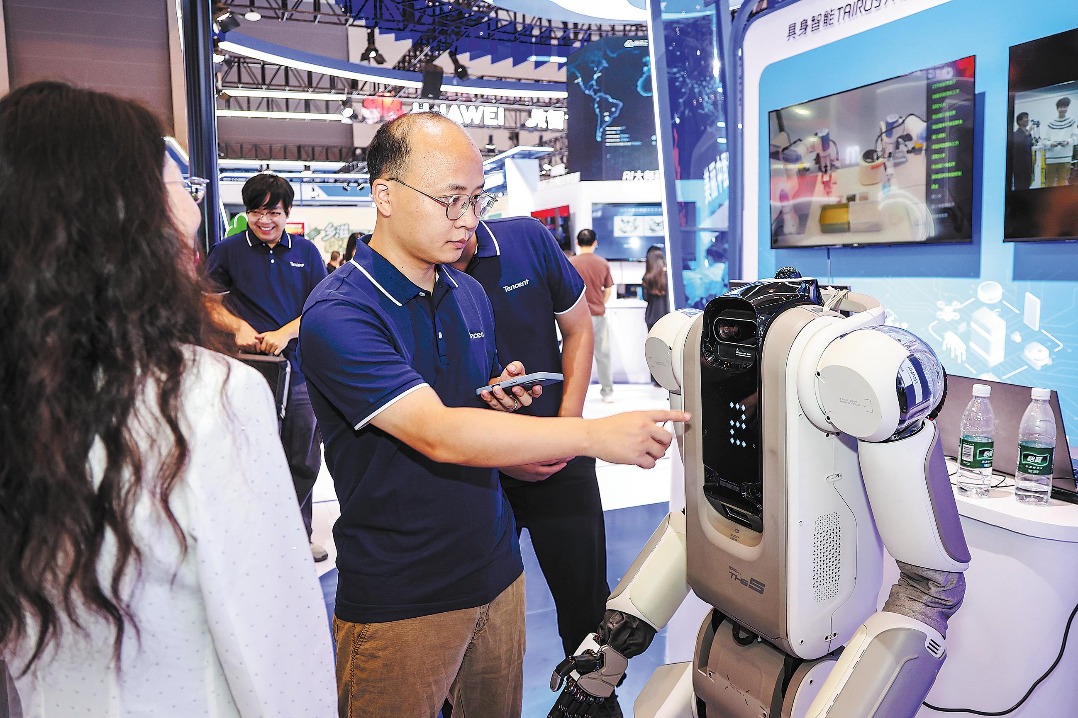
Other new consumption trends include the growing appetite of young consumers for time-honored local brands keen on innovation, the rising potential from rural areas, and the increased consumer passion for digital, cultural, tourism, and health products and services.
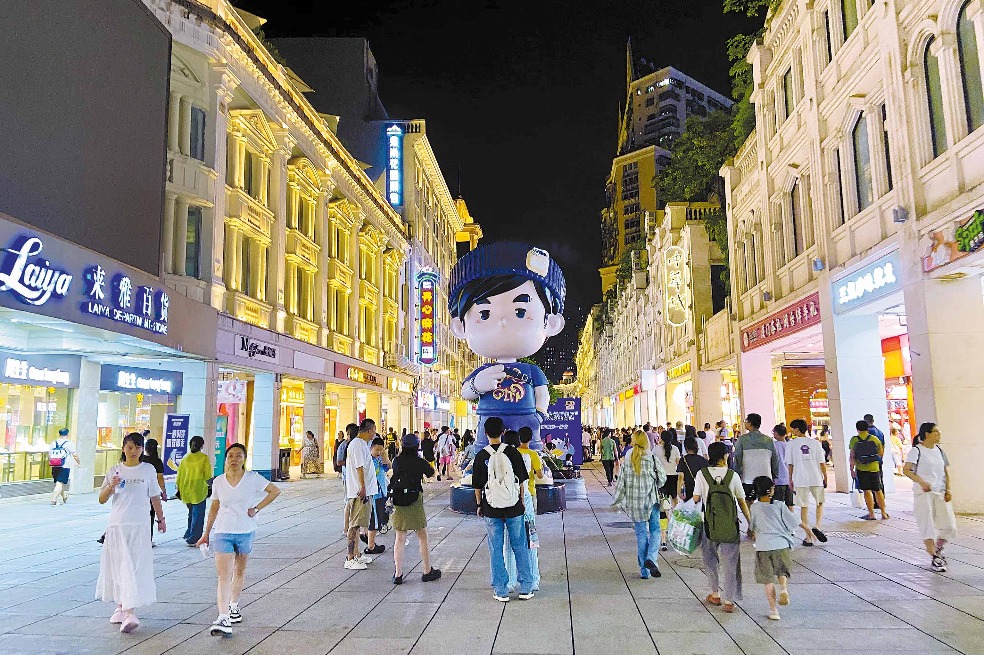
Geographically, Shanghai, Beijing, Tianjin and Chongqing as well as Guangzhou, Guangdong province, are striving to stand out as international consumption centers, exploring ways of elevating people's livelihoods by better meeting their increasingly diverse consumer demands. The potential in the central and western regions is to be unleashed as China makes efforts to promote coordinated development across the country.
Foreign companies are also expected to expand their presence in the marketplace, as the country has slashed the number of sectors that are off-limits to foreign investors from 93 to 33, while foreign ownership limits on the financial and automobile sectors have been loosened.
Hailing foreign firms as "the significant participant in, witness of and contributor to China's building of a well-off society", Wang acknowledged their role as "special and important".
So far, they have generated one-tenth of urban employment, one-sixth of tax revenue and two-fifths of imports and exports.
Despite the challenges from COVID-19, 56 percent of US companies, 73 percent of European companies and 89 percent of Japanese companies made a profit in China last year. The inflow of foreign investment into China rose 4.5 percent, compared to a 40-percent decline worldwide.
Looking forward, Wang said opening-up is about reform, and the emphasis of opening-up will be more on making institutional arrangements.
Regarding the development of the country's free trade zones, he said, "We have reached a consensus and identified goals, and we will promote opening-up in line with higher-level international economic and trade rules."
Stress tests with some high-level economic and trade rules will be conducted if the situations are mature, he said, adding the negative list for foreign investment in pilot free trade zones will be further reduced.
Wang said a key part of the Ministry of Commerce's work is to facilitate mutually beneficial cooperation with other countries, the ministry will support foreign investment and foreign trade as its primary tasks, actively advance the joint building of the Belt and Road projects, promote the integration of domestic and foreign trade, and boost bilateral and multilateral trade cooperation.
Vice-Minister of Commerce Wang Shouwen said the country is seeking to sign more free-trade agreements and upgrade existing free-trade deals with Singapore and the Republic of Korea, respectively.
Talks over new agreements with the Gulf Cooperation Council, Israel and Norway will be accelerated, as will those concerning the China-Japan-ROK free trade agreement, he said.
So far, China has inked 19 free trade agreements involving 26 countries and regions. Worldwide, more than 350 international free trade agreements have been reached, according to the World Trade Organization.
The vice-minister said free trade agreements have brought closer ties between China and its trade partners. For instance, China's trade with ASEAN skyrocketed from $78 billion in 2003 to $685.1 billion last year.
Amid the disruptions of COVID-19, China's trade with free-trade-agreement partners rose by 3.2 percent in 2020, compared with a 0.8 percent increase with non-free-trade-agreement partners.
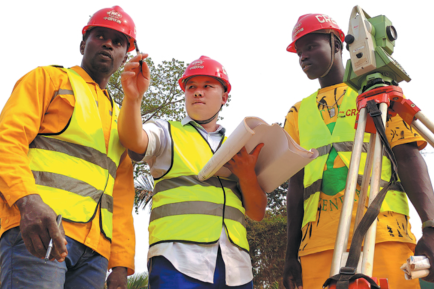
As for the Belt and Road cooperation, Vice-Minister of Commerce Qian Keming said China has extended its global reach, signing more than 200 cooperation documents with 172 countries and international organizations. Over 90 bilateral cooperation mechanisms have been established to facilitate trade, investment and e-commerce.
From 2013 to 2020, China's cargo trade with economies involved in the Belt and Road Initiative totaled $9.2 trillion. "These efforts have brought new development opportunities and broader markets to all countries, and at the same time enabled them to share the dividends of our reform and development," Wang Wentao said.