Vocational education goes to head of the class







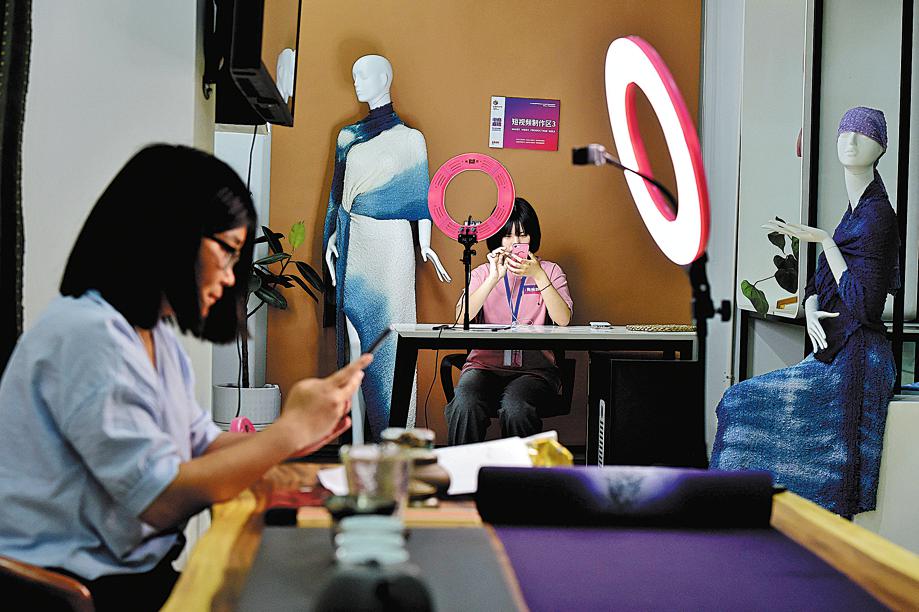
"To some extent, running a good vocational education market is more important than running more top-class universities. It is more important to alleviate the current social anxiety, under which professional education is inferior to academic pathways and students are unwilling to become skilled talent that may be 'looked down upon'," Xiong added.
Currently in China, general academic high schools and vocational high schools are two major types of schools at the senior secondary level. Students who pass the high-school entrance examination can be admitted to a general academic high school, while those who fail the exam will drop out of school or turn to vocational secondary schools.
Some 6.4 million students were admitted to vocational high schools last year, in sharp contrast to this year, when 16.6 million students had entered secondary vocational schools as of late August, according to the Ministry of Education.
"Potential clients for the vocational education market are not only students, but also comprised of millions of workers and part-time employees seeking new skills to improve themselves, especially given that the country is undergoing a huge industrial upgrading and transformation in the aftermath of the peak of the COVID-19 pandemic," Lyu said.
Zhou Huafei, senior president of teaching research and development at Tarena, a leading IT education provider, said that despite uncertainties created by the pandemic, Chinese companies are in urgent need of professional IT talent with sufficient practical knowledge and technical skills to help them with both basic technological structure and high-end technologies.
"The company has seen a new high in terms of the demand for talent from leading technology and internet firms over the past year, with such talent focusing on emerging strategic industries like artificial intelligence, cloud computing and cybersecurity being the most popular," he said.
Tarena, which has been doing IT training for 20 years, innovated in order to meet new demand from emerging sectors. It worked with Huawei Technologies Co, for instance, to open courses for the HarmonyOS system as Huawei launched the operating system's latest version this year.
For the second quarter, Tarena reported its revenue had soared 75.5 percent year-over-year to 582.3 million yuan ($91.2 million). Revenue in its adult professional education business, which represented 50.3 percent of total revenue, increased 22.3 percent year-over-year.
Tarena also inked a strategic cooperation deal in late July with cybersecurity leader 360 Security Group. The two parties will work together in training cybersecurity engineers via courses and professional certifications they develop together.
"As cybersecurity problems have become prominent in almost all industries, learning skills related to cybersecurity has become indispensable for IT talent," said Qin Jiangyan, operations director of cybersecurity talent development at 360.
"With the cooperation of Tarena, a company that has one of the country's largest IT student enrollments and a complete IT curriculum system, we look forward to helping domestic companies build their own safe and open security systems from the bottom up," she said.
However, Xiong from 21st Century Education Research Institute pointed out that encouraging listed companies and leading enterprises to develop vocational education doesn't mean that they can leverage their economic power to reap excessive profits.
"Developing vocational education requires a large amount of investment, including nurturing teaching teams with new technologies, so government authorities should formulate additional policies, including tax incentives, for such enterprises," he said.
Lyu said that while vocational education is a great opportunity for education companies in the K-12 education sector to transform themselves, they still face many practical bottlenecks.
"It is not easy to build up resources in the vocational education sector. It will take at least three to five years for China to produce a group of leading companies in the vocational education market," he added.