Shared commitment to greater action
Risks of extreme weather disasters can be reduced if countries uphold the Glasgow Climate Pact







COP 26 was the world's largest conference to address climate change since 2015. Some positive results came out of it, including the Glasgow Climate Pact, which commits all countries to further stepping up efforts to mitigate climate change this decade. Although this is challenging for all countries, it is essential if catastrophic climate change is to be averted.
When I went to school in Europe in the early 1990s, there was an increasing consensus among scientists and governments that human activities were causing global warming, and that this would lead to increasingly disastrous consequences in the future. Despite a series of United Nations agreements since then, global emissions of greenhouse gases have not decreased-in fact they have rapidly increased.
It is now 30 years later, and we are already seeing the impacts of climate change in every region of the planet. The past seven years were the hottest years on record. The years 2020 and 2021 have seen record-breaking temperatures occurring across Europe, northern Africa, North America and Russia. Some normally cool regions turned to infernos with temperatures in parts of Siberia reaching 48 C, and in parts of Canada reaching 46 C, coupled with some of the largest wildfires ever recorded. Parts of the United States and Australia were also ravaged by wildfires. In August, heat stress affected 74 percent of all land regions on earth. Soaring temperatures and the consequent disasters are causing untold damage to ecosystems and property, and are leading to further greenhouse gas emissions.
China also experienced unusual heat waves and flooding events, causing massive damage along the Yangtze River in 2020, and in Zhengzhou, capital of Central China's Henan province, in 2021.
The evidence of climate change is now beyond doubt, and so is the link between climate change and an increase in observed extreme weather events. The latest report of the International Panel for Climate Change-a UN-coordinated scientific report accepted by governments of all countries in the world-includes a dedicated chapter on weather extremes for the first time. Among its key conclusions is that it is an "established fact" that human-caused greenhouse gas emissions have "led to an increased frequency and/or intensity of some weather and climate extremes".
The most obvious link is between climate change and heat waves-climate scientists are now confident that every heat wave in the world is made stronger and more likely to happen because of human-caused climate change. For example, the 2013 summer heat wave in eastern China would have been extremely unlikely without the effects of human influence, but by now it has become a once-in-four to once-in-five year event. By 2050, such heat waves are expected to occur every year. Since 1951, China's average and extreme temperatures have been increasing significantly, accompanied by more intense and more frequent incidents of extreme weather and climate conditions that have been occurring for longer durations, according to China's National Climate Center.
It is also clear that climate change is causing extreme rainfall to be more common and more intense in most regions of the world, and this is coupled with flooding becoming more frequent and severe. A study about the unusual floods that caused havoc in parts of Germany and Belgium in July concluded that this event was made between 1.2 and 9 times more likely due to climate change.
The 2021 report by the IPCC also warns of a global sea level rise caused by the melting of Arctic ice, where temperatures will increase much faster than the global averages. The rising sea level, combined with increased occurrence of heavy precipitation, can result in an increased likelihood of flooding in China's low-lying, economically developed coastal regions. This could cause massive loss of property and economic disruption.
Moreover, agricultural productivity could be affected by heavy precipitation, droughts, or unusual temperatures. Climate change could cause increased water stress in the North China Plain. In the event that one or more of the major agricultural production regions in the world are disrupted, global food supplies and prices could be seriously affected.
Sadly, the harm caused by climate change goes well beyond extreme weather events. For example, coral reefs are already rapidly dying around the world, as they are unable to cope with the rapid increase in ocean water temperature. This has knock-on effects on marine ecosystems, as important breeding grounds for fish and all sorts of marine species are wiped out. Combined with heavy overfishing, this is causing the ocean to be depleted of species at alarming rates, leading to serious risks in the future supply of seafood.
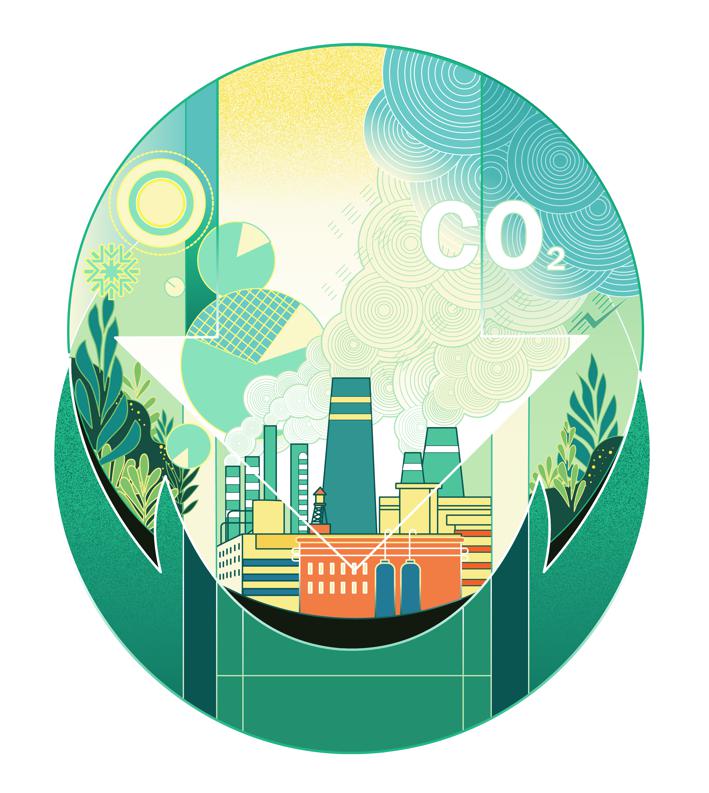
The risks presented by the climate crisis increase with every degree of global warming. This is why in 2015 all countries signed up to the goals of the Paris Agreement, to hold the global increase in temperature to between 1.5 C and 2 C. The Glasgow Climate Pact, which was just finalized, goes a step further, emphasizing that the impacts of climate change will be much lower at 1.5 C of warming, and that all parties must make efforts to achieve that goal. Doing so requires rapid, deep and sustained reductions in global greenhouse gas emissions, reducing global carbon emissions by 45 percent by 2030 and to net zero around 2050, as well as deep reductions in other greenhouse gases such as methane.
Reducing emissions requires major transitions in almost all sectors of society. In my view, the most heartening result of the Glasgow climate conference is some of the agreements which came out of the process, such as the US-China joint declaration on enhancing climate action, and the EU-China joint communique which came out in October. As we jointly address the formidable challenge of the climate crisis, cooperation among the world's most important economies, and the fostering of mutual trust, are absolutely indispensable.
The author is chief representative for China of environmental law organization ClientEarth and team leader of the EU-China Environment Project. The author contributed this article to China Watch, a think tank powered by China Daily.
The views do not necessarily reflect those of China Daily.
Contact the editor at editor@chinawatch.cn