Bouncing back
Pessimism and blame game surrounding rising food prices should be taken with a pinch of salt








Price reflects the relationship between supply and demand. But a rise or decline in price does not necessarily stem from a change in the supply-demand relationship. For example, in countries plagued by hyperinflation, prices could rise even when the supply-demand situation remains unchanged. Since the outbreak of the COVID-19 pandemic, global food prices have surged, which some attribute to reduced grain outputs due to the pandemic and some to China increasing its food imports.
These views are biased. According to forecasts made by the United Nations Food and Agriculture Organization, the global wheat output in 2021-22 is expected to reach 770 million metric tons, 0.8 percent lower than the figure in 2020-21. But the output for coarse grains is projected to stand at 1,514 million tons, 1.6 percent higher than the 2020-2021 level. Also, rice production is expected to rise 0.9 percent year-on-year. The US Department of Agriculture has an even more positive outlook for global food production. Overall, global food yield has kept growing despite the pandemic.
As regards China, the country imported about 25 million tons of corn in 2021, a relatively small share in the global corn trade volume of 200 million tons. Thus, China's imports do not greatly affect the global corn price. In addition, even though China's imports of corn and vegetable oil declined in 2021, the global prices of soybean and soybean oil didn't drop as a result. It should be noted that the prices of all major commodities, except for food, soared during the pandemic. The commodities price index of the International Monetary Fund stood at 183.85 in November 2021, up 59.5 percent year-on-year. Among all commodities, the fuel price grew 136.9 percent, while the agricultural products price index rose by 21.8 percent.
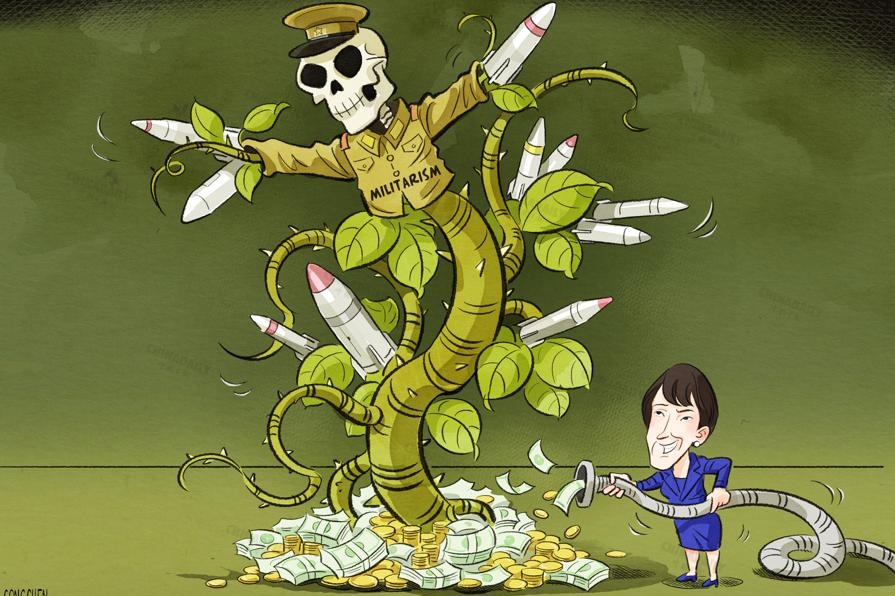
The reason underlying the surge in global food prices is the super-loose monetary policies adopted by major economies to cope with the effects of the pandemic. The unlimited quantitative easing launched by the United States in March 2020 has caused excessive liquidity of the US dollar-the most extensively used international currency-which has pushed up the prices of global commodities and triggered high inflation in the country. The Consumer Price Index in the US rose 7 percent year-on-year in December, with the food price index increasing 6.3 percent to its highest level in 40 years. Therefore, the growth in food prices in the US is not a result of the changed supply-demand situation.
Now as the US Federal Reserve starts to exit its quantitative easing in response to the skyrocketing inflation and other major economies tighten their monetary policies, the prices of global commodities will drop, with food prices expected to fall in the second half of 2022.
The growth in agricultural production driven by rising food prices may continue for a period of time. The outputs of all major agricultural products, except for grains, are expected to keep rising in 2021 and 2022, including oilseeds, meats, dairy and aquatic products. Although the pandemic is still raging in some parts of the world, the virus will not likely wreck severe havoc on the global economy in the future, and the world has probably already passed the darkest moments. Global agricultural production and trade will rebound.
As for China, the country's grain output hit a record high of 682.9 million tons in 2021, up 2 percent year-on-year. This year, China will strive to maintain its grain output above 650 million tons, and increase the planting areas for soybean and oilseed. To this end, China will take measures to protect arable land, and cultivate 100 million mu (6.67 million hectares) of high-standard farmland. The country will also double down on efforts to seek breakthroughs in key agricultural technologies such as the breeding of high-quality seeds, improve the research and utilization of agricultural machinery, and vigorously develop controlled-environment agriculture such as greenhouses.
Thanks to the growing agricultural production capacity in countries such as China, global food prices have been dropping in a long-term trend, which has helped more and more people get rid of hunger. Despite the deteriorating hunger situation due to the impact of COVID-19, it should be noted that the global hungry population has shrunk remarkably over the past decades, and the ultimate goal of "zero hunger" is sure to be achieved one day.
Price changes are the result of economic activities. In general, the price of commodities such as food will decline when their availability increases, and consequently humanity will enjoy more material wealth. We should take a rational attitude toward the change in the price of a given product at a specific time. The hikes in food prices during the pandemic have spurred agricultural production and thus increased global food supplies. More and more evidences show that the prices of global commodities will return to normal in 2022.
The author is a researcher in the Rural Development Institute at the Chinese Academy of Social Sciences.The author contributed this article to China Watch, a think tank powered by China Daily. The views do not necessarily reflect those of China Daily.
Contact the editor at editor@chinawatch.cn