China can still attract global capital, adviser says







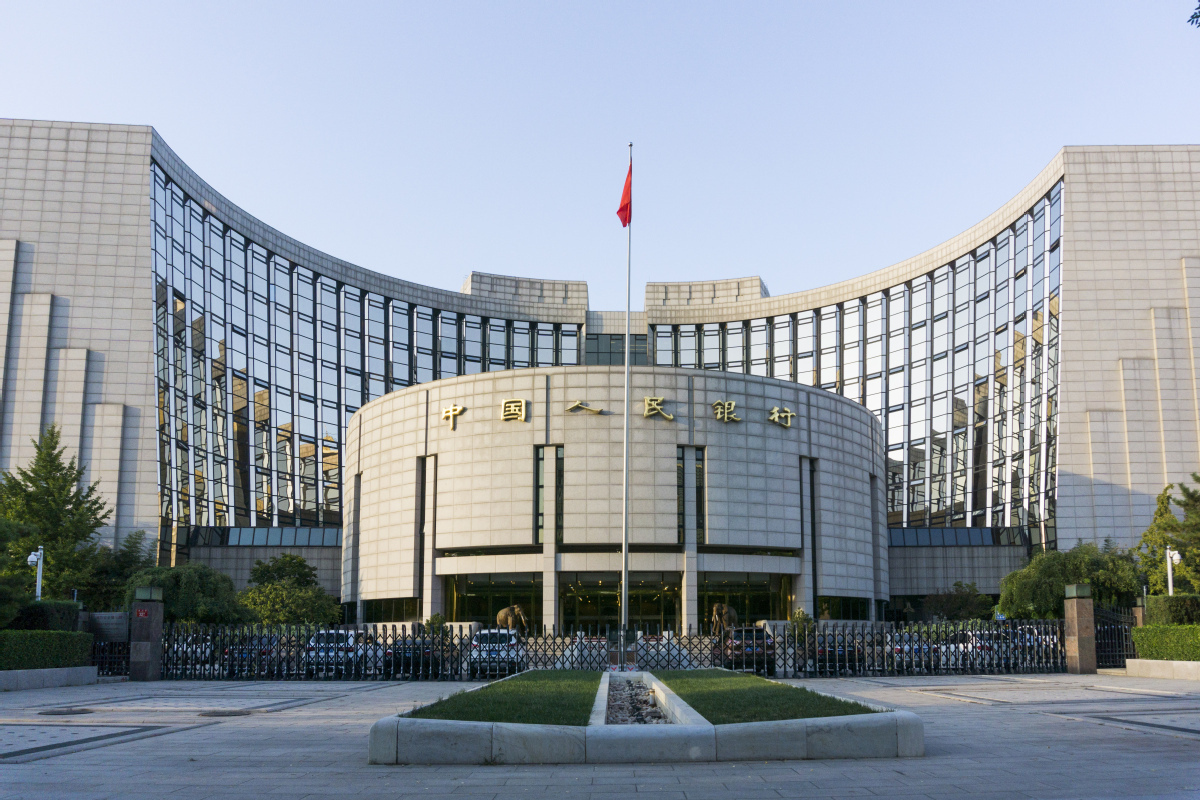
The tightening of monetary policy in the United States will not affect China's monetary policy autonomy or its ability to attract global capital, a political adviser said, adding that fiscal policies need to work more proactively this year to boost growth.
Wang Yiming, a member of the 13th National Committee of the Chinese People's Political Consultative Conference, said the recent strengthening of the renminbi meant the narrowing of the interest rate gap between China and the US will not constrain the ability of the People's Bank of China-the country's central bank-to enhance its monetary policy autonomy.
"China is implementing a prudent monetary policy with an easing bias, which helps in lowering risks and boosting market sentiment about China's steady economic recovery and investors' confidence," said Wang, who is also a vice-chairman of the China Center for International Economic Exchanges.
"As the global economy is faced with mounting uncertainty, the steady economic recovery in China has made it an even more attractive place for capital. Not only is the capital outflow not happening, but more capital is now coming into China."
Wang hailed the steady economic progress that China made against the odds of a complex and challenging external environment last year. He said the country's GDP exceeded 114 trillion yuan ($17.7 trillion) in 2021, and it contributed roughly a quarter of global growth.
The pace of economic recovery has been different since the COVID-19 pandemic. China has realized an earlier economic recovery from the impact of COVID-19, he said, leading to a divergence in the monetary policies followed in China and the US.
Wang said China started normalizing its monetary policy as early as the second half of 2020 and, in the face of increasing downward pressure, started shifting to a prudent policy stance with an easing bias from the fourth quarter of last year. Moves included a half a percentage point reduction in most banks' reserve requirement ratios in December, releasing 1.2 trillion yuan of liquidity.
Soaring inflation has recently pushed the US Federal Reserve to step up efforts to exit its easing monetary policy. Its chairman Jerome Powell told the US Congress on Wednesday that he plans to propose a 25 basis point interest rate hike this month. With such moves, the interest rate gap between China and the US is narrowing.
Wang said US monetary policy tightening will not add to depreciation pressure on the RMB, and the autonomy of China's monetary policy will not be impacted.
"Inflation pressure in China remained moderate in January with the CPI inching up only 0.9 percent year-on-year," he said. "This provides room for China's prudent monetary policy with an easing bias."
The Government Work Report delivered by Premier Li Keqiang on Saturday said the prudent monetary policy should be both flexible and appropriate this year, with reasonably ample liquidity being maintained.
Wang said one prominent issue faced by the Chinese economy is insufficient demand.
"Both consumption and investment are notably slackening, leading to a weakening in financing demand from medium-sized, small and micro-sized businesses," he said. "Against such a backdrop, the role of a proactive fiscal policy needs to be better brought into full play."
The report said efforts will be made this year to make the proactive fiscal policy more effective. Tax refunds and cuts are expected to total 2.5 trillion yuan this year, more than double the 1.1 trillion yuan last year.
Wang hailed the proposed tax and fee cuts as timely and effective, saying such moves could keep more liquidity directly in the hands of smaller businesses and tide them over amid difficulties, anchoring market expectations.
"Small and medium-sized enterprises and self-employed individuals will be the primary beneficiaries of the new tax cuts and refunds this year, and they remain a key underpinning for the nation's job creation and economic prosperity," he said. "The survival and thriving of these smaller businesses, who are large in number and cover a wide range of sectors, will enhance the prospects of the Chinese economy after the COVID-19 situation."
Wang said one challenge facing the Chinese economy is the conflict between Russia and Ukraine, which will add to global uncertainty, stoke commodity prices and disrupt global production chains.
"This may add to challenges facing downstream and smaller businesses," he said. "Preparations need to be made to protect smaller businesses from such potential challenges."





- China sees rise in influenza, rhinovirus, and other respiratory infectious diseases
- Zhang Chaoyang emphasized active thinking in AI era
- CIIE concludes with record-high intended deals
- Lhasa's GDP grows 7.1 percent in first three quarters of 2025
- Co-hosting games boosts GBA integration
- Scholars call for ecological protection of Tunbu culture