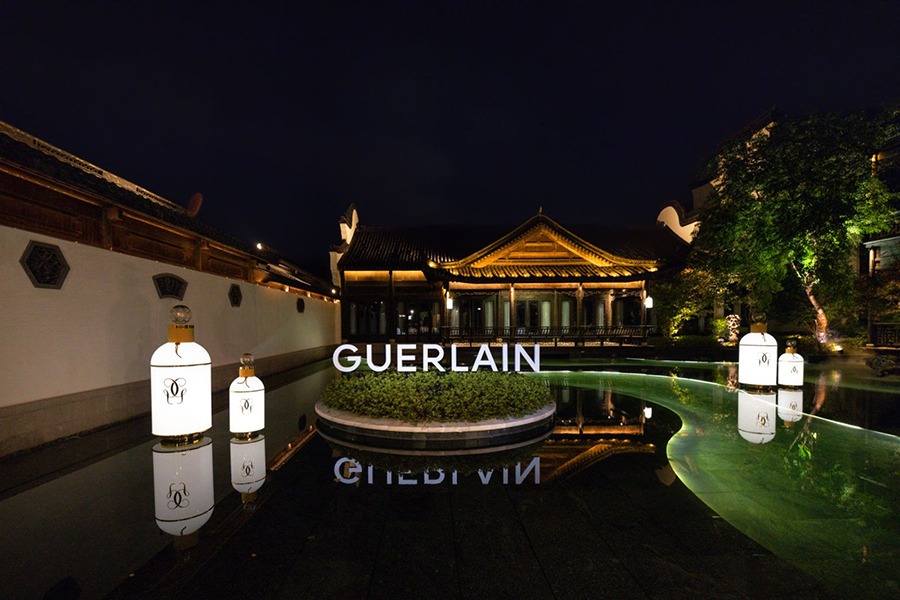
Cultivating culture and truly poetic landscapes







Until recently, the depth of my personal "philosophy" of gardening has been as sophisticated as "that plant might look nice over there".
That said, I've long appreciated the often deeply rooted philosophies that enlighten garden designs in different cultures, and especially in China.
Portugal's Romantic-style gardens are eclectic to the point of seeming almost haphazard and purposefully overgrown. Tidy traditional English gardens are shaped around the existing terrain. In contrast, old-time French garden landscapers would, for instance, flatten hills to ensure symmetry that could be seen all at once.
Chinese gardens are, instead, meant to be experienced scene by scene like scroll paintings and intermingle manicured and natural landscapes.
"Even though everything (in the garden) is created by man, it must appear to have been created by heaven," landscaper Ji Cheng (1582-1642) wrote in his monograph, The Craft of Gardens, in the 1630s.
In 1665, diplomat Sir William Temple wrote an essay comparing the symmetries of European and Chinese gardens. And in 1738, Jesuit missionary and court painter for Chinese emperor Qianlong (1711-99), Father Attiret, identified China's imperial gardens as "terrestrial paradises" and commissioned Chinese-style fountains for Versailles.
Ancient Chinese gardens initially served as places of respite for otherwise overworked monarchs and bureaucrats, promising the work-life balance required by the Taoist imperative of equilibrium.
Over time, they were increasingly informed by philosophical and, in particular, poetic sentiments.
A notorious departure from this-later disparaged for its decadence-was King Zhou's Dunes of Sand Garden.
It contained a "wine pool and meat forest". Hunks of roasted meat were skewered on the branches of the trees growing on an island set in a pond filled with liquor. Zhou and his concubines boarded boats to dip cupped hands into the firewater to sip and harvest the meat that seemed to grow on the branches like fruit.
Other cultural motifs, some over two millennia old, have persisted.
Zigzagging bridges, for instance, represent the concept that you encounter hidden knowledge by taking detours rather than straight paths.
Since around 200 BC, gardens often contained miniature replicas of Mount Penglai, three peaks said to be the abode of the eight immortals that are often represented as islets in ponds. This mythical realm can be likened to Eden, in that it's a place where the only thing not found in abundance is suffering, which is utterly absent.
And certain plants are still organized according to figurative meanings, such as the "three friends of winter"-pines (longevity), bamboo (humility) and plum trees (tenacity)-which provide some sense of life in the dead of the coldest season.
Ultimately, such connotations fostered a tradition in which gardens and poems have inspired each other.
The tianyuan, or "fields and gardens "poetry genre, was born after aristocrat Shi Chong (249-300) invited 30 luminary poets to his garden for a feast to pen what would become the compendium, Poems of the Golden Valley.
Poet Wang Xizhi (307-365) later invited celebrated poets to the shore of a winding creek in his garden for a drinking game with literary flourish. He floated cups brimming with booze down the waterway. Whoever sat on the bank where the cup got stuck had to down it and improvise prose on the spot, resulting in the collection, Poems Composed at the Orchard Pavilion.
Later emperors also dug twisting brooks for sailing goblets.
Chinese gardens also inspired literati from outside the country. Marco Polo wrote about Kublai Khan's summer retreat, Xanadu, which in turn inspired the poem Kublai Khan by England's Samuel Taylor Coleridge.
Indeed, learning all of this has made me reconsider my own outlook on arranging my potted garden in Beijing. You could say that I think about it more, well, poetically than before.