



Auto sales plummet in April but prospects remain bright







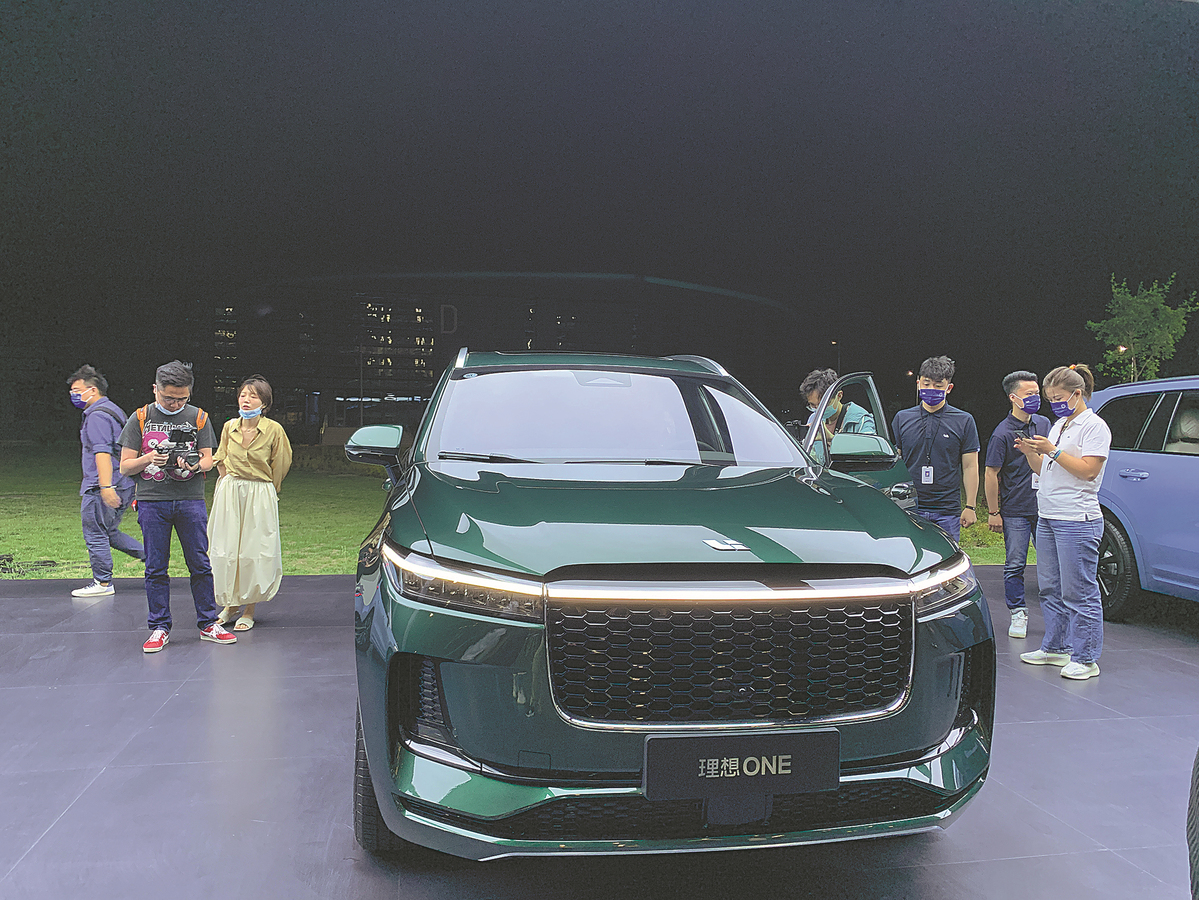
Industry production slowly resumes in region hit by the pandemic in March
China's popular new energy vehicle startups saw their deliveries in April plummet, primarily due to the impact of COVID-19 on their supply chain, but analysts say the sector is expected to regain its momentum as the pandemic is gradually curbed.
Four of the startups each sold more than 10,000 vehicles in March, but none of them reached the same level in April, as production at suppliers in the Yangtze River Delta region, including Shanghai, was disrupted.
The top three companies saw the deepest fall: Xpeng's April sales saw a 41.6 percent slump from March to 9,002 units; Nio's plummeted 49.2 percent from March to 5,074 units; and Li Auto's deliveries in the same month nose-dived 62.2 percent to 4,167 units.
These bleak sales numbers resulted in a change in the rankings by sales, with Leapmotor soaring to the top, with 9,087 units delivered in April, although that represented a 9.7 percent fall from March as well.
Shen Yanan, president of Li Auto, said its plant and around 80 percent of its suppliers are in the pandemic-affected Yangtze River Delta region.
"Some of them are in Shanghai and Kunshan, Jiangsu province, and they cannot ensure supplies, so we could not produce more vehicles when we ran out of our stock," said Shen.
He said this hit its deliveries in April, and some customers who had expected their vehicles to arrive that month had to wait longer.
Nio said it suspended production for days at its plant in Hefei, Anhui province, in early April because of disruptions to the supply chain caused by the pandemic.
Xpeng, based in Guangzhou, Guangdong province, fared somewhat better than the others, but also admitted that it experienced "unprecedented difficulties".
The pandemic has strongly affected traditional carmakers as well. Great Wall Motors, China's largest SUV and pickup maker, said insufficient supplies cut March production by 14.85 percent year-on-year.
SAIC Motor, Chinese partner of Volkswagen and GM, said on Saturday that its production was slashed by 62.02 percent and sales cut by 60.03 percent in April, as most of its plants were in Shanghai.
Retail sales of passenger vehicles in April were expected to stand at around 1.1 million, down 31.9 percent, said the China Passenger Car Association, based on its survey of major carmakers in the country.
But the situation is slowly turning around as local governments are helping carmakers and suppliers in the affected region to resume operation and production.
Zhang Hongtao, an official at the Shanghai commission of economy and information technology, said more than 80 percent of 666 companies that were allowed to resume their work had started operation by April 30. Of those companies, 231 are in the auto industry.
Tesla and SAIC are gradually revving up production in their Shanghai plants. Suppliers including Continental are trying their best to ensure supplies to carmakers.
In addition to production, the government is rolling out measures to stimulate vehicle sales.
The State Council, China's cabinet, has asked local authorities to ease purchases of vehicles, especially new energy ones, and to facilitate the building of charging facilities in the country.
Local governments shall not put in place new measures that curb vehicle purchases and those who have done so shall gradually scale up license plate quotas, said the State Council.
Zhang Xiang, a researcher at North China University of Technology in Beijing, said a larger quota of license plates will help drive up vehicle sales, especially in big cities.
South China's Guangdong province has said it is handing out another 40,000 license plates in Guangzhou and Shenzhen this year in addition to its existing quota.
The two cities are on a list of Chinese metropolises that curb vehicle sales to control air pollution and traffic congestion. Others include Shanghai, Beijing and Tianjin as well as Hangzhou in Zhejiang province.
Analysts are confident in the prospects of the Chinese vehicle market, especially the NEV segment.
Last year, a total of 3.5 million electric cars and plug-in hybrids were sold in the country, which has been the largest market for such vehicles since 2015.
Earlier this year, the China Association of Automobile Manufacturers estimated that deliveries could reach 5 million this year. It has not yet revised this estimate.
- Global benefits have resulted from China's strategy in COVID fight
- China to highlight green, low-carbon development philosophy in school education
- Asia ready for leading role in global governance
- Manufacturers embrace the digital economy
- Shanghai reports 322 confirmed, 3,625 asymptomatic local COVID-19 cases



















