Xi's Economic Agenda: Charting roadmap for China's modern infrastructure system







BEIJING -- In the face of COVID-19 flare-ups and increasing downward pressure on the economy, the Chinese leadership is looking at infrastructure investment to bolster growth while realizing the country's modernization goals.
The country's renewed calls for infrastructure investment were reiterated at recent high-profile meetings chaired by President Xi Jinping, also general secretary of the Communist Party of China (CPC) Central Committee and chairman of the Central Military Commission.
During the meeting of the Central Committee for Financial and Economic Affairs on April 26, Xi, also head of the committee, urged all-out efforts to strengthen infrastructure construction in the country's endeavor toward a modern infrastructure system.
From traditional infrastructures, such as water conservancy and transportation networks, to the new infrastructures led by cloud computing and artificial intelligence platforms, the meeting discussed a wide range of infrastructure development topics and gave full consideration to the various needs related to China's future development.
Later that week, on April 29, a meeting of the Political Bureau of the CPC Central Committee, chaired by Xi, reiterated the need to comprehensively reinforce infrastructure construction.
These high-level announcements made during the two consecutive meetings highlighted the pivotal role of infrastructure in the national economy, said Sun Chuanwang, a professor at Xiamen University.
The moves will further stimulate investment potential in the infrastructure sector and bring opportunities for the relevant industries and enterprises, Sun added.
A flurry of pledges to ensure solid implementation followed. The Ministry of Transport, for instance, planned to advance infrastructure investment with a moderately proactive approach. Meanwhile, the National Development and Reform Commission (NDRC) urged to expand infrastructure investment in the fields of industrial upgrades, urban and rural construction and national security.
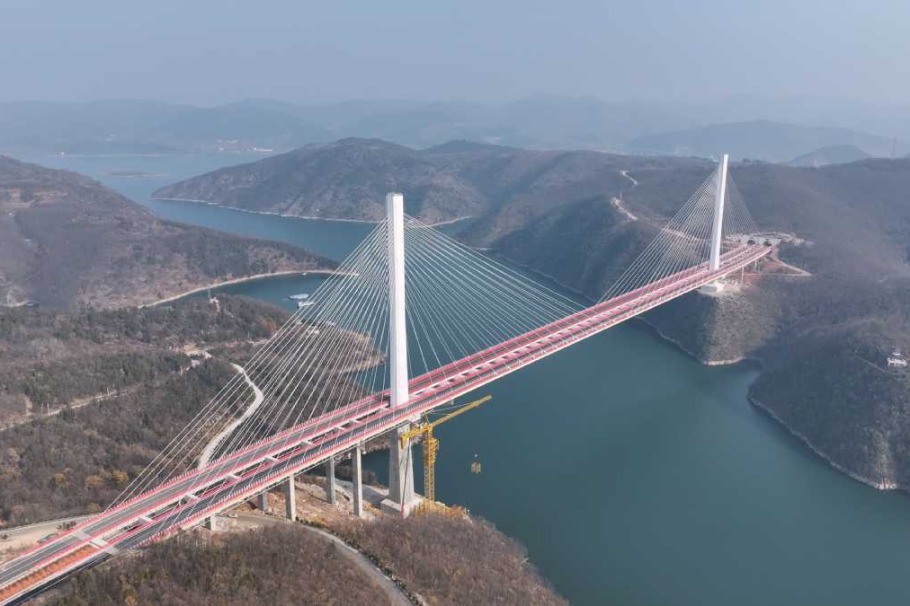
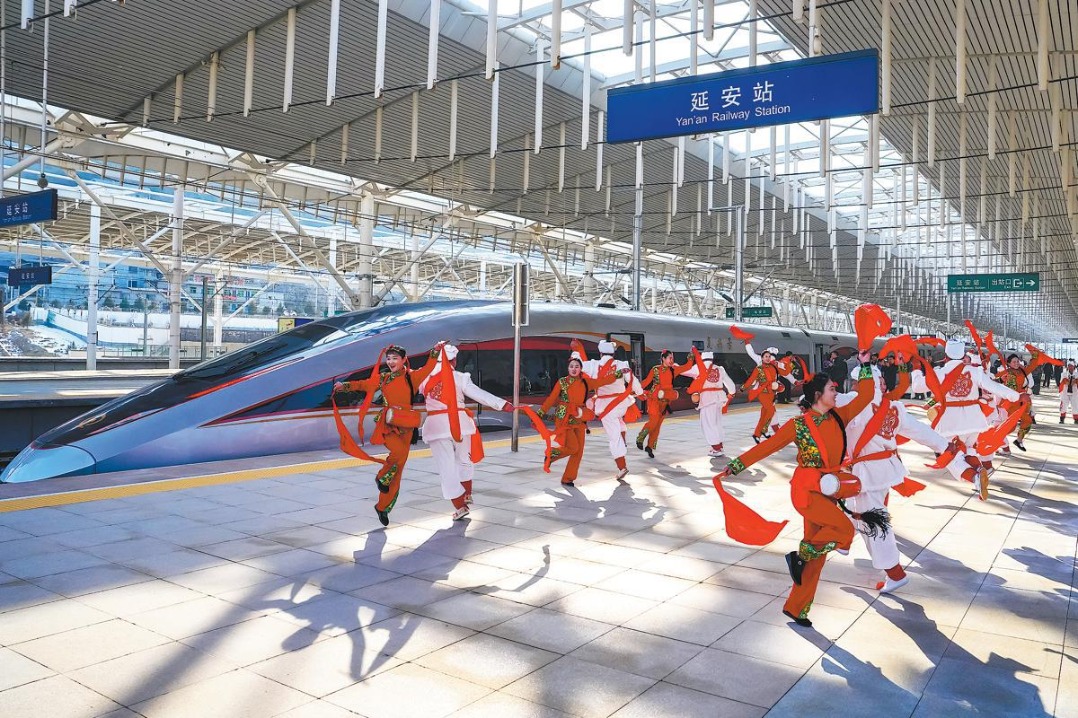
Infrastructure serves as a pillar for economic and social development. Under Xi's leadership, China has made great advances in infrastructure construction, ranging from water conservancy and transportation projects, to information infrastructure, with the overall level improving in leaps and bounds.
Concerned about people's well-being in border areas, Xi urged efforts to advance the construction of the Sichuan-Tibet Railway project with high quality, in an instruction made ahead of the construction of the Ya'an-Nyingchi section of the railway in November 2020.
Describing the project as a vital step in facilitating the Party's general plan for governing Tibet in the new era, he stressed the project's important role in safeguarding national unity, promoting ethnic solidarity and consolidating stability in border areas.
A few months later, aboard a train from Nyingchi Railway Station to the regional capital Lhasa, Xi inspected the construction along the railway and hailed the railway as a major move to boost Tibet's development and improve people's living standards.
With the country's modernization drive high on his agenda, Xi met with the main scientists and project leaders of China's Five-hundred-meter Aperture Spherical Radio Telescope (FAST), the world's largest single-dish radio telescope, during his inspection trip in southwest China's Guizhou Province in February last year.
Noting that the FAST is a major national scientific and technological infrastructure, Xi stressed the importance of science and technology in China's pursuit of building a modern socialist country.
In addition to leveraging infrastructure investment to spur economic growth in the short term, China has also been striving to build technological and digital infrastructure as a part of its long-term goal to optimize the overall economic layout.
As part of the digital information infrastructure, the number of 5G base stations in the country increased by 81,000 during the first quarter of the year, bringing the total to over 1.5 million.
In the country's latest steps to ride the digitalization wave amid a surge of demand for computing capacity, China initiated works earlier this year on a mega project to establish eight national computing hubs and 10 national data center clusters in a bid to improve overall computing power and resource efficiency.
"Computing power has already become an important infrastructure for the national economic development," the NDRC stated on its website, estimating China's demand for computing power to surge by over 20 percent annually in the coming years.
As the Chinese economy enters into its critical stage of transformation and upgrading, a modern infrastructure system with a focus on shoring up weak links and fostering new growth drivers will lay a solid foundation for the country's medium and long-term development, said Fan Ruoying, a researcher with the Bank of China.
Looking ahead, efforts should be made to improve cross-regional and cross-department coordination in organizing infrastructure investment, lift restrictions on market access for private enterprises, and further innovate investment and financing methods, Fan noted.




- 'Separatist fallacy' of Lai Ching-te 'doomed to fail'
- Shanghai Symphony Orchestra rings in the new year
- New power station opens in Shanghai
- Series on Shanghai revolutionary sites airs
- Xu Beihong's horse-themed art exhibition opens in Shanghai
- China has enhanced social safety net: government minister