US plan for anti-China alliance set for failure







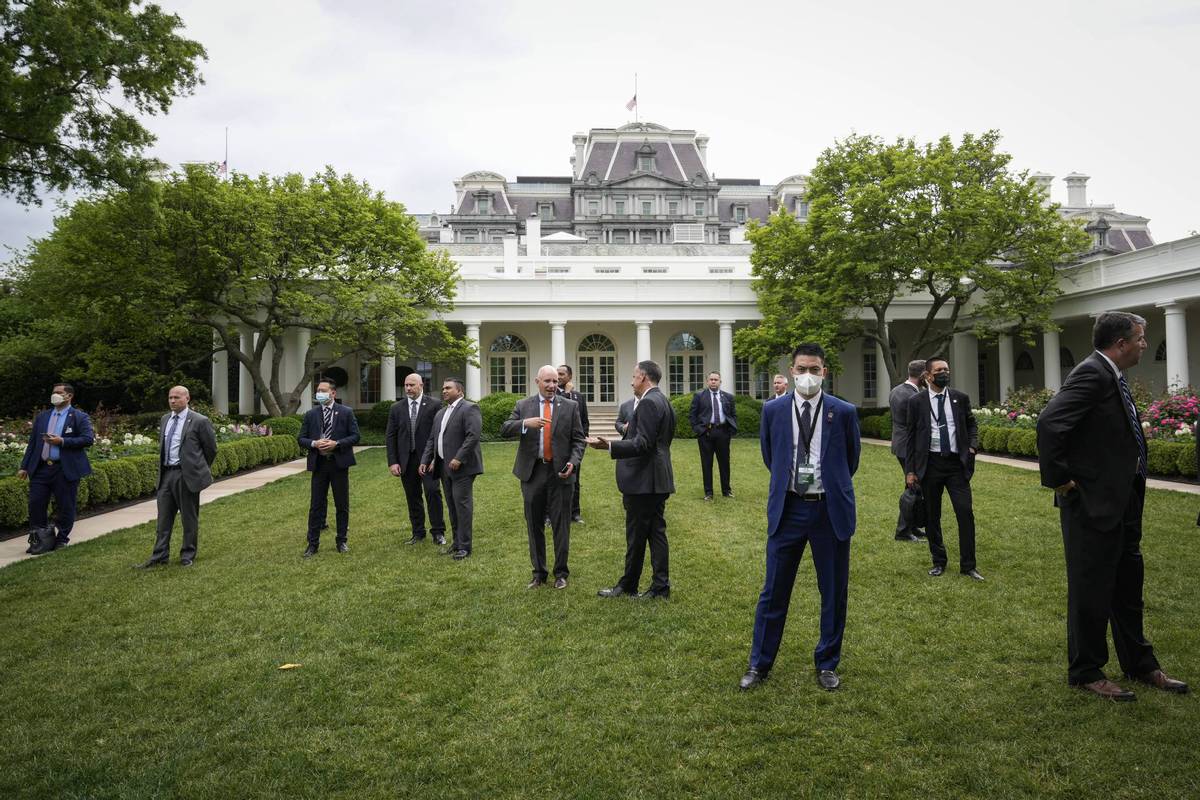
The administration of United States President Joe Biden recently held its long-planned summit in Washington with the leaders of the Association of Southeast Asian Nations.
The meeting had been delayed for several months due to geopolitical factors and the Ukraine crisis, but the White House has insisted that the event was a "priority" to demonstrate the "enduring US commitment to the region".
The US perceives partnerships with Southeast Asian countries as a means of containing the rise of China, pressing those countries to take sides in a struggle against Beijing.
But the reality could not be further removed from what Washington hopes to achieve.
Those who observed last week's summit will be aware that the final joint statement between the US and the ASEAN member states was weak, unsubstantial and unremarkable. This illustrates the strategic ambiguity and nonalignment of the Asian nations in regard to their diplomatic relationships and their clear unwillingness to commit to anti-China causes.
Not only that, such an outcome also demonstrated how the US is unwilling to offer these countries anything in practice despite making hefty geopolitical demands from them.
It was widely reported that the US had pledged to invest $150 million in ASEAN states in order to counter China's influence.
Leaving aside the government, a single Chinese company-Huawei-h(huán)as pledged double that amount for the ASEAN region on its own, with the firm announcing last year a $300 million fund for Southeast Asian technology startups.
In other words, Washington's supposed contribution is paltry and inconsequential.
While the US exerts pressure on Southeast Asian countries to take sides against China, and talks up its commitment to the region, in practice it continues to view the diplomatic relationships as a zero-sum game in its favor, a game that sees making concessions to other nations, in terms of business and trade, as unfavorable to US interests.
These countries only matter to the US to the extent that they can be used to contain China; anything else is perceived as a burden. The US left the Trans-Pacific Partnership and has assumed a policy of apprehension toward free trade at large, yet talks about setting the rules for the Asian region without being willing to engage itself more deeply.
The mindset is absurd. The US expects ASEAN countries to ignore their greatest trading partner and the biggest engine for their domestic growth, and adhere to the demands of another country on the other side of the Pacific that seeks to set the rules while maintaining an exclusionary stance.
And it does all this while throwing billions upon billions of dollars into a military conflict in Europe. This shows how US interests are dictated by that of its military-industrial complex. The US is happy to provide arms and weaponry of every kind to serve the interests of mega arms manufacturers, yet giving money and aid to meet the development needs of other countries, as well as providing market access, is seen as controversial.
As a result, the US does not have a serious or concrete vision to help the ASEAN member states other than to try and dictate things to them from afar. The latest summit was really all about the premise of the US maintaining its hegemonic position in this region and attempting to create divisive Cold War blocs-while actually refusing serious support or assistance to the countries.
In contrast, China has always been more willing, able and ready to offer substantial assistance across the board in its partnership with ASEAN.
All said, last week's summit was underwhelming, even by Washington's own standards, and shows why Biden's foreign policy will ultimately fail in its objectives.
The author is a British political and international relations analyst.