Power of algorithms








Big tech companies in China can play a key role in accelerating the energy transformation
Digital technologies can have an important role to play in helping the country speed up its low-carbon transition. During the health crisis triggered by the COVID-19 pandemic, digital platforms and online activities have been thriving, providing essential services to people. At the same time, fossil fuel consumption and carbon emissions have continued to rise, and the monthly average carbon dioxide levels reached 420 parts per million in April, for the first time on record.
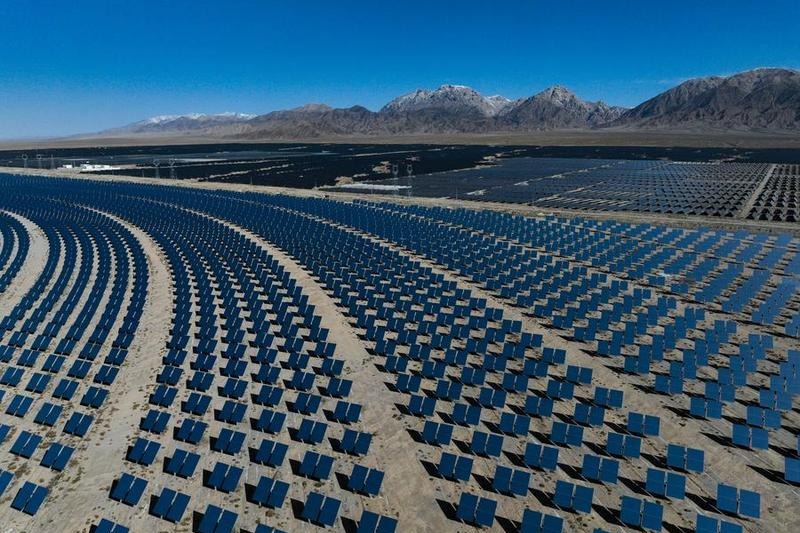
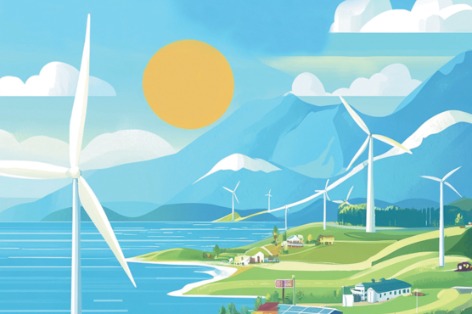
The Chinese government has set a goal of peaking CO2 emissions before 2030 and achieving carbon neutrality before 2060. One of the key pathways to achieve these goals is to develop a new energy system characterized by the large-scale adoption of solar, wind, hydro, geothermal, biomass and ocean energy. By the end of 2020, the installed capacity of renewable energy power generation in China had reached 934 gigawatts, and renewable energy power generation was about 2,200 GWh, accounting for 29 percent of the country's total power generation.
It is expected that the total installed capacity of wind and solar power generation will reach more than 1,200 GW by 2030.
In fact, big tech companies are well placed to support the digitalization of the energy sector. This is because, these big tech companies have the "algorithmic power", their ability to connect hundreds of millions of suppliers and consumers through online digital platforms. With such algorithmic power, big tech companies can help the energy utility companies improve their decision-making, ensure energy supply security and effectively increase the proportion of renewable energy.
For example, Tencent, one of the leading tech companies in China, supported Towngas Energy, a State-owned gas utility turned smart energy service company, to develop a digital energy platform for zero-carbon industrial parks. The platform can measure and collect data including solar photovoltaic, energy storage and charging operations, and realize data visualization, so as to support the intelligent management, analysis, prediction and optimization of energy and carbon flows in industrial parks. The platform will be further expanded to include energy-efficiency management, energy trading, carbon trading and other applications to help industrial parks accelerate their zero carbon development. The case of Tencent and Towngas Energy is a vivid illustration of win-win collaboration between a big tech company and a conventional energy utility in China.
In resource-intensive sectors, major players are also actively using digital technologies to decarbonize their operations. For instance, China Baowu Steel Group, a large steel maker, is working to establish a virtual production line monitoring system with digital technologies, seeking to reduce emissions by significantly optimizing its risk detecting and prevention workflows.
Compared to the conventional energy system, the future energy system can be characterized with decarbonization, decreasing use and decentralization.
Decarbonization implies increasing the use of renewable energy and low-carbon technologies, such as electric vehicles, carbon capture, use and storage and hydrogen energy.
Decreasing the use of energy can be achieved through energy conservation and management across all major energy consuming sectors.
A decentralized energy system is characterized by locating energy production facilities closer to the site of energy consumption (e.g.rooftop solar), which transform the energy flow from a "one-way street "into a multi-directional, multi-lane highway.
For the above to work efficiently and optimally, digitalization is indispensable. Digitalization includes such technologies as artificial intelligence, blockchain, cloud computing, data analytics, the internet of things and digital twins, etc., which will allow the integration of more renewable energies, ensuring network reliability and better managed energy demand.
There are five ways digital technologies can help enable decarbonization.
First, flexible electricity supply. Digital technologies can enable the existing coal-fired power plants to operate more flexibly with less pollution and emissions. With the application of artificial intelligence and machine learning, the coal-fired power plants can change their operational status-offline, online, minimum load, or full load, etc.-as often as needed to accommodate an increasing share of intermittent renewable energy inputs from solar and wind power generation.
Second, predictable solar and wind power. Digital twins of solar or wind power plants can be developed to simulate real-life operation conditions and spot anomalies to prevent potential failure. Further, AI-based models can provide accurate weather forecasts to optimize solar and wind outputs.
Third, reliable electricity grids. As the share of intermittent renewable energy generation increases, the stability of the electricity grids may be affected. In this case, digital technologies can help integrate intermittent solar and wind energy to better match energy demand to times when the sun is shining and the wind is blowing. With deep machine learning and IoT-enabled energy storage and analytics tools, electricity grids become intelligent and flexible. Digital technology applications help reduce line losses and operating costs, and make the grids more resilient to cope with external risks such as natural disasters.
Fourth, responsive electricity demand. Digital technologies can support demand side response and virtual power plants, so businesses can turn up, turn down, or shift electricity demand at times when power is more abundant, affordable and clean. Blockchain technologies can enable households with rooftop solar to become "prosumers" (both consumers and producers of energy), who can sell surplus solar electricity to their neighbors.
Fifth, effective power trading. With the development of a power market, the number of participants on the supply-side and demand-side, as well as the frequency of trade will grow significantly. As such, the processing of massive real-time data should rely on digital platforms to predict user demand, grid load, and the generation capacity of each power source, so as to formulate appropriate trading strategies and optimize power supply from diversified energy sources.
The author is a senior adviser on carbon neutrality strategy of Tencent and the former chief of the Energy Sector Group at the Asian Development Bank. The author contributed this article to China Watch, a think tank powered by China Daily. The views do not necessarily reflect those of China Daily.
Contact the editor at editor@chinawatch.cn