NATO gathering could split Asia into hostile blocs







Participation of Japan, South Korea leaders sends dangerous signal to world, expert says
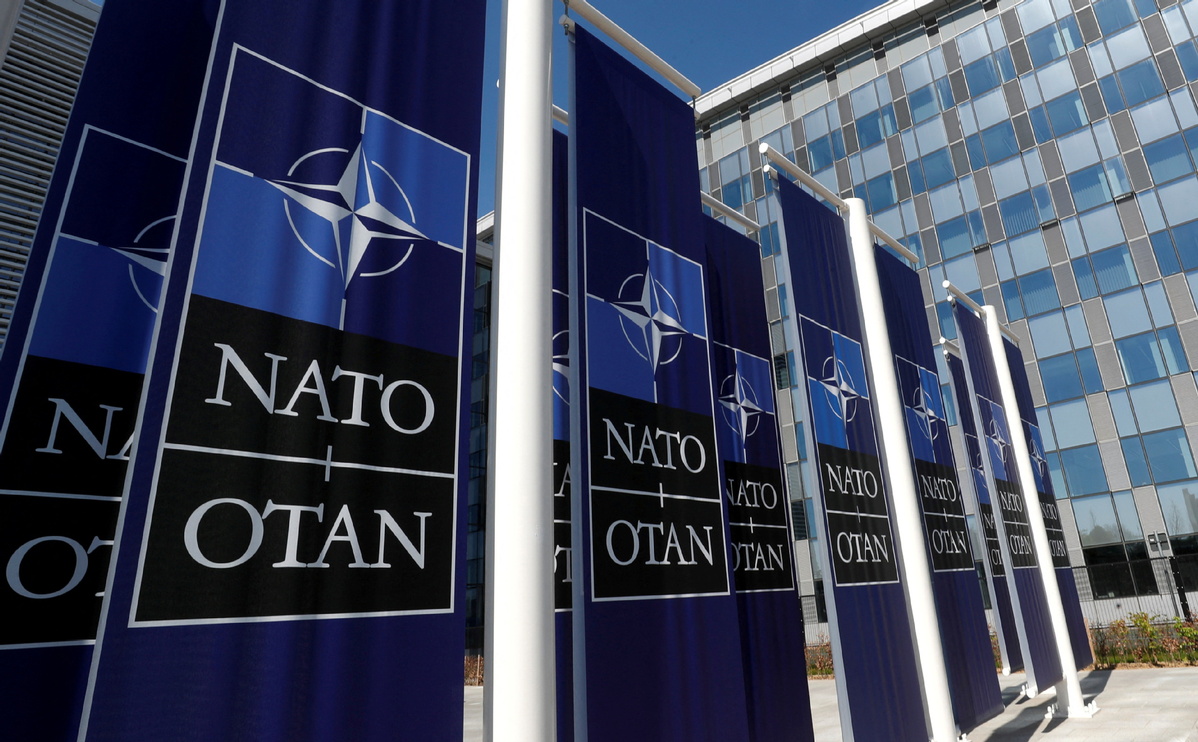
The North Atlantic Treaty Organization's summit in Madrid could be a turning point in Asia's security architecture due to the attendance of Japan and South Korea, as this risks bringing on "a new Cold War, an Asian NATO, or a region split into hostile blocs," security experts said.
"As nonmember states of NATO, Japan and South Korea's participation sends a dangerous signal to the world that NATO, reneging on its promises, seeks to expand its remit beyond a European security mission," said Wang Qi, a researcher of East Asian studies at the Chinese Academy of Social Sciences in Beijing.
NATO's eastward expansion has been blamed as the root cause of the Ukraine crisis, which has no immediate solution in sight and is intensifying.
The first NATO summit attended by the leaders of Japan, South Korea, Australia and New Zealand, even as observers, casts a shadow on the globe and already-worsening geopolitical tensions.
Japanese Prime Minister Fumio Kishida announced on Wednesday that he will attend the 30-nation military alliance's summit in Spain on June 29 and 30, and he highlighted the links between Asia's security and that of Europe. Before Kishida's announcement, South Korea's presidential office confirmed that the nation's new leader, President Yoon Suk-yeol, will also attend the summit.
Given Kishida's thinly disguised accusations leveled against China over a range of issues, including internal affairs, such as the Taiwan question, Wang said Beijing is very concerned about Tokyo's next move. If you add South Korea, whose amicable relations with Beijing are driven by economics, Wang warned that a tilt toward NATO risks upsetting the situation.
Kishida said, "Security in Europe is inseparable from security in the 'Indo-Pacific'."
Over the past few weeks, Kishida had aimed veiled barbs at Beijing when he hosted a summit of the Quadrilateral Security Dialogue of Japan, the United States, Australia and India. In a keynote speech later at the Shangri-La Dialogue in Singapore, he said that he felt a strong sense of foreboding that what is happening in Ukraine today may happen in East Asia tomorrow.
US Defense Secretary Lloyd Austin said at the forum: "We do not seek confrontation or conflict. And we do not seek a new Cold War, an Asian NATO, or a region split into hostile blocs".
However, Beijing was largely unconvinced, with Foreign Ministry spokesman Wang Wenbin saying that the US was "the biggest factor fueling militarization in the Asia-Pacific" and accusing NATO of sending aircraft and warships to carry out military exercises in waters off China's coast.
"NATO has publicly stated on many occasions that it will remain a regional alliance, it does not seek a geopolitical breakthrough and it does not seek to expand to other regions. However, some NATO member states keep sending aircraft and warships to carry out military exercises in waters off China's coast, creating tensions and disputes," Wang said at a news conference.
"NATO has been transgressing in regions and fields and clamoring for a new Cold War of bloc confrontation. This gives ample reason for high vigilance and firm opposition from the international community."
Wang Qi, the CASS researcher, said that what Austin insisted is exactly what NATO risks by expanding its remit into Asia and that what is happening in Ukraine is what Kishida wants to happen in East Asia.
"Apparently, inviting NATO to step into the Asia-Pacific region solidifies Japan's role as the foremost leader in regional geopolitics. Likewise, it gives Japan a greater presence in European policy. But... (beyond) this, Japan wants to achieve its great power ambitions-creating tension and trouble in the peaceful Asia Pacific region so that it can legitimize its longtime ambition to develop military force and push for an amendment of its pacifist Constitution," she said.
As a result, Japan has promised to boost defense spending to 2 percent of its GDP, in line with NATO targets, and has been stepping up military cooperation with the transatlantic group in remarkable ways with back-to-back engagements, she added.
During a meeting with NATO Military Committee chief Rob Bauer this month, Japanese Defense Minister Nobuo Kishi said Japan hopes to strengthen its ties with European countries and welcomes NATO's expanded involvement in the Asia-Pacific region.
Wang Guangtao, an associate professor at the Center for Japanese Studies of Fudan University, said that Japan kept increasing its defense budget to turn itself into a strong military power. That is causing suspicion that an Asia-Pacific version of NATO could emerge in which Japan would like to play a large role.
In an article published in the People's Liberation Army Daily on Friday, Guo Ruobing, president of the National Security College of the National Defense University of China' s PLA, said the US has stated it does not aim to create "an Asian NATO", but it has deliberately played up the issues of the Korean Peninsula, the East China Sea, the Taiwan Straits and the South China Sea.
By strengthening military alliances, Guo wrote, "The US' fundamental purpose is to create tension in the region and mobilize its allies and partners to build a small anti-China clique".
Doug Bandow, a senior fellow at the Cato Institute in Washington, also opposes the initiative. "These are foolish diversions. Europeans should focus on defending Europe," he said on Thursday.
Kishida might hope to win points with US President Joe Biden's administration. But more important is fulfilling the ruling US Democratic Party's promotion of increased military outlays, which requires building domestic political support for a more active role in defending East Asian Pacific waters, wrote Bandow, who was also a special assistant to former US president Ronald Reagan.
Masanari Koike, a former member of Japan's House of Representatives, believes Japan's further involvement in NATO is not possible.
"NATO is the security alliance with an idea of collective self-defense, which the Japanese constitution basically prohibits," Koike said.
Contact the writers at wangxu@chinadaily.com.cn