Bioeconomy becomes burgeoning force







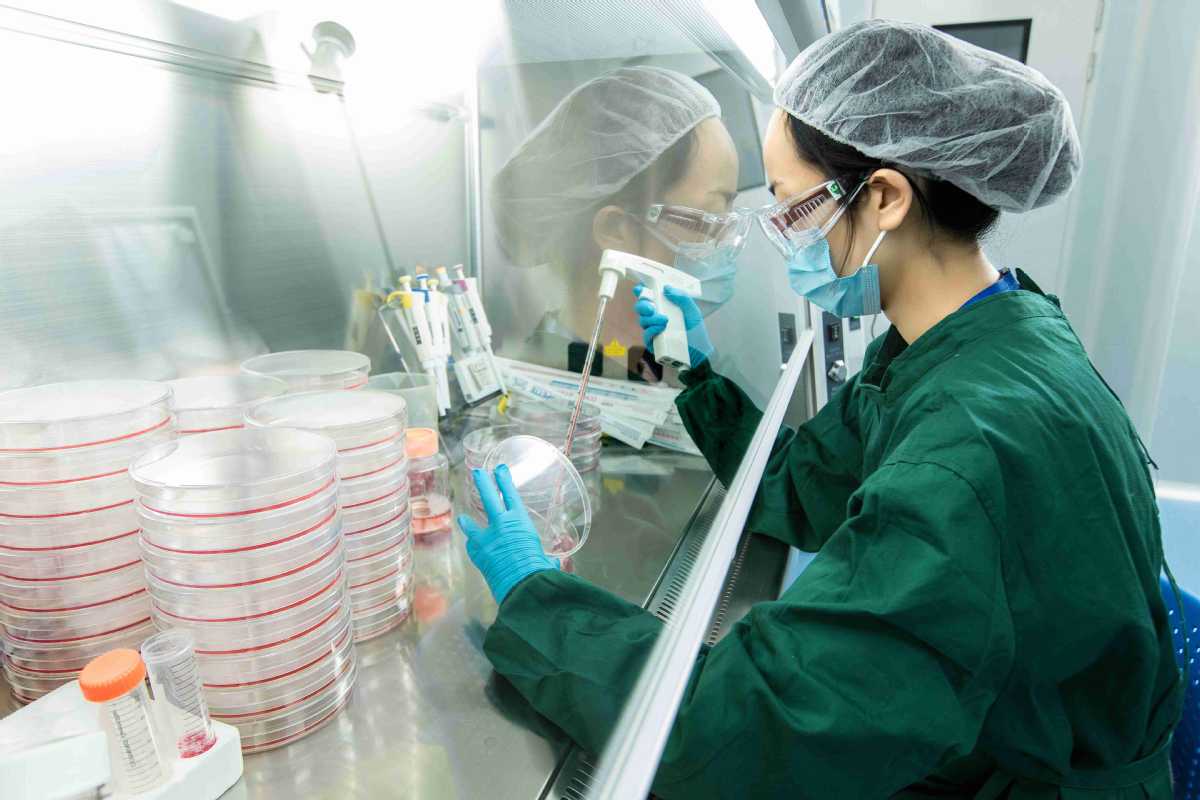
National plans help drive rapid advances in growing sector
China is betting big on the bioeconomy, with intensified efforts to invest in and expand its capabilities in the area.
The country sees rising potential in the burgeoning sector, which is predicted to be worth 22 trillion yuan ($3.28 trillion) in 2025, said Bai Jingyu, director of the innovation-driven development center of the National Development and Reform Commission.
Officials, experts and business executives said innovative development in life sciences and biotechnology is spurring rapid growth in medicine, health, agriculture, energy and other sectors of the Chinese economy.
This activity-collectively referred to as the bioeconomy-is expected to inject new impetus into the economy and foster green, low-carbon and high-quality development, creating new business opportunities for global stakeholders.
Given the huge shocks produced by the COVID-19 pandemic, governments and large biopharmaceutical companies across the world have increased their investment in biosecurity, vaccines and medical research and development, driving rapid development of the sector.
Given the growth potential, China has been accelerating the push to spur technological innovation and industrial development in the sector, aiming to gain a competitive edge globally.
China's top economic regulator unveiled a new plan in May to spur the bioeconomy during the 14th Five-Year Plan period (2021-25). It aims to meet rising domestic demand for healthcare and better lives, foster high-quality economic development, prevent and control biosecurity risks and modernize China's system and capacity for governance during the period.
The NDRC said in a statement that the new plan is in line with the requirements of the 14th Five-Year Plan, which pledges to promote innovation and the integration of biological and information technology as well as accelerate the development of biomedicine, biological breeding techniques, biomaterials, bioenergy and other industries to enhance the sector in scope and strength.
Under the plan, the bioeconomy-a model focusing on protecting and using biological resources and deeply integrating medicine, healthcare, agriculture, forestry, energy, environmental protection, materials and other sectors-will become a key driving force to boost high-quality development by 2025.
By then, the proportion of the bioeconomy's added value to GDP is expected to steadily increase. China is expected to witness a significant rise in the number of enterprises engaged in the bioeconomy, with annual revenue of at least 10 billion yuan each.
By 2035, China aims to be at the forefront globally in terms of the comprehensive strength of its bioeconomy.
Xu Tao, an academician at the Chinese Academy of Sciences, called the bioeconomy a new economic model fueled by the development and application of life sciences and biotechnologies. As it boosts the national economy, it will also help build the modern industrial system and safeguard people's health and well-being.
"The plan will inject new impetus to China's bioeconomy growth, including fields such as early tumor detection," said Oscar Zhang, a principal at Qiming Venture Partners.
The incidence of cancer is associated with aging, and early intervention following early detection will reduce mortality and financial costs for patients, he said. The plan has promoted the incorporation of advanced technologies such as genetic testing, for example, into disease prevention, he said. It also encourages early screening for major diseases to make treatment more effective.
The firm has invested in Berry Oncology, a domestic company specializing in genomic testing and early cancer screening, and it is very optimistic about the company's prospects.
Berry Oncology recently announced the launch of an innovative multi-cancer screening product based on its proprietary technology. "With one single test, the product can accurately detect six high-risk and high-incidence cancers in China," including lung, esophageal, gastric, liver, pancreatic and colorectal cancers, the company said in a recent statement.
Tian Shilin, chief scientist at global genomic services and products provider Novogene, said, "The development of some core bioeconomy technologies is progressing and gradually forming industrial-scale applications, such as crop molecular breeding." Crops made with molecular breeding use genetic engineering to evaluate gene function, but they are not classified as genetically modified since the first step in their development is pollination.
"The release of the plan will bring more attention to the bioeconomy, igniting further discussions and action at industrial levels," Tian said.