BRI: A path to fulfilling dreams







Young people put proposals on table that bring initiative's goals within reach
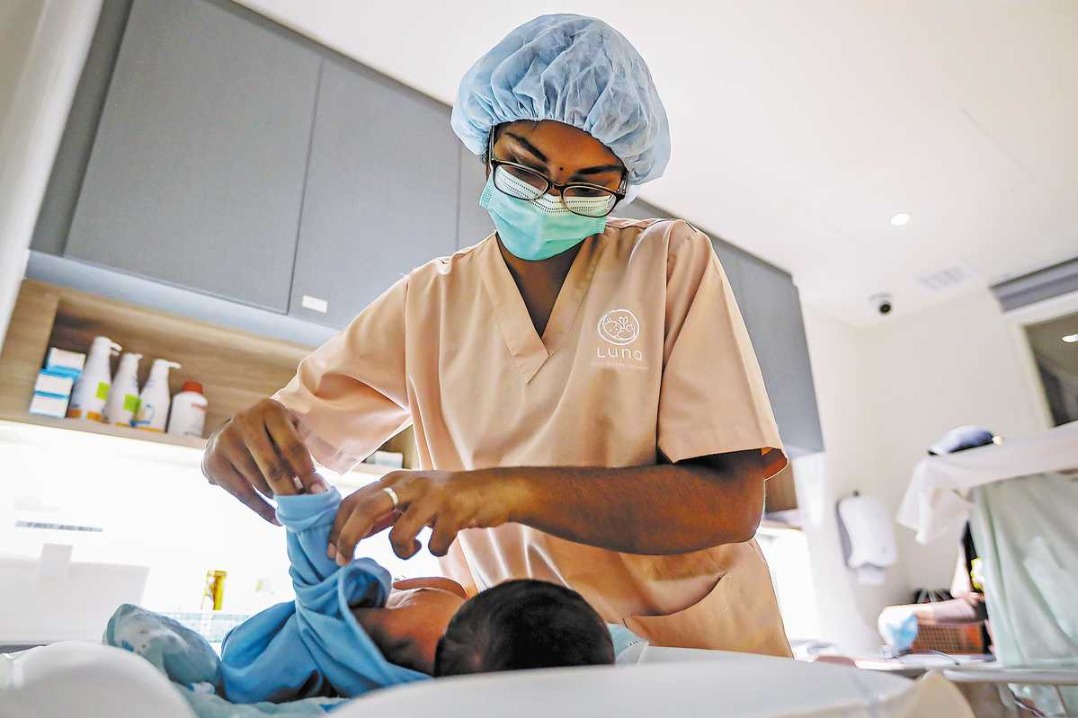
Misbahul Ferdous has a dream: for people in all developing countries to be able to enjoy good healthcare facilities, technologies and services, and a tool he is using to try to bring that to fruition is the Belt and Road Initiative.
Ferdous, 38, is a Bangladeshi doctor in Fuwai Hospital, Chinese Academy of Medical Sciences and Peking Union Medical College. He is working on building a resource-sharing platform for medical institutions in countries involved in the BRI.
The platform aims to strengthen exchanges on diagnosis and treatment technologies, academic discussions, training for young doctors and sharing of telemedicine services. More than 30 hospitals in 10 BRI countries have expressed interest in taking part in the project, he said.
Ferdous, who gained a PhD degree at Shandong University School of Medicine in 2017, started his career at the Fuwai Hospital. Over the years he has taken part in many health collaboration programs in countries involved in the BRI, including Bangladesh, Egypt, Indonesia, Malaysia, Nepal, Saudi Arabia, Thailand and the United Arab Emirates.
This experience and the pandemic have inspired him to develop a platform that could help doctors in BRI countries work together to deal with post-COVID-19 symptoms and prevent similar health crises, he said.
"The pandemic is a global health crisis that needs joint efforts, especially for developing countries that lack medical facilities and enough doctors, but we lack those joint efforts now. The BRI has helped implement many projects that improve people's lives, and I believe that under the BRI mechanism we could strengthen healthcare collaboration and improve healthcare situations in developing countries."
Ferdous' proposal is one of more than 100 project proposals from global young people in the Wise-Demo Campaign 2022 of the Global Young Leaders Dialogue. The event was co-organized by the Academy of Contemporary China and World Studies and the Center for China and Globalization.
Ten project proposals were selected as the best ones on Friday and will receive support from the academy and others to put their proposals into action. Of various global issues that young people are concerned about, the BRI has stood out.
"I think it is because the BRI is concrete and realistic," said Yu Yunquan, president of the Academy of Contemporary China and World Studies. "It has brought tangible benefits to participating countries and created real development opportunities for the youth of all countries."
Since the BRI was initiated nine years ago many young people worldwide have taken part in exchange activities related to BRI. They have felt the tremendous changes the BRI has brought to the world, Yu said.
China has signed more than 200 collaboration documents with 149 countries and 32 international organizations, according to official figures. By May, China's trade in goods with countries involved in the BRI totaled $11.8 trillion, and its nonfinancial direct investment in these countries exceeded $140 billion.
Ehizuelen Michael Mitchell Omoruyi, executive director of the Center for Nigerian Studies at the Institute of African Studies at Zhejiang Normal University, has been following the BRI, and his proposal is to verify through various data and cases that the BRI is a "growth tool to solving global problems" and presents an opportunity for African countries to gain development dividends through infrastructure financing, increase foreign investment, expand trade and ultimately reduce poverty.
Enormous opportunity
Over the past 20 years China's lucrative economic investment package, flexible political approach and focused big-ticket development projects under the BRI have provided an enormous opportunity to African countries, he said.
He cited a report by the consulting firm Deloitte that says China has completed or is building projects in the continent that will help to add and upgrade about 30,000 kilometers of highways, 2,000 km of railways, 85 million metric tons a year of port capacity, more than 9 million metric tons a day of clean water treatment capacity, about 20,000 MW of power generation capacity and more than 30,000 km of transmission and transformation lines.
Western countries have said the BRI is creating a debt trap in Africa, he said, but "considering the actual situation of African countries, since 2000 China has made nine commitments to cancel the debts of borrowing countries".
In cases of failing to pay their debts on time, China has offered a variety of debt restructuring options to help African countries tide over their difficulties, he said.
"BRI finances are not a debt trap that nations may fall into, but through the BRI finances African nations are getting out of the trap of no development."
Yu of the Academy of Contemporary China and World Studies said young people are more willing to take part in and contribute to global development, and they find many areas of global development attractive, especially education, climate change and international collaboration.
Mostak Ahamed Galib, director of cross-cultural communication and the BRI research center at the Wuhan University of Technology, is now working on a series of short-video programs to explore success stories among BRI countries in promoting global development, and in science and technology, economics, infrastructure construction and other fields.
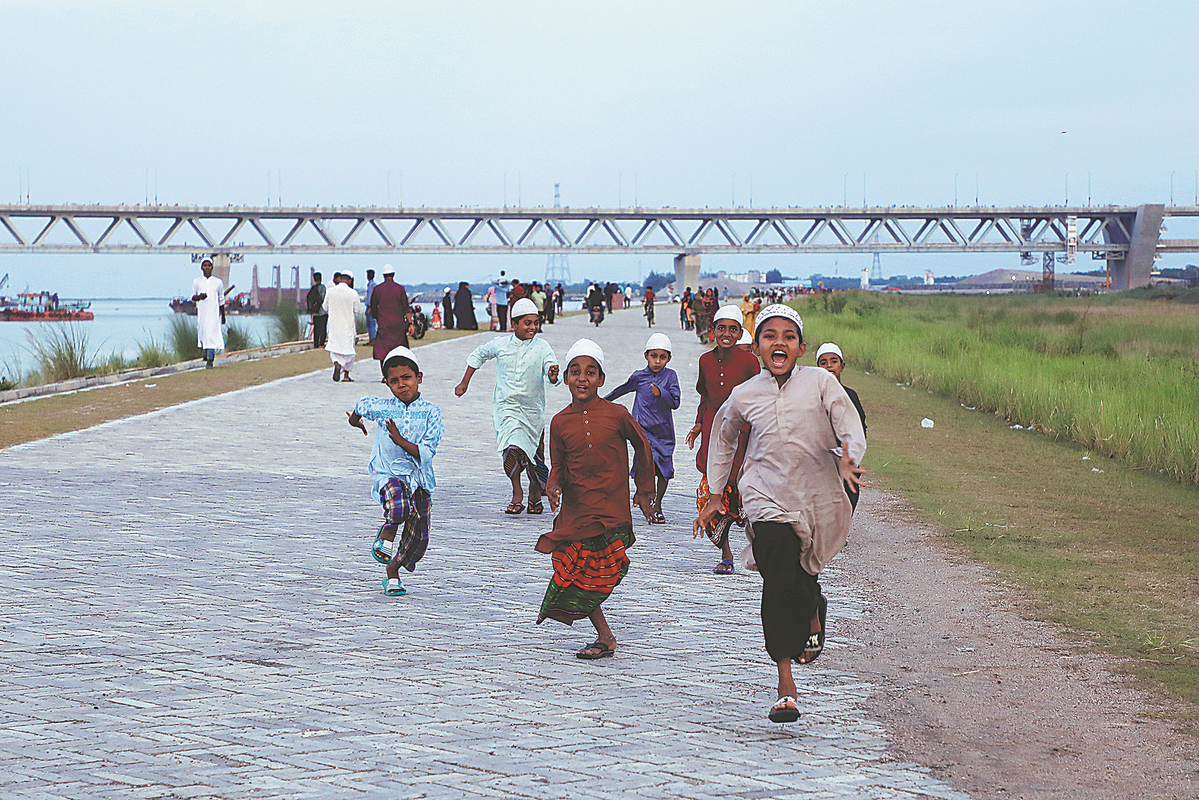
One of his videos tells the story of the China-built Padma Multipurpose Bridge in Bangladesh, which opened to the public last month, cutting travel times from parts of the southwest of the country to the capital Dhaka from seven to eight hours to as little as 10 minutes.
The 21.5-meter-wide, 6.15-kilometer-long bridge built over the Padma River will raise Bangladesh's GDP by more than 1 percent a year, benefiting about 30 million people in 21 southwestern districts of the country, said Fahmida Khatun, executive director of the Centre for Policy Dialogue, a think tank in Dhaka.
Galib said he wanted to record the friendly stories that the Padma bridge has carried between Chinese and Bangladeshis.
Galib, who has lived in Wuhan for 20 years, said that every time he walked near the Yangtze River Bridge in the city, he had thought it would be great if a bridge like that could be built over the Padma River in his hometown.
"Now my dream has come true."