Vital clues shed light on avian migration routes







Stopover sites
It was widely believed that Beijing Swifts migrated directly to destinations without stopping, but the research results showed otherwise.
Swifts typically travel more than 250 km on average each day. They are considered to have reached a stopover site if they do not travel any farther than 500 km for at least three days, the study found.
Liu said: "The Beijing Swifts visited two to six stopover sites during their autumn migration, while remaining at one or two such sites in the spring migration, according to the observed data. We presume the birds spend more time accumulating fat reserves or flying locally during their time at stopovers so that they can manage a long migration."
The three main stopovers for the Beijing Swift are the Congo Basin and its surrounding areas, the southwestern coast of the Red Sea, and the Caspian Sea's southern coast.
Ancient buildings
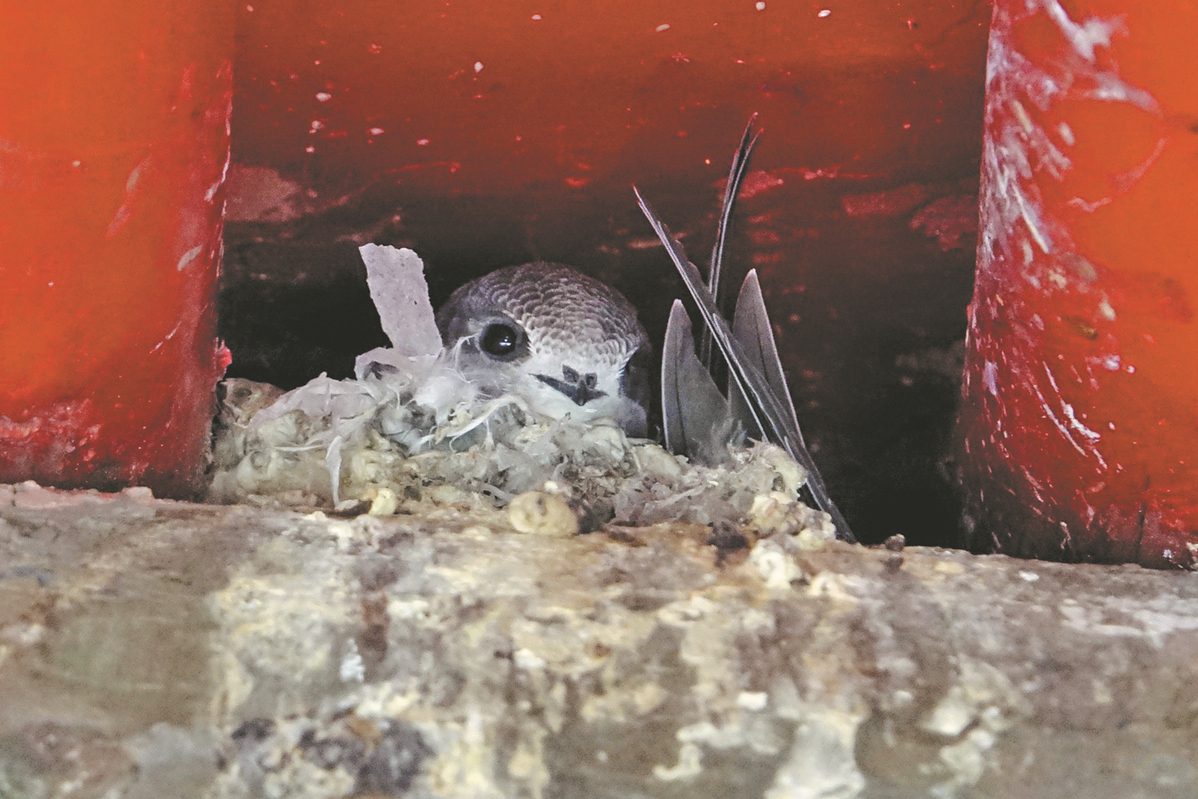
In spring, flocks of Beijing Swifts hover in the sky over the capital. They nest in the city's ancient buildings, including the Beihai Park pavilion, the Palace Museum and the city's ancient gates.
The birds have four short, forward-facing claws. To become airborne, they extend their wings to the full, retracting their claws in flight.
Zhao, the ornithologist, said: "This species flies nearly all its life, except during the breeding season. The swifts' forward-facing claws are suitable for clinging to cracks in cliffs and gaps in ancient buildings and walls.
"In Beijing, the roofs of ancient architecture provide ideal wooden perches for the birds, which they prefer due to the layer of thermal insulation that exists in wooden structures."
In 1870, the Beijing Swift was first observed in the capital by British naturalist Robert Swinhoe, before becoming a symbol of the city's avian diversity.
In recent years, surveys on the birds' numbers carried out by the Beijing Wildlife Rescue and Rehabilitation Center indicated that their nesting locations were increasing, with the swifts showing a preference for nesting in tall buildings.
Shi Yang, director of the center's wildlife rescue department, said the birds now nest widely across the capital, while in 2008, they were only found at 40 nesting locations.
Zhao said artificial nesting boxes should be provided for the birds at suitable locations throughout Beijing, and sounds of them chirping should be broadcast near artificial caves to encourage the birds to build nests.