


Dawn of civilization rises from a red mountain








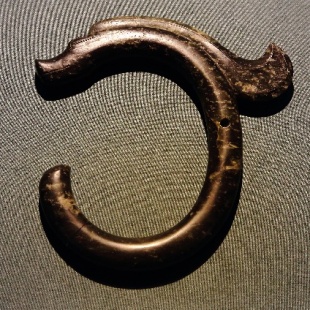
In Chifeng, a city in the southeast of the Inner Mongolia autonomous region, the image of a C-shaped dragon is almost ubiquitous: by the exits of railway stations, on shop posters, and even as decorations on the desserts in bakeries.
That 5,000-year-old jade dragon, found in Chifeng in 1971, is probably one of the best-recognized prehistoric cultural relics among the Chinese general public. In the hearts of people in Chifeng, its status is sublime.
Excavated by a hill named Hongshan (meaning "the red mountain" after the color of its rocks) in Chifeng in the 1930s, a brilliant Neolithic culture renowned for its exquisite jades was uncovered. In 1954, it was formally named Hongshan Culture.
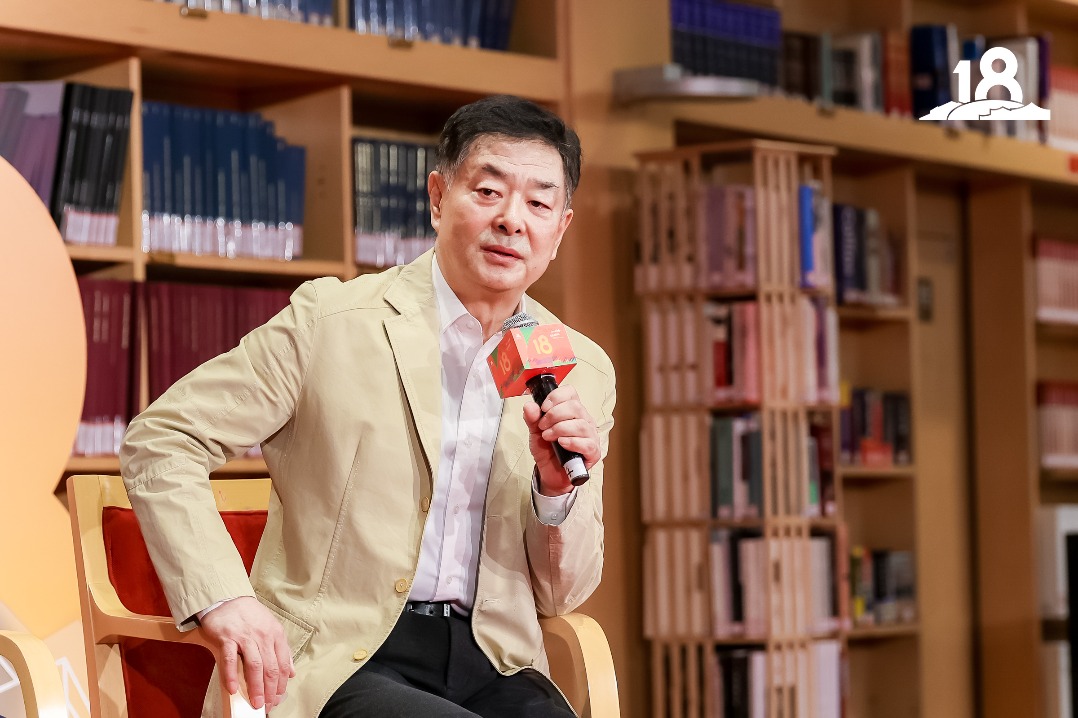
Since then, generations of Chinese archaeologists have worked to further unveil this culture, highlighting rituals with clear and marked divisions among social classes, which, in their eyes, indicated the appearance of civilization. As a native of Chifeng, veteran archaeologist Liu Guoxiang has spent decades rebuilding the distant past of his beloved homeland.
"From 5,500 to 5,000 years ago, Hongshan Culture entered its boom period, when dramatic changes happened in its society," says Liu, a researcher with the Institute of Archaeology, the Chinese Academy of Social Sciences. "Its belief system and sacrificial rituals were well established, which were especially marked by worship for the heaven and the earth, ancestors and the dragon totem."
In Chaoyang, a neighboring city in the west of Liaoning province, discovery of the Niuheliang site in 1983 is a milestone in the study of Hongshan Culture. Starting from a "goddess temple", a supersized center of religious belief and ceremony has gradually been revealed by the shovels of archaeologists.
In spite of its significance, Niuheliang is just a part of a wider spectrum, and the social stratification of Hongshan Culture is not only reflected through this individual site, but can also be seen over a much larger geographic region.
For example, from the approximately 5,000-year-old Banlashan site, also in Chaoyang, about 80 kilometers away from Niuheliang, an altar on a smaller scale, and 78 graves of a lower status than those uncovered at Niuheliang, with jade burial objects, have been unearthed in the past decade.
According to Xiong Zenglong, a professor at Jinan University in Guangzhou, Guangdong province, and who once hosted the excavation, the number of graves in Banlashan tops that of all known sites related to Hongshan Culture, and the site appears to be a subcenter of sacrifices and ceremonies.
Several other key ceremonial hubs of various tiers were also discovered in the wider region, like those at the Hutougou and Dongshanzui sites, also in Liaoning, to jointly portray a massive hierarchy of beliefs.
However, so many discoveries of religious sites also make people wonder: Where did those priests and pilgrims live?
"Thanks to Hongshan, we began to realize that the dawn of Chinese civilization was like a starry night, where various cultures shone in different regions of present-day China," says Wang Wei, a researcher at the Chinese Academy of Social Sciences' Academic Division of History and the leading expert in the national program to trace the origins of Chinese civilization.
"But our knowledge of society in Hongshan Culture will be limited if we only get materials related to its ceremonial centers," Wang says. "We have to look for the large-scale settlements whose levels equal Niuheliang, and even 'capital cities', in order to gain a complete chain of evidence."
Some achievements have been made in the search for Hongshan "cities". At the Weijiawopu site in the east of Chifeng, for instance, the foundations of more than 110 houses were found among the settlement ruins, which were surrounded by a moat. Similar settlements were also found at the Ma'anqiaoshan site in Chaoyang.
A bigger surprise may be hidden at the Nasitai site in the north of Chifeng. According to Liu, this site is estimated to spread across at least 1.5 square kilometers, and was probably a metropolis of the time, the status of which may be on par with Niuheliang, though detailed archaeological excavations have not yet begun.
"Its splendor may be even beyond our expectation," Liu says. "There's a possibility that this is where Hongshan's rulers lived. The landscape surrounding the site has hardly changed in the past millennia. Standing on the hill, you may be seeing the grand picture of a 5,000-year civilization in a single glance."
Many mysteries of Hongshan Culture still await clarification, but many of its legacies can be firmly felt by today's Chinese people, perhaps, like the emphasis of rituals, a love of jade, and the exceptional status of the dragon.
For Jia Xiaobing, a researcher with the Institute of Archaeology, CASS, who now hosts excavations at the Niuheliang site, Hongshan Culture can provide key inspiration to the modern world.
"Sharing the same cultural identity and ritual system, the inclusive society of Hongshan also demonstrated diversity," he explains. "That culture was an active participant in a network of communication, which reminds us of the importance of mutual learning among civilizations to achieve common prosperity."
Wang Kaihao in Chifeng, Inner Mongolia.