Nations benefit from China's help on a number of fronts








China has always supported Pacific island countries, serving as an important development partner, whether it be in the cultivation of Juncao-an economical and environmentally friendly substitute for timber-or building much-needed hospitals and schools.
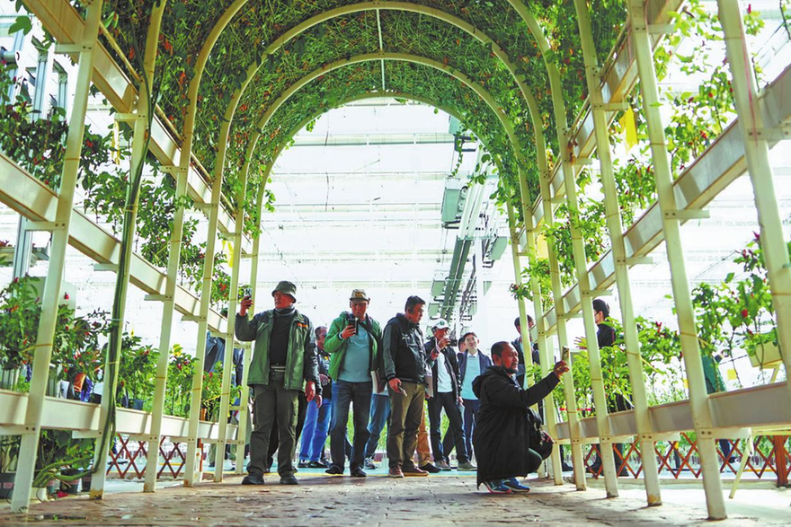
Juncao, known as "magic grass "and discovered by Chinese scientists, can also be used to grow mushrooms. This technology was invented in the 1980s by Lin Zhanxi, a professor at Fujian Agriculture and Forestry University.
According to the UN, Juncao's real power stems from how it is used in a broader social context such as poverty eradication, clean energy, and other targets listed in the UN's 2030 Agenda for Sustainable Development.
Juncao was introduced into Papua New Guinea from China in 1997.Since the first China-aided Juncao technology demonstration base overseas was established in Papua New Guinea in 2000, the technology has been put to use in more than 100 countries.
In 2018, when President Xi Jinping visited Papua New Guinea, Juncao was forecast to lift 30,000 local people out of poverty in the next five years. During his visit, the two countries agreed on another aid project using the technology-a day ahead of the Asia-Pacific Economic Cooperation Leaders' Meeting in Papua New Guinea.
Just one year before Xi's visit, the Juncao grass yield in Papua New Guinea set a world record of 854 metric tons per hectare, sufficient to feed 400 to 500 sheep or help grow 100 tons of fresh mushrooms.
In a congratulatory letter to the Forum on the 20th Anniversary of Juncao Assistance and Sustainable Development Cooperation, held in Beijing last year, Xi said, "I have long cared about international cooperation on Juncao technology."
Lin Zhanxi is chief scientist for the China-Fiji Juncao Technology Cooperation Project, which was launched in 2014 after the two nations' governments signed an agreement to start agricultural cooperation.
China's Juncao project has benefited Fiji during the eight years it has been introduced to the Pacific island nation, Fijian officials and farmers said.
Juncao became popularly known in Fiji as "the happy grass from China" after the project's two phases proved a resounding success. A third phase is due to be implemented.
Lin Zhansen, head of the team of Chinese experts based in Nadi, Fiji's third-largest city, said that by early June, more than 40 officials and technicians from Fiji had been sent for training in Fujian province.
Tagiyaco Vakaloloma, 28, a senior technical assistant for mushroom research and development at the Fijian Ministry of Agriculture, hailed the Juncao project and expressed gratitude to China. "The project has benefited our people's livelihoods and also produced cattle feed," Vakaloloma told Xinhua News Agency.
Hospitals are another significant contribution made by China to the development of Pacific island nations.
On June 20, China handed over a new hospital in Enga province to the government of Papua New Guinea. The modern facility will help improve medical services for people in the province.
Speaking at the handover ceremony in Wabag, the provincial capital, Papua New Guinea's Prime Minister James Marape thanked China for its support for the high-quality project, adding that his government is willing to deepen collaboration with Beijing in all areas, Xinhua reported.
Peter Ipatas, governor of Enga, said it had been a dream for local people and all of Papua New Guinea to have a medical center with advanced technologies, and thanks to China's help, the dream had come true.
Zeng Fanhua, China's ambassador to Papua New Guinea, described the project as the latest example of bilateral collaboration on health and said such collaboration demonstrates friendship as well as mutual support and trust.
The first Confucius Institute in Papua New Guinea was inaugurated on Feb 20 last year. The program, which has about 300 students, is run by Papua New Guinea University of Technology in cooperation with Chongqing Normal University.
When it opened, the Confucius Institute was hailed as a milestone in education and people-to-people exchanges between China and Papua New Guinea.
The University of the South Pacific, or USP, in Fiji also has a Confucius Institute aimed at promoting Chinese-language skills in the region, particularly in the business and government sectors.
The joint venture project between USP and Beijing University of Posts and Telecommunications was launched in 2012, with more than 4,000 students completing Chinese-language courses since its inception.
Xinhua News Agency contributed to this story.
Contact the writers at vivienxu@chinadailyapac.com