China denounces 'debt trap' accusation as a lie







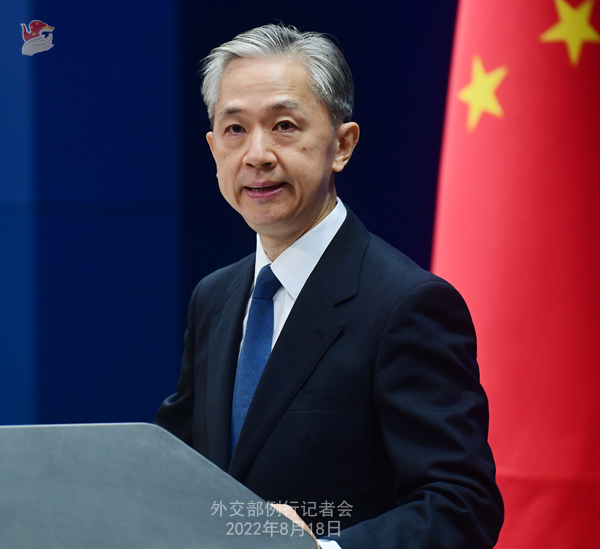
BEIJING - The so-called "Chinese debt trap" is a lie made up by the United States and some other Western countries to deflect responsibility and blame, Chinese Foreign Ministry Spokesperson Wang Wenbin said on Thursday.
"Their allegation against China is simply untenable," Wang said in response to the accusation made by U.S. Secretary of State Antony Blinken during his visit to Africa.
Wang said developing countries mainly borrow from commercial and multilateral lenders. According to the World Bank's International Debt Statistics, by the end of 2020, commercial and multilateral creditors accounted for 40 percent and 34 percent respectively for the public external debt of 82 low-income and lower middle-income countries.
Bilateral official creditors took up 26 percent and China less than 10 percent, said Wang.
He said that, in recent years, developing countries have mainly borrowed their new debts from Western commercial creditors and multilateral institutions. According to World Bank statistics, between 2015 and 2020, commercial, multilateral and bilateral official debts accounted for 42 percent, 35 percent and 23 percent respectively of the 475.2-billion-dollar new public external debt of low-income and lower middle-income countries.
Most of the commercial debts, or 39 percent of the total new debts, are financed by sovereign bonds in the international financial market. A research by Eurodad on 31 key indebted countries found that 95 percent of the countries' sovereign bonds were held by Western financial institutions, Wang said.
He stressed that the developing countries' medium- to long-term debt payment mainly flowed to Western commercial creditors and multilateral institutions.
According to World Bank estimates, low-income and lower middle-income countries have to make 940 billion U.S. dollars worth of principal and interest repayments in the next seven years, including 356.6 billion U.S. dollars to Western commercial creditors and 273 billion U.S. dollars to multilateral institutions, 67 percent of the total payments due. Only 14 percent of their total payments, or 130.8 billion U.S. dollars, will go to the Chinese government and commercial institutions.
They will have to pay, more than 300 billion U.S. dollars to sovereign bond holders, most of which are Western financial institutions, who are clearly the biggest source of debt service pressure for the borrowing countries, said Wang.
He said that it is much more expensive to borrow from Western commercial creditors than from China. Take Africa as an example, according to the estimates of the UK's Debt Justice based on World Bank data, the interest rates of China's official and commercial loans to African countries are lower than the interest rate (of 5 percent) on commercial loans from other countries. They are also far lower than the interest rates (of 4-10 percent) on the 10-year government bonds, according to the numbers disclosed by the African Development Bank.
Besides, the sovereign loans provided by China come with a fixed interest rate, while Western commercial creditors often apply fluctuating interest rate. As the U.S. dollar enters its rate hike cycle, the debtor countries are facing growing pressure on repayment, Wang said.
The spokesperson pointed out that Western commercial creditors and multilateral institutions have been absent from the global debt relief and service suspension effort.
China has been implementing the G20 Debt Service Suspension Initiative and the biggest contributor to the effort. By contrast, Western commercial creditors and multilateral institutions, who hold the biggest share of debts, claimed they need to maintain their credit rating and have thus refused to be part of the effort and failed to make proportionate contributions to relieving the debt burden of developing countries, Wang added.
"When certain politicians and media in the U.S. and some other Western countries hype up the so-called 'Chinese debt trap' despite those facts, their real aim is to create a narrative trap to sow discord between China and other developing countries, impede their cooperation and disrupt the growth of developing countries," Wang said.
"But the developing countries and people with insight from the rest of the international community will not fall for this," he said.