Xinjiang overcomes terrorism, prospers







Editor's note:China has seen tremendous changes nationwide, from economic growth to environmental protection, from social improvement to cultural progress. In this series, China Daily maps the changes and tells the stories of the people who lived through them.
Once inundated by extremism and poverty, region has come on strong economically to become magnet for tourists
After successfully curbing terrorist and extremist activities that once posed serious threats to society over the past decade, the Xinjiang Uygur autonomous region is now in better shape than it has ever been to boost its development. For a number of years, Xinjiang suffered from the combined impact of ethnic separatists, religious extremists and violent terrorists, and it was plagued by frequent terrorist attacks. As a result, people lived in constant fear.
Such concerns have been alleviated as the overall situation in the region has markedly improved since the Communist Party of China Central Committee developed governance policies for Xinjiang after the 18th CPC National Congress in 2012.
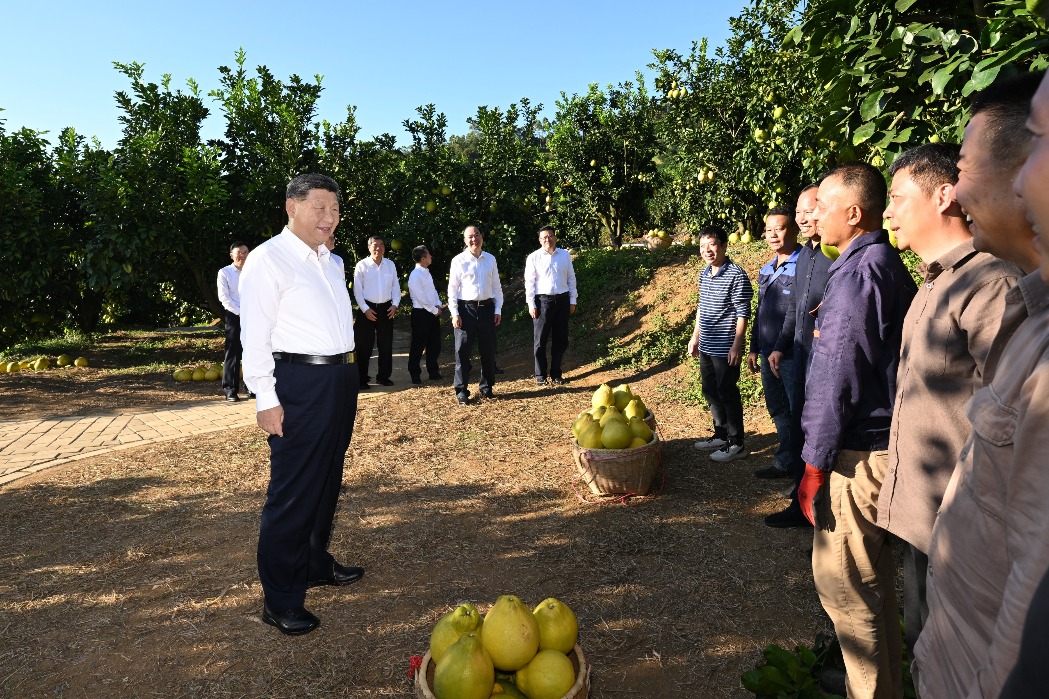
During an inspection tour to Xinjiang last month, President Xi Jinping said that on the nation's journey in the new era, it will endeavor to build Xinjiang into a beautiful place that is united, harmonious, and prosperous, with an advanced culture, a happy life for all and a sound environment. Xi also said it's important to have a deep understanding of the close connections between development and stability, development and people's livelihoods and development and the will of the people, and people must benefit from the achievements made.
After ensuring enduring social stability, security and prosperity became the overarching goal for the region, a series of effective measures to fight separatism, extremism and terrorism have been implemented since 2014. The region saw thousands of terrorist attacks from 1990 to 2016, but hasn't seen one in the past six years. "Being able to live without constant fear of a terrorist attack is the greatest desire for the Xinjiang people," said Dilqamar Tucson, who lost her right leg in an attack in Luntai county, Bayingolin Mongol autonomous prefecture, on Sept 21, 2014.
Xu Guixiang, a spokesman for the regional government, said the Xinjiang people's sense of fulfillment, happiness and security has been on the rise. More importantly, their longing for peace and stability for many years has been granted.
Zhang Yongpan, a researcher from the Chinese Borderland Research Institute, part of the Chinese Academy of Social Sciences, said rooting out terrorism is one of the most important achievements made by the region in the past decade, as stability is the foundation for the region's socioeconomic development.

During a visit to Xinjiang in March, Wang Yang, chairman of the Chinese People's Political Consultative Conference National Committee, said that the region enjoys unprecedented opportunities for development and needs to take full advantage of its current stability and policy support while planning its development path.
While the social situation stabilizing, Xinjiang's economy has maintained steady and healthy growth. From 2012 to last year, Xinjiang's GDP rose from 740 billion yuan ($109.74 billion) to nearly 1.6 trillion yuan, with an average annual growth rate of 7.5 percent. In the first half of this year, GDP grew by 4.9 percent, ranking third among all provincial-level regions in China.
Furthermore, the region used more than 70 percent of its general public budget expenditure to improve people's livelihoods over the past 10 years. The disposable income of rural residents increased from 6,394 yuan in 2012 to 15,575 yuan last year, while the disposable income of urban residents rose from 17,921 yuan to 37,642 yuan during the same period.
In addition, the region, which used to be at the forefront of China's anti-poverty fight, won the battle by the end of 2020.
Through targeted alleviation efforts, the region has lifted all of its nearly 3.06 million impoverished rural residents out of poverty, and has removed all of its 3,666 poor villages and 35 poor counties from the poverty list.
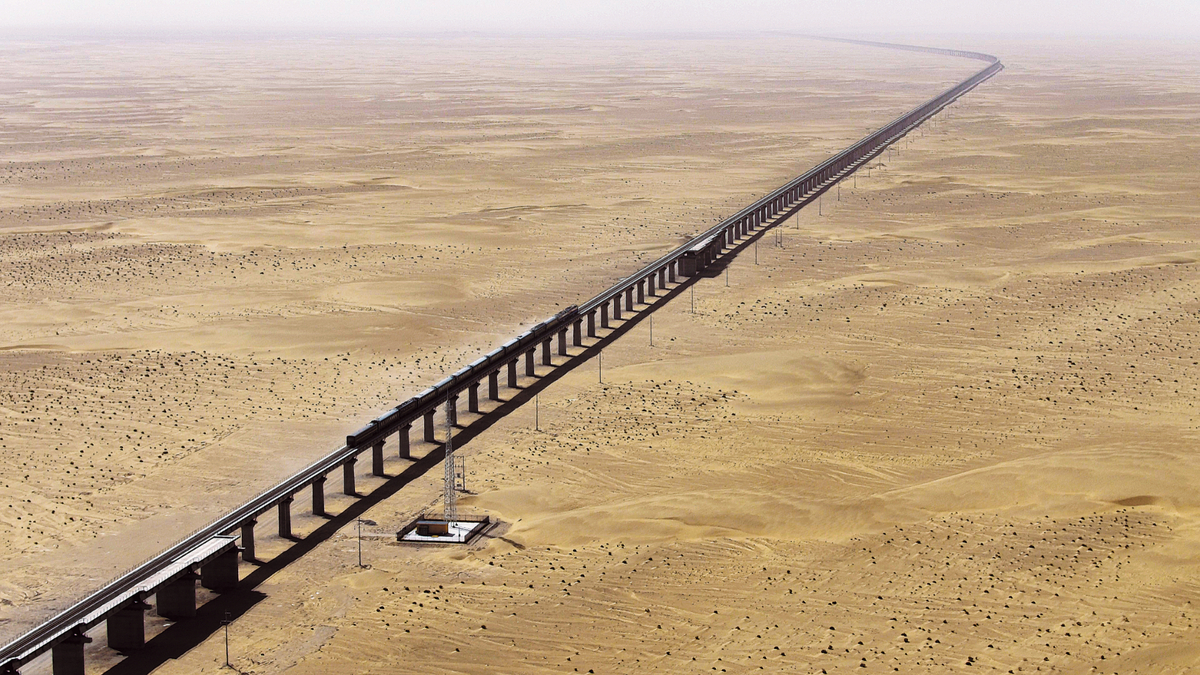
To support poverty alleviation and the development of the vast region, which covers one-sixth of China's territory, continuous efforts have been made to improve infrastructure.
On June 16, the completion of the world's first railway to circle a desert in Xinjiang made headlines in many countries. The 2,712-kilometer-long railway circles the Taklimakan Desert, the world's second-largest shifting sand desert. The line has brought railway services to some areas in southern Xinjiang for the first time, boosting socioeconomic development and promoting rural vitalization in the region.
Besides railways, Xinjiang has further accelerated the construction of civilian airports to better boost connectivity. By the end of this year, the region, which had 17 airports in 2010, will have 25-the most among all provincial-level regions in China.
Last year, Xinjiang's fixed asset investment exceeded 820 billion yuan-up 15 percent year-on-year, the second-fastest growth rate among provincial-level regions.
In June, the regional development and reform commission announced that Xinjiang plans a total fixed asset investment of over 900 billion yuan this year. The investment will focus on major projects in infrastructure and strategic emerging sectors, including railways, airports, power transmission lines and new energy bases, it added.
Ablikem Azez, director of the Xinjiang Culture and Tourism Bureau, said an improved transportation network has also helped to boost the development of tourism in the region and has made travel easier than ever.
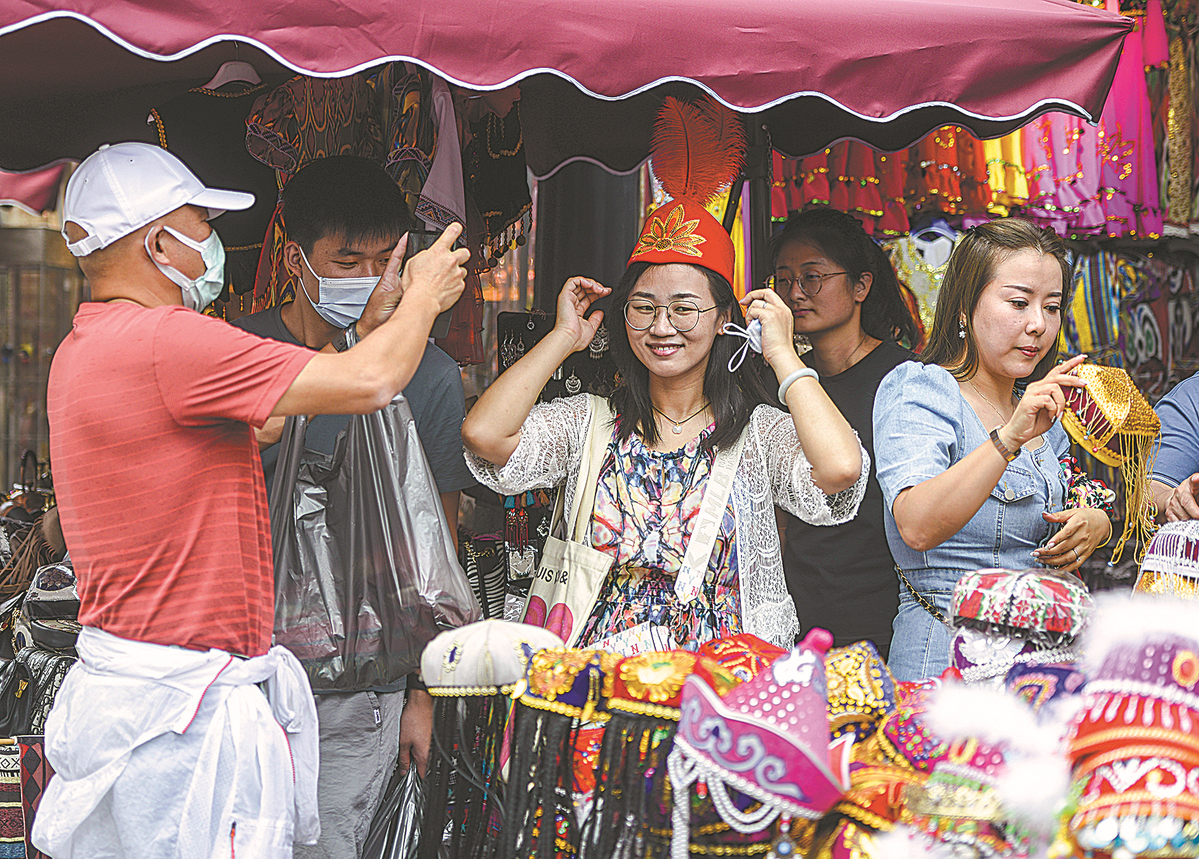
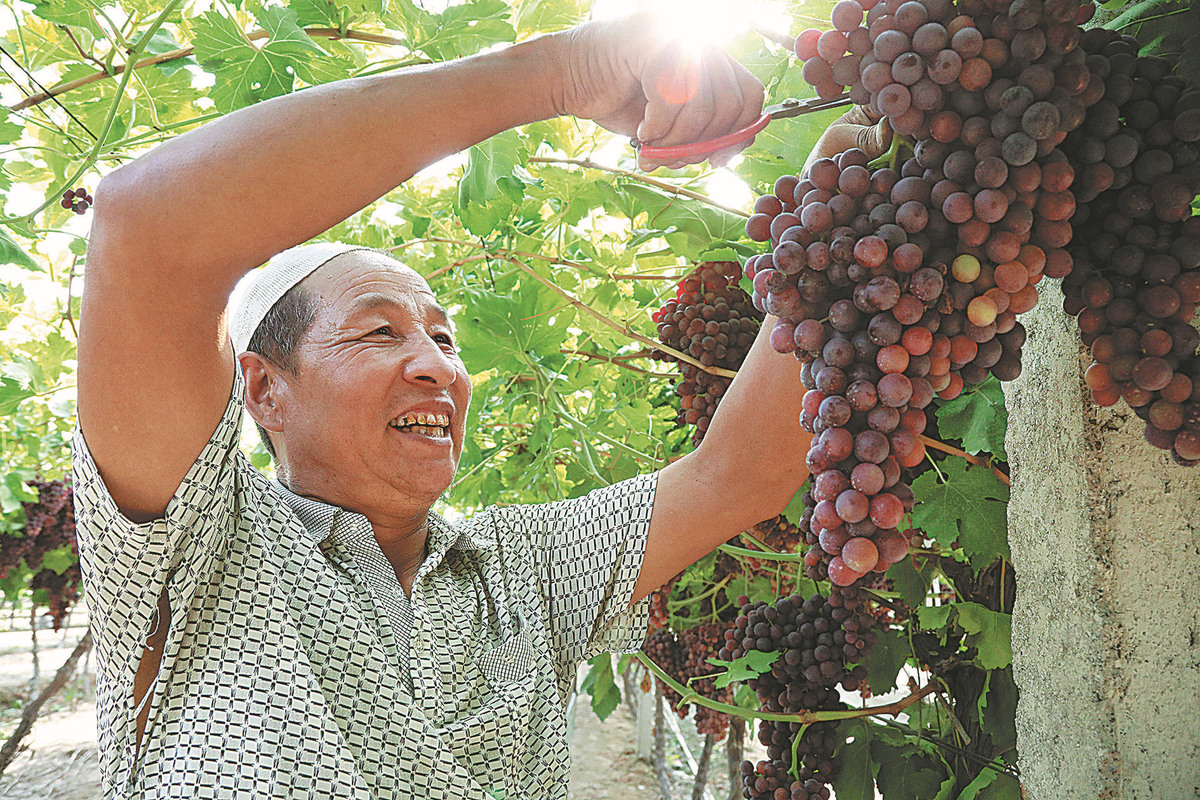
Having a stable social situation has helped the tourism boom in Xinjiang in recent years because people no longer have safety concerns, Ablikem said. Diverse geographical features, rich ethnic cultures and unique cuisine have made tourism one of Xinjiang's pillar industries. Despite the COVID-19 epidemic, Xinjiang received 191 million tourist visits last year, an increase of 20.5 percent from 2020.
Xinhua contributed to this story.