'Learning poverty' a growing global problem







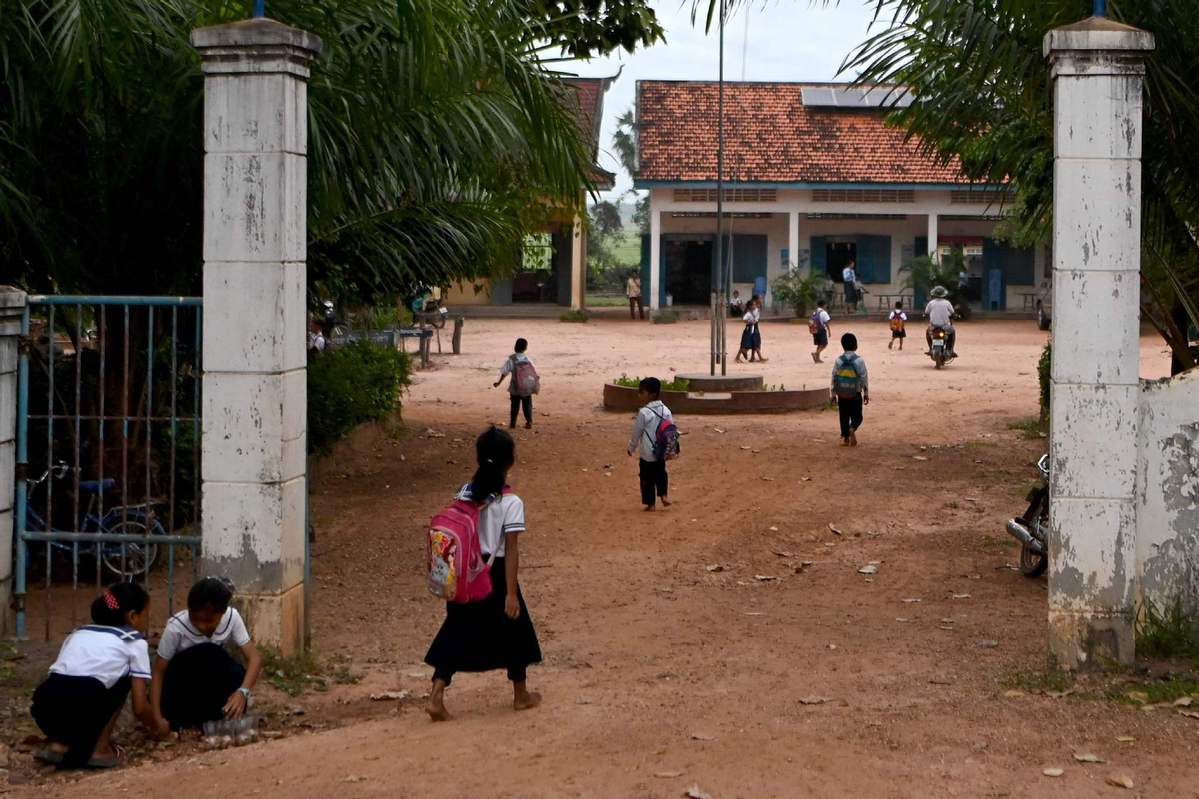
A recent report highlighted that although there was a global learning crisis before the COVID-19 pandemic, the disruptive school closures brought about by the pandemic sharply exacerbated "learning poverty"-a measure of children unable to read and understand simple text by age 10.
Needless to say, the world's less-privileged children have borne the brunt of this learning catastrophe.
The report-"The State of Global Learning Poverty: 2022 Update"-was jointly published by the World Bank, UNICEF, the United Kingdom's Foreign, Commonwealth & Development Office, the US Agency for International Development and the Bill&Melinda Gates Foundation, in partnership with UNESCO.
It was estimated that, globally, underserved children whose education was disrupted by the pandemic could lose $21 trillion in future earnings, amounting to 17 percent of today's global GDP. This far exceeds the estimates in 2020 of $10 trillion.
While the impact has caused a global rise in learning poverty, Latin America and the Caribbean have been the worst affected. Approximately 80 percent of children there are unable to understand a simple written text by the time they leave primary school. That's up from around 50 percent before the pandemic.
The next largest increase was seen in South Asia, where 78 percent of children are now likely to fail the same basic literacy test (compared with 60 percent pre-pandemic).
Thus, the prolonged school closures (full or partial) and unequal mitigation strategies will only serve to deepen the learning in-equality among children.
The fact that children from less-fortunate socioeconomic backgrounds and other educationally marginalized groups will continue to suffer larger learning losses is only to be expected. Children with the most anemic grasp of foundational literacy before the pandemic closures are now faced with continuing to suffer the largest learning losses. Without strong foundational skills, due to non-inclusive and inequitable schooling environments, such children are unlikely to acquire the technical and higher-order skills needed to thrive in increasingly competitive and complex labor markets and more complex societies.
The inequality in learning between advantaged and disadvantaged groups is set to grow, making aspirations for ending extreme poverty and promoting shared prosperity a bridge too far.
The Hong Kong Special Administrative Region's Education Bureau recently relayed that, due to pandemic-related issues, all primary schools and kindergartens in the academic year beginning this month will maintain half a day of face-to-face teaching. This will extend the run of enormously disruptive environments besetting Hong Kong's children since December 2019. Add to that the language-based educational poverty of underserved children, which continues relentlessly.
One way or another, even in normal pre-COVID-19 times, a wide segment of children were being systemically underserved and educationally marginalized on the basis of language. What is astoundingly remarkable is the consistent narrative by the empowered lot (educators/teachers) to claim how hard it is for them to teach in an inclusive manner and provide equal learning opportunities for children.
In response to the persistent demands of schools and teachers, Hong Kong's Education Bureau has been extremely generous in providing them with constant funding. For the 2021-22 school year, the government spent more than HK$500 million ($63.7 million) to aid non-Chinese-speaking students in learning Chinese. From the 2016-17 to 2020-21 fiscal years, the average total annual expenditure for support measures for English-language education was about HK$900 million. In addition, the HKSAR government set up the Language Fund in 1994 and injected HK$5 billion seed money into the Language Fund in 2014 to provide a steady stream of funding to facilitate the long-term objective of enhancing the English proficiency of Hong Kong students.
The Education Bureau has been providing the desired resources as well, but it seems that even that is not enough incentive to behave as inclusive educators. It's deeply disturbing that, while teaching is inherently considered the noblest of professions, the stakeholders have reduced it to lamenting the need for more money. Every single child who falls victim to educational poverty and intergenerational socioeconomic marginalization, owing to the nonperformance of a teacher, is clear evidence of educators having failed them.
It's time to move beyond mere social media posts and indulging commentators who play the "blame the victim" narrative. It would augur well for such teachers to appreciate that just returning to the pre-COVID-19 status quo will not secure the future of Hong Kong's daughters and sons. It instead requires their sincere commitment to ensuring a vigorous learning recovery, at a proactive and accelerated rate.
Teachers need to seize the initiative, recalibrate the academic year, reassess learning levels regularly, prioritize teaching the fundamentals and increase the efficiency of instruction, including through catch-up learning. This is the only and nonnegotiable way to secure the future of Hong Kong's young ones and the health and well-being of Hong Kong.
Now more than ever, it is time to respond positively to Nelson Mandela's oft-cited philosophy-"There can be no keener revelation of a society's soul than the way in which it treats its children."
The author is co-founder and CEO of Integrated Brilliant Education, an NGO that provides equity-based, inclusive and equal language-learning opportunities in the Hong Kong Special Administrative Region.