Tasty tradition is sweet success for culture







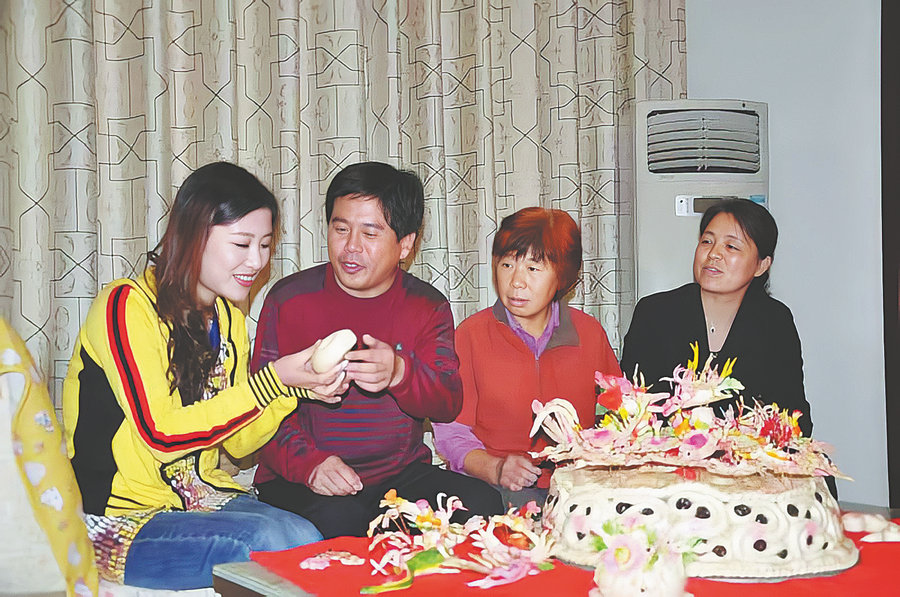
Many Wenxi huamo works are ingeniously crafted by local women through kneading. In the vast rural areas of the county, women pass their skills to their daughters.
They seem to work magic on the plain-looking dough through pinching, cutting, repairing, sticking and embellishing with common household utensils, such as needles, combs, knives, and shears. Consequently, the bun craft has also been affectionately called "mother's art".
"It reflects Wenxi working women's deep folk art knowledge in their lives over the long course of history," Zhi says, adding that it was all hands on deck for making huamo in his family during major holidays throughout his childhood.
"It has long been part of my life."
However, with the development of the times, young women are no longer keen on steaming buns. The art of the flowery bun, which has always been the pride of local rural households, faces a crisis.
Zhi has tried to revive the ancient art.
"That was when I seriously started to bond with huamo," Zhi says.
Although huamo had been named a provincial intangible cultural heritage, authorities set their sights on restoring the influence it had once enjoyed.
In 2006, Zhi worked with local officials and found a 70-year-old village woman had huamo down pat, and filmed her making the traditional food.
"We recorded all the 12 steps from processing wheat, grinding flour to kneading and pinching dough, as well as steaming and coloring in her house," Zhi recalls.
The 15-minute film, introducing Wenxi huamo, created a national sensation.
From that moment on, huamo made its presence felt across the land. It made its way to a national intangible heritage culture exhibition in Beijing in February 2009, and the World Expo 2010 in Shanghai, as well as overseas.
Although exhausted, Zhi says it is worth it when the culture of his hometown is appreciated by guests from across the country and beyond.
During Spring Festival in 2012, Wenxi held a huamo cultural festival. More than 300 villages from the county sent more than 2,000 pieces of huamo, some of which were named the biggest or tallest of their kind by the Hong Kong-based World Record Association.
After the festival, the county authorities supported huamo cooperatives and the registration of huamo trademarks, giving further impetus for the development of the intangible culture.
"I felt the era of the Wenxi huamo had finally arrived," says Zhang Haiyun, a local who has been deeply attracted to huamo under the influence of her mother and grandmother.
"At 10, when my mother and grandmother were making huamo, I would be allowed to pinch the dough," the 41-year-old recalls.
"It was more for self-indulgent fun, but I guess learning also happened in a subtle way."
In 2005, Zhang's sharp business acumen had her register the Beiyuan Bun trademark in the local area.
"I thought of developing the traditional handicraft into an industry when I realized it had such a long history," she says.
Then, the 2012 festival urged her to materialize her ambition.
"I was surprised to find that we could make so many things out of flour at the festival, so I made an immediate decision to set up a company that specializes in making huamo," she says.