Europe's meat habit contributing to world's food crisis








European countries are experiencing their worst cost-of-living crisis in decades, owing to surging energy and food costs. COVID-19, the war in Ukraine, and climate change have compounded the increase in commodity prices, leading to food shortages and rapidly rising food insecurity in the developing world. But there is good news — with a simple (but critical) change in food production, the European Union can ease food-price inflation and bolster global food supplies.
An analysis by consulting firm SYSTEMIQ shows that by cutting meat production by just 13 percent — the equivalent of European consumers going meat-free for one day a week — the EU could reallocate enough grain and land currently used to feed livestock to offset the 23 million metric tons of wheat Ukraine produced in 2020.
This should come as no surprise. After all, meat is a notoriously inefficient source of nutrition. For every 100 calories of feed consumed by cattle, we produce just one beef calorie. As it stands, we are using vast amounts of land and fertilizers to grow food that only livestock can eat.
Meanwhile, fertilizer prices have soared by 60 percent in the past year, owing to reduced exports from Russia and Ukraine (which together account for over one-quarter of all fertilizer production) and manufacturing disruptions across Europe caused by soaring gas prices. "To avert a future crisis, we need to bring fertilizer prices down," Rebeca Grynspan, secretary-general of the United Nations Conference on Trade and Development (UNCTAD), recently warned.
Simply put, the meat industry's inefficient use of fertilizers drives up food prices, exacerbates world hunger, and pushes farmers into poverty. Reallocating land from meat production to grains, vegetables, legumes, and alternative proteins would be a far more effective way to feed a growing population on a warming planet.
Reducing EU meat production would also provide significant climate benefits. After all, animal farming generates as many greenhouse gas emissions as all the world's cars, trucks, planes, and ships. According to our calculations, cutting livestock-related emissions by 5 million tons of carbon dioxide would be the same as removing more than 4 million new gasoline-fueled cars from Europe's roads.
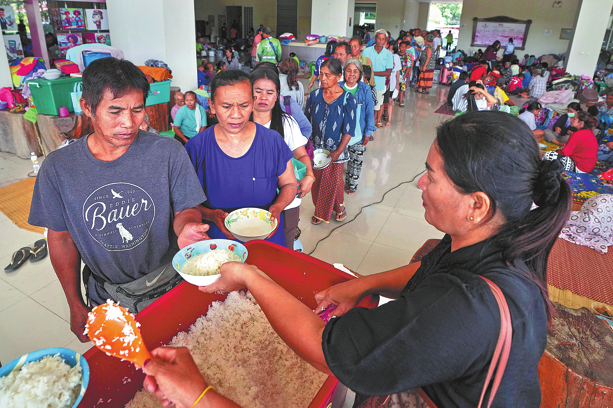
Even a relatively modest cut in Europe's meat production would have a meaningful global impact. According to UNCTAD, lower-income countries suffering from acute food insecurity, such as Benin, Somalia, and Laos, are almost entirely dependent on wheat imports from Ukraine and Russia.
Against this backdrop, many Organization for Economic Cooperation and Development countries continue to allocate a disproportionate amount of land to feed livestock. This partly reflects massive overconsumption; the average EU citizen consumes twice as much meat as the global average. As a result, two-thirds of all cereals in the EU are used for animal feed.
But while diverting grain from livestock to human consumption could prevent major food shortages across the developing world, it would also reduce food insecurity in wealthier countries, which are facing severe food-access issues of their own. In France, for example, roughly 10 percent of the population relies on food banks.
European policymakers grappling with rising food and energy prices must combat the global food crisis and climate change by reducing incentives for industrial meat production and creating incentives for plant-based proteins and sustainable meat substitutes. By spurring a market shift toward more sustainable proteins through initiatives like the EU's sustainable food-systems framework, policymakers can encourage supermarkets and fast-food restaurants to offer more low-emission proteins like plant-based meat and other emerging meat substitutes. Such policies would stimulate investment in European businesses while providing significant environmental and health benefits.
But policymakers must also ensure that farmers are not sidelined. They must take measures to support livestock farmers and encourage them to move away from industrial meat production. For instance, ranchers and farmers should receive financial incentives to reduce their herds and switch to regenerative agricultural practices. In this way, we can ensure that consumers can access affordable proteins without European farmers losing their livelihoods.
Given the greater frequency of extreme weather events such as flooding and droughts, and the ongoing war in Ukraine, it is hard to imagine that food prices will fall any time soon. But just as they have learned to turn down the thermostats to reduce their dependence on Russian gas, Europeans can eat less meat. Saving millions of vulnerable people from famine is surely worth such a modest effort.
Sarah Lake is the executive director of Madre Brava. Nico Muzi is the managing director of Madre Brava.
The views do not necessarily reflect those of China Daily.