China's pursuit of sci-tech goals to benefit world








Nation aims to be better contributor to solving global challenges, experts say
China's pursuit of self-reliance and strength in science and technology does not mean it will decouple from the world, experts said, adding that the goal is to turn the country into a more capable and innovative contributor when tackling global challenges with the international community.
The Chinese scientific community would continue to expand international cooperation, launch more research projects and pursue greater innovation that can serve the world, and also proactively participate in the global governance of science and technology-related affairs, they added.
The report to the 20th National Congress of the Communist Party of China stated that China would expand science and technology exchanges and cooperation with other countries, cultivate an internationalized environment for research, and create an open and globally competitive innovation ecosystem.
However, some Western experts speculated that China's emphasis on becoming more self-reliant in science and technology indicates the country is trying to decouple from the world to become more resilient to deal with external uncertainties and influences.
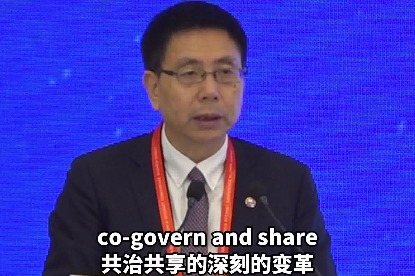
Liang Yingda, director of the Ministry of Science and Technology's Department of Strategy and Planning, said China has always engaged with the international scientific community. China has established scientific and technological cooperation with over 160 countries and regions, including 114 government-level collaboration agreements.
In 2021, China held over 40 ministerial-level exchanges on topics such as public health, climate change, clean energy, and tackling the COVID-19 pandemic. It also signed 21 new government-level cooperation agreements.
On Oct 28, scholars and officials from China and Belgium held their fourth annual science and technology exchange symposium in Brussels. Cao Zhongming, China's ambassador to Belgium, said in the opening speech to the symposium that China is a contributor and supporter of multilateralism as well as finding joint solutions to global challenges.
A similar exchange took place between China and Ireland on Oct 13, when science officials from both countries celebrated the 10th anniversary of the Strategic Partnership for Mutually Beneficial Cooperation.
Since 2016, China has launched and supported nearly 2,000 joint research projects with more than 60 countries, regions, and international organizations, covering areas including agriculture, energy, the environment, resources, communication, and health sciences, Liang said.
The total budget for these projects is about 10 billion yuan ($1.4 billion).
Moreover, China has participated in nearly 60 global science projects, including the International Thermonuclear Experimental Reactor and the Square Kilometer Array. The country is also a member of over 200 international organizations and multilateral mechanisms and more than 1,200 Chinese experts hold senior positions in international science and technology organizations.
As for academic output, China co-authored over 183,000 papers with 169 countries last year, a 1.5 times increase compared with the 71,000 papers published in 2015.China also opened 53 joint laboratories with Belt and Road Initiative countries and has trained over 15,000 foreign science workers.
In the face of the COVID-19 pandemic and challenges to global economic recovery, "countries should enhance openness and cooperation in science and technology and jointly find solutions to these global challenges," Liang said.
Strong bonds
Dialogue and cooperation between science and technology professionals can build a strong bond that crosses cultural, national, racial, and religious boundaries, said Zhang Yuzhuo, vice-president of the China Association for Science and Technology.
"It can mend misunderstandings and find common ground for cooperation among various stakeholders," he added.
Scientists and engineers from different countries can work together to find innovations and solutions, jointly tackle the challenges of our time, and promote prosperity for humanity. Zhang said this would generate improved relations that are imperative for building trust, promoting open science, and improving cooperation.
Exchanges in science and technology have a unique advantage in promoting mutual trust and mitigating friction between nations, he said.
The Chinese scientific community is staunchly against protectionism and decoupling and will continue to play a positive role in developing global governance on science and technology-related issues. "Our door of opening-up will only open wider," Zhang said.
Yu Jihong, a noted chemist and professor at Jilin University, said China's pursuit of self-reliance and strength in science and technology does not mean it will decouple from the world.
"We hope the country can expand international exchanges and cooperation so that we can utilize and contribute to the global innovation resources," she said.
Wang Xiujie, a researcher from the Institute of Genetics and Developmental Biology of the Chinese Academy of Sciences, said to better contribute to international innovation, China needs to produce globally significant breakthroughs.
"Exchanges between scientists are largely based on their passions, interests, and recognition of new scientific findings and projects," she said. "If Chinese scientists can create more original breakthroughs through self-reliance and strength in science and technology, foreign scientists will be more likely to engage with China."
Xu Chuang, a professor at China Agricultural University's College of Veterinary Medicine, said China had increased its scientific outreach in recent years. His field of veterinary medicine for dairy cows has received numerous grants for international cooperation with countries like Mongolia and Italy.
"Every time I share my story, my foreign colleagues are often surprised by how committed and supportive China is in promoting global cooperation," he said.
"Through international science collaboration, we not only get to share our knowledge and solutions in tackling joint challenges, but also facilitate a healthy circulation of talents and ideas that are beneficial for scientific advancement."