Knock it on the head








US needs to cast aside the Wolfowitz Doctrine to ensure the peace and progress of mankind
In November, during the series of summits in Asia, President Xi Jinping met first with US President Joe Biden then a few days later with Vice-President Kamala Harris.
These meetings were significant as they allowed for a frank exchange of views on the international community's most pressing issues, such as climate change, global macroeconomic stability, the inflation and recession caused by US monetary policy, and debt relief for the poorest countries. Issues such as health security, global food security and the effects of the conflict between Russia and Ukraine were also discussed. The leaders of the two countries also addressed bilateral issues, such as the trade and technology war, respect for the one-China principle, and the ways in which governments can deal with disagreements appropriately.
President Xi asserted that China-US relations must not be a zero-sum game in which one side competes or prospers at the expense of the other. The successes of China and the United States are opportunities, not challenges, for each other. The world is big enough for both countries to develop and prosper together. Both sides must correctly perceive each other's domestic and foreign policies and strategic intentions. China-US interactions should be defined by dialogue and win-win cooperation, not confrontation or zero-sum competition. In general terms, the Chinese president reaffirmed the guiding principles of Chinese foreign policy since the 1950s, the Five Principles of Peaceful Coexistence, which are still in force today.
President Biden, on his part, said that the US will continue to compete vigorously with China, including by investing in sources of strength at home and aligning efforts with allies and partners around the world. He reiterated that this competition should not veer into conflict and underscored that the US and China must manage the competition responsibly and maintain open lines of communication. The two leaders discussed the importance of developing principles that would advance these goals and tasked their teams to discuss them further.
The main aspect that should be highlighted about both meetings is they were the first face-to-face meetings between the leaders since Biden took office on Jan 21 last year. At that time, there was an expectation that bilateral relations could recover some of the ground that had been lost as a result of the confrontational approach of the Donald Trump administration. However, this was shown to be a false hope at the first meeting between senior officials of the two sides in Anchorage, Alaska, on March 19, 2021, when the US representatives tried to impose their agenda on the Chinese delegation. Since then, the US has intensified its moves targeting China, such as the creation of the AUKUS partnership and the unfounded investigations into the origin of the COVID-19 pandemic.
Greater understanding between China and the US is in the interests of the world, which faces serious challenges that can only be overcome through cooperation. Crises such as climate change and the pandemic cannot be tackled unilaterally. The transition to green energy and building sustainable infrastructure in developing countries are also challenges that cannot be financed by just one government and require a broad coalition led by the two largest economic powers in the world.
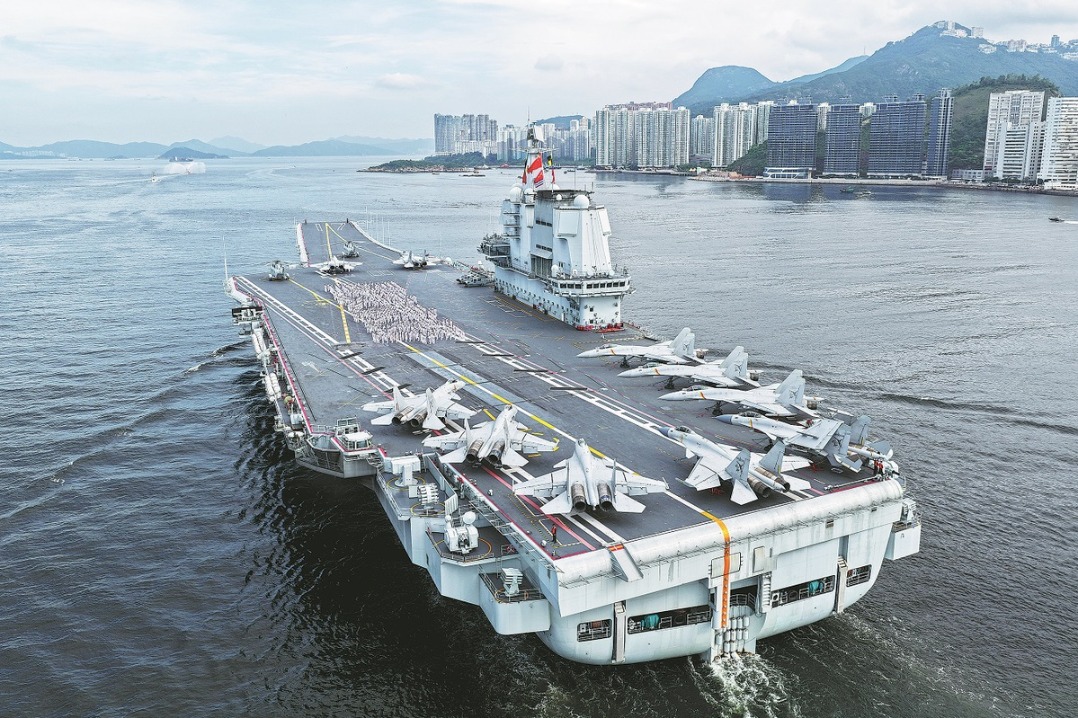
Unfortunately, the US elite puts its own interests above the interests of its people and humanity. Since its founding, the US has seen itself as a beacon that radiates supposed universal values to the world. The US elite can't envision anything other than primacy. This view was reinforced with the end of the Cold War when the US established itself as the only superpower. Since 1991, when the Soviet Union collapsed, until today, the US' strategy has been to prevent the emergence of any country that could threaten its economic, technological and military hegemony, be they NATO allies, Japan, Russia or China.
This stance was consolidated in the so-called Wolfowitz Doctrine, created in 1992 under the supervision of Paul D. Wolfowitz, the Pentagon's then under-secretary for policy, which established the following strategy: "The US must show the leadership necessary to establish and protect a new order that holds the promise of convincing potential competitors that they need not aspire to a greater role or pursue a more aggressive posture to protect their legitimate interests. In non-defense areas, we must account sufficiently for the interests of the advanced industrial nations to discourage them from challenging our leadership or seeking to overturn the established political and economic order. We must maintain the mechanism for deterring potential competitors from even aspiring to a larger regional or global role."
However, regardless of the interests and unilateral stance of the US, the world, as Galileo Galilei said, moves by itself. In a world moving toward multipolarity, the hegemon and its allies can't ignore the role of developing nations. We do not live in a world torn apart by war and colonialism as we did in 1945 when the rules of the current international order were created. China has become an unavoidable actor in international relations. In this respect, dialogue and cooperation between China and the US are contingencies of a reality in which differences will be ironed out over time. That's not just what humanity wants; it's what humanity needs.
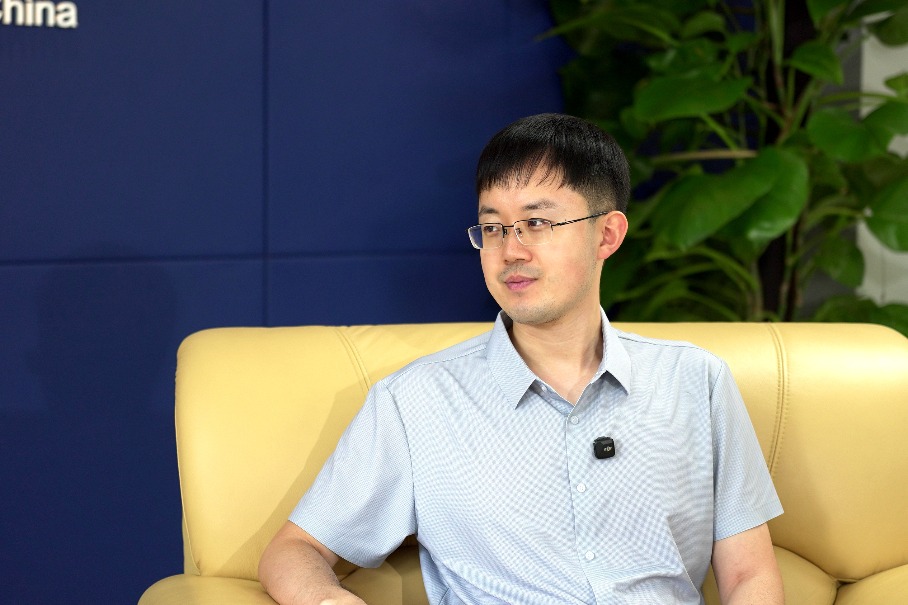
The author is a professor of international political economy at Sao Paulo State University. The author contributed this article to China Watch, a think tank powered by China Daily.
The views do not necessarily reflect those of China Daily.
Contact the editor at editor@chinawatch.cn