A staunch defender of multilateralism








Editor's note: How will China handle its relations with other countries in 2023? How to strengthen cooperation and decrease conflict and confrontation? Four experts share their views on the issue with China Daily.
From the perspective of rational choice theorists, states act rationally to maximize their national interests. Accordingly, China has chosen peace over war, because it will facilitate domestic as well as global development.
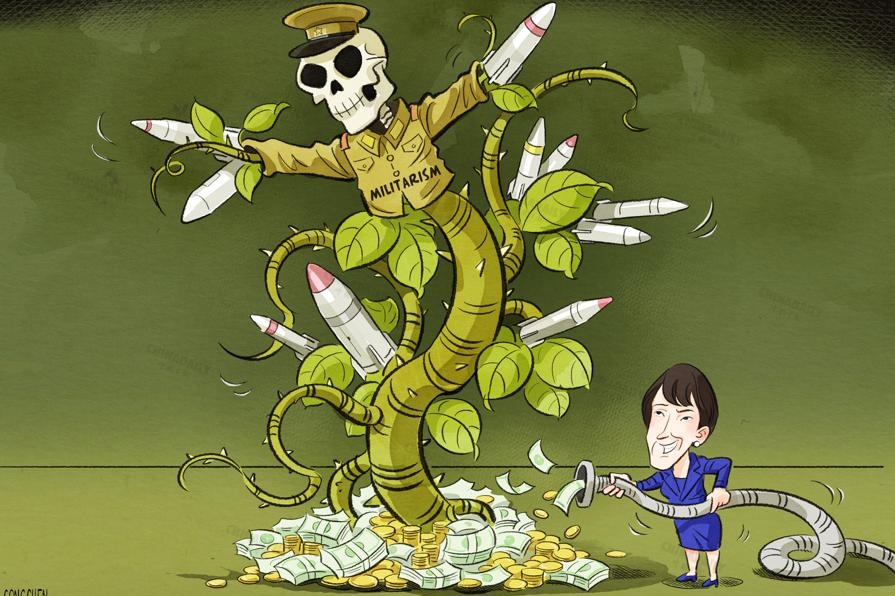
Therefore, the concerns over China's aggression and military threat are overblown. That they are overblown is also indicated by a recent RAND report, suggesting that China's ability to overtake the United States by a decisive margin is doubtful.
Although China acknowledges the inevitability of competition, it rejects the notion that conflict is inevitable. The huge cost of a military confrontation between China and the US and its allies will hurt China in the worst way imaginable. And member states of the European Union, which is one of the largest trade partners of China, will shy away from making any economic deals with a warmonger.
Chinese leaders and diplomats have been reiterating that China's policy is to put development at the center of the international agenda. China needs a peaceful environment as a necessary condition to help it narrow its technology gap with major Western powers and become self-reliant in advanced technology. Yet, given the US' hostility, China knows that the flow of investment and technologies from the US will decline.
Hence, to prevent the US-created hurdles from derailing its economic and technological development, China must try its best to avoid decoupling with the European Union and other developed economies.
In less than a decade, China's exports have grown sixfold while its imports have increased almost fivefold. China has also applied to join the Comprehensive and Progressive Agreement for Trans-Pacific Partnership. After all, economic interdependence helps deter countries from making war — and China is a promoter of peace, defender of multilateralism and opposes protectionism.
Former US secretary of state Henry Kissinger, American academic and activist Orville Schell and the late US sociologist and China expert Ezra Vogel have argued that China does not seek global hegemony, though it wants to achieve regional hegemony. We support the first part of their observation but have strong reservations about the allegation that China seeks regional hegemony.
Their misperception may stem from the Chinese mainland's announcement that it would not refrain from taking military action to prevent the Taiwan separatists and pro-independence politicians from splitting the country. At most, the mainland wants to strengthen its military capability to deter external powers and the Democratic Progressive Party from supporting pro-independence activities on the island.
China does not have any intention of challenging and disrupting the US-dominated global order either. To counter specific US hegemonic actions in China's backyard and promote fairness in the international order, China wants to promote multilateralism, develop strategic partnerships with some of the major powers, and seeks to increase its say in international relations and international institutions.
In this regard, a proper assessment of China's challenges may help US policymakers better understand that China does not pose a threat to any country.
Three years ago, former US president Jimmy Carter reminded us that the US is the biggest warmonger in the world because its aim is to impose US values on other countries. In contrast, China has been investing resources in infrastructure projects such as high-speed railways. Former Malaysian prime minister Mahathir Mohamad, too, has said that China's policy is not to conquer and occupy other countries.
China's rise has been peaceful. According to political scientist Zhang Weiwei, China is a "civilizational state" and does not seek confrontation with other countries. It only seeks peaceful coexistence, mutual learning and mutual benefit.
China promotes global cooperation, not confrontation. And in line with that philosophy, it will likely push for the implementation of the Global Development Initiative while making efforts to align it with the UN's 2030 Agenda for Sustainable Development.
President Xi Jinping has added a strong normative dimension to his view on development, arguing that China's development will be pursued in line with the common development of other countries. Way back in 2013, he proposed the Belt and Road Initiative to promote closer economic cooperation between China and other economies so as to improve infrastructure connectivity.
Another aspect of China's foreign policy is to make the world order fairer. Besides denouncing bullying, China advocates and practices genuine multilateralism, promotes equality of rights, rules and opportunities for all countries, and is working with other countries to develop a new type of international relations featuring equality, mutual respect, fairness, justice, and win-win cooperation.
We are hopeful and confident that with the help of its foreign policy, China will be able to realize national rejuvenation.
And if China continues to help maintain global peace and contribute to global development, it will be able to win the hearts and minds of the international community. This will provide an amicable external environment for the Chinese government to cash in on the valuable strategic opportunities and strengthen its economy, make China self-reliant in advanced technology, and achieve common prosperity in the country.
The views don't necessarily reflect those of China Daily.
Junius Ho Kwan-yiu is a Hong Kong Legislative Council member and a solicitor.
Kacee Ting Wong is a barrister, part-time researcher at Shenzhen University.