Belt & Road fits well with nations' growth strategies







Synergy seen as a boon to economic recovery, global governance reform
The efforts of China and partner economies to enhance the connections between the Belt and Road Initiative and national development programs will add fresh growth momentum to bilateral and multilateral cooperation, market watchers and senior business executives said.
It will also boost the world's economic recovery, they added.
Synergizing the BRI and other national development strategies — such as Indonesia's Global Maritime Fulcrum, Saudi Arabia's Vision 2030 and Egypt's Vision 2030 — will scale up trade and investment in fields such as the digital economy, traditional and new infrastructure, clean energy, agriculture and modern services between China and those partners, experts said, as well as create a new path for global governance reform in the years ahead.
China and countries such as Pakistan, Serbia and Thailand are also leveraging their comparative strengths and further widening market access to each other, said Xu Hongcai, deputy director of the Economic Policy Commission with the China Association of Policy Science in Beijing.
For instance, China has been eager to assist Saudi Arabia in charting a new path of economic diversification and integration with the BRI following the Saudi government's unveiling of Vision 2030 in 2016. The country's strategic framework aims to cut dependence on oil and transform the kingdom into a leading industrial powerhouse and global trading and logistics hub.
China has signed cooperative documents with 20 Arab countries and the Arab League on jointly building the BRI, with more than 200 large projects in energy and infrastructure having been implemented, according to China's Ministry of Foreign Affairs.
Apart from developing energy projects related to oil in Saudi Arabia and other parts of the Middle East, China Energy Engineering Group Co Ltd, the Beijing-based State-owned enterprise known as Energy China, started to build a 2.6-gigawatt photovoltaic project in Saudi Arabia in mid-November.
The project, located in Al Shuaibah in Jeddah, Makkah province, will be equipped with advanced PV modules. It is expected to be the largest individual PV project in the Middle East and North Africa, providing anticipated 3,000 jobs for locals, said Xiong Gaoxia, vice-president of China Energy Co Ltd, an Energy China subsidiary.
The project is designed to help cut carbon dioxide emissions by about 3.12 million metric tons per year. It is also designed to speed up the country's energy structure transformation as well as green and low-carbon development, he added.
About 80 percent of the business of China Construction Fifth Bureau Installation Engineering Co Ltd used to be building office and residential blocks as well as hotels and shopping malls, while industrial manufacturing and infrastructure projects were rarely involved, according to the company's chairman, Yang Yong.
But after discovering the surging demand generated by many countries' industrial upgrades and urbanization booms, the Changsha, Hunan province-based SOE has adjusted the direction of its business, Yang said. Infrastructure and manufacturing projects now account for 80 percent of its domestic business and 100 percent of its business abroad.
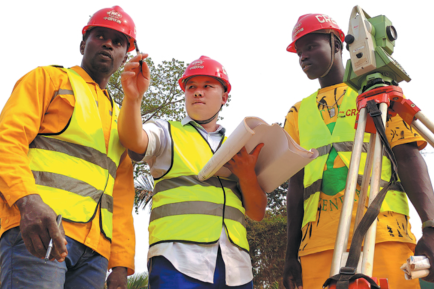
In recent years, the company has taken part in construction, such as the tunnel for Algeria's North-South Highway and the expansion of Hazrat Shahjalal International Airport in Dhaka, Bangladesh. It also built manufacturing facilities for Chinese smartphone makers Oppo and Vivo in India.
Based on its annual workload in overseas markets, Yang said the company is able to provide up to 1,200 jobs a year for local communities. It also helps local workers improve their skills by offering training courses.
After developing a number of big-ticket projects in countries such as Algeria, India, Bangladesh and South Sudan, CCFBIEC will focus on South Asia, the Middle East, Africa, and Central and Eastern Europe to support the growth of the BRI and many countries' development strategies, Yang said.
China's SOEs, especially those that are centrally administered, have lengthy experience in setting up and managing transportation, energy, telecommunications and power projects, based on their financing ability, technological advantages and management expertise. The government has long encouraged them to take advantage of more market opportunities related to BRI development, said Li Jin, chief researcher at the China Enterprise Research Institute in Beijing.
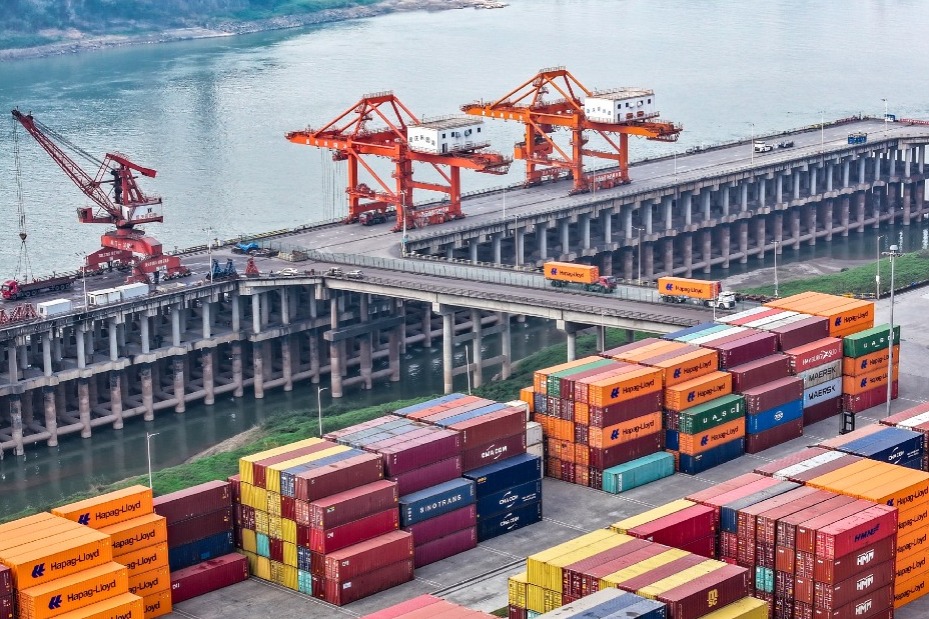
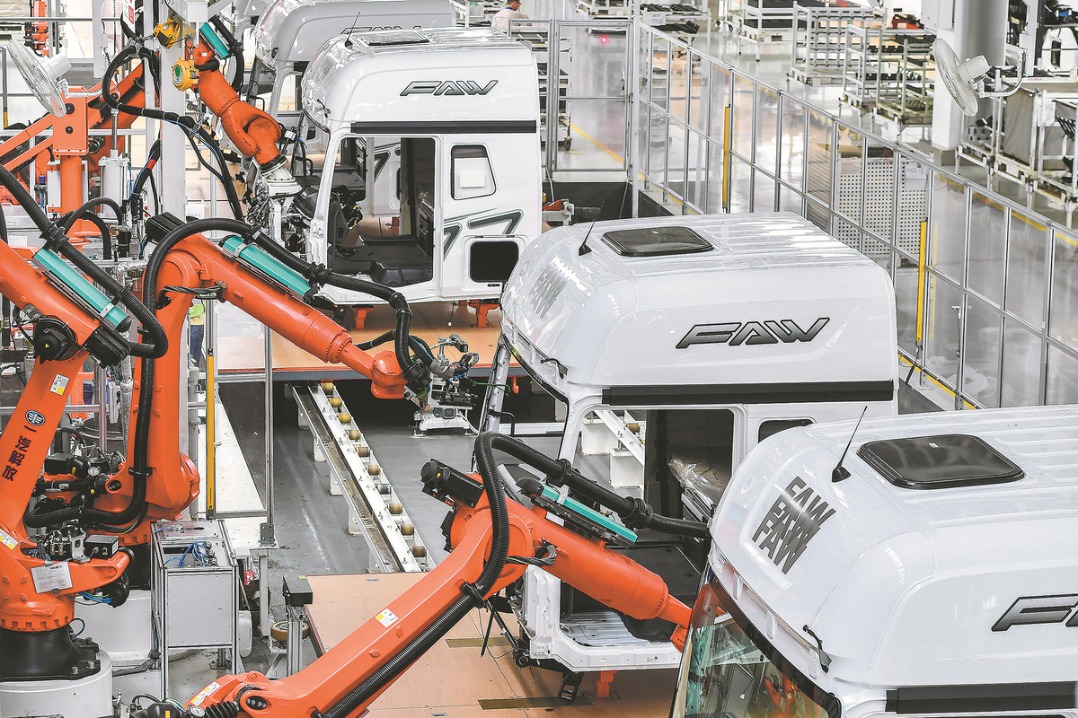
Their involvement in BRI-related projects has not only led China's nonfinancial outbound direct investment in participating economies, but also driven China's exports to those markets, especially of telecommunications equipment, construction machinery, green building materials, high-end steel products and vehicles, said Wei Xiaoquan, a researcher specializing in regional economic development at the University of International Business and Economics in Beijing.
China's nonfinancial ODI into economies participating in the BRI reached $19.16 billion from January to November, with an increase of 6.5 percent year-on-year, accounting for 18.7 percent of China's total nonfinancial ODI during this period, said the Ministry of Commerce.
The country's SOEs saw their foreign trade volume surge 14.1 percent on a year-on-year basis to 6.15 trillion yuan ($881 billion) in the first eleven months, accounting for 16 percent of the country's total, according to the General Administration of Customs.
"The BRI is significant not only because it advances economic cooperation between China and the world, but also because it facilitates upgrades to the transformation of the global governance system, narrows the North-South gap and helps developing countries accelerate growth," Wei added.