Social tech offers way to improve care for elderly







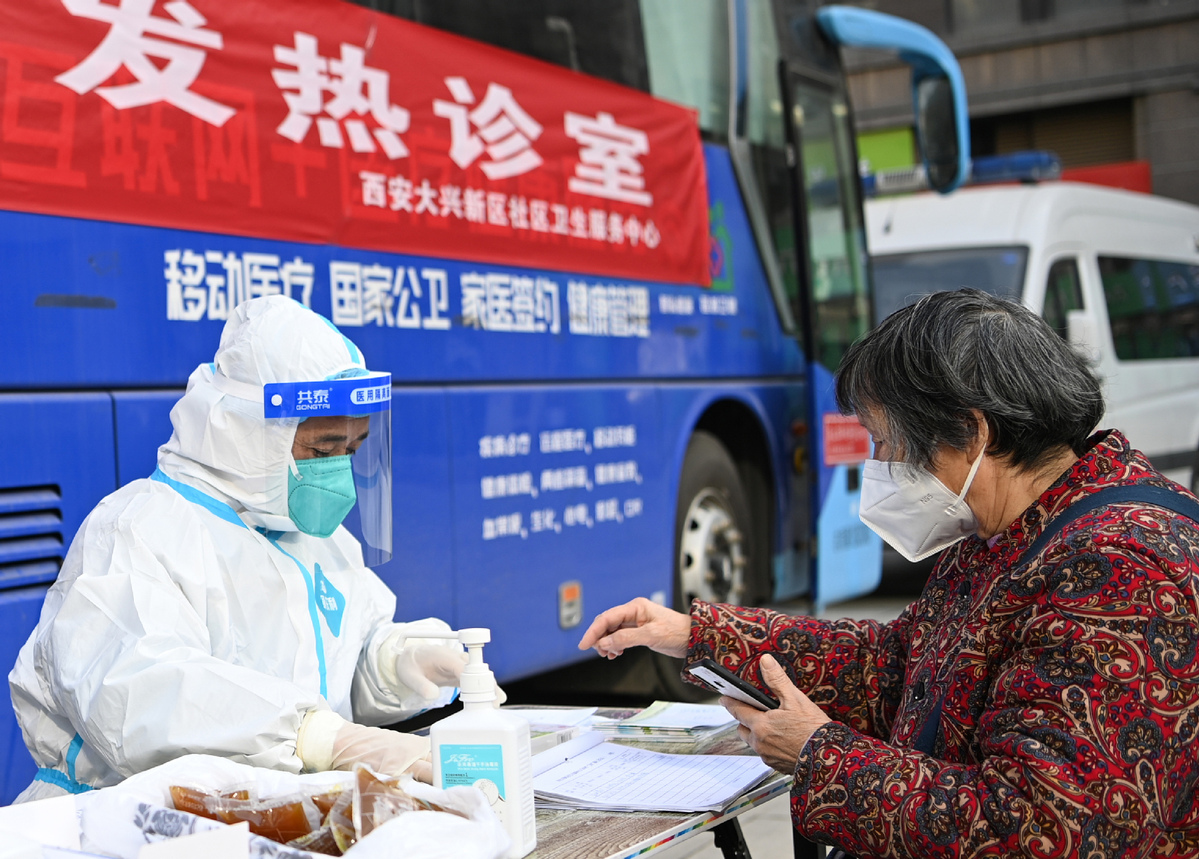
COVID-19 has increased concerns about the global condition of the population over 65 years of age. After all, it is this rapidly growing segment of the population that has experienced the highest mortality and suffering from the pandemic. But this is also the group that carries the greatest burden of chronic noncommunicable diseases like diabetes, heart disease, cancer and arthritis, as well as many other conditions.
The elderly also represent a significant proportion of those who are disabled, impoverished, isolated, lonely, depressed or receiving social welfare support, assistance with activities of daily living, and around-the-clock care. That care is provided by family members who are already under pressure for child care and work responsibilities, as well as by friends, neighbors, fellow elderly and the disabled themselves.
China has set out a policy expectation projecting that 90 percent of the elderly will be living at home, 7 percent receiving care in the community and only 3 percent receiving institutionalization. To achieve that objective, China needs to mobilize substantial resources, because by 2050 almost 30 percent of its population will be over 65 years old.
To assist this effort to care for several hundreds of millions of elderly at home, a number of investigators at Harvard are collaborating with colleagues at several of China's leading universities on a project called Social Technology for Global Aging. This project aims to use assistive and other technologies to improve eldercare. However, it seeks to do so by focusing on the specific social conditions within which that technology will be deployed, so that appropriate technologies can be maximized in their effectiveness and their side effects and unintended consequences reduced.
In addition, new social technologies — policies, training, programs, community activities, communicative processes — are being deployed. To tackle the complexity of the integration of social systems with technologies, at each stage of the research and implementation process, medical anthropologists work closely together with engineers, physicians, public health workers, design specialists and experts in eldercare to develop, implement and evaluate interventions.
We are only at the very beginning of this important work, but we have already accomplished a few things. We have prepared a quantitative, qualitative and ethnographic study of the social conditions of older adults in our study area — an urban and rural district of a major city in eastern China. That survey also will get at the resources already available to the elderly, their current levels and preference of using technologies in daily lives, and what they themselves and experts take to be major needs.
Furthermore, we are preparing studies of such interventions as the consequences of elevators for small walk-up buildings; assisted technologies for elderly with limited mobility in high-rise apartments; education programs focused on raising the quality of eldercare among home health aides, nursing assistants and family care providers; prevention practices to reduce the risks of diabetes in older adults; palliative care at the end of life; and community programs and social and health policies like long-term care insurance that can support home care.
In addition to these activities, we are very attentive to the unique qualities of the social technology approach itself. One of the emphases is the importance of an in-depth understanding of the living settings in which technologies or technology-enabled interventions will be used for the benefit of elderly people or their caregivers, and we also are trying to document how it can best be implemented so that it can be applied by others in China and globally.
The collaboration among engineers, anthropologists, healthcare workers and design experts holds great potential to discover and develop entirely new ways of helping older adults, but also in itself is novel and challenging. We are writing the best practices as we develop them.
Our intention is to use our experience in China to first benefit older Chinese adults. But we will seek in the longer term to take what is useful and assist in its application globally.
Because the challenges of aging populations are experienced by many societies, we believe there will be global interest in our research. That research is sponsored and funded by the Jiangsu Industry Technology Research Institute and includes a collaborative center in China along with participants from Fudan, Tsinghua and Minzu universities and several universities in Nanjing. These institutions are collaborating with the faculty from Harvard's schools of medicine, arts and sciences, engineering and applied sciences, design, public health and business.
Arthur Kleinman is a professor of medical anthropology at Harvard University. Hongtu Chen is an assistant professor of psychology at Harvard Medical School's Department of Global Health and Social Medicine.