Sino-Arab cooperation highlights mutual benefits







From the camel caravans traveling along the ancient Silk Road routes, to Egypt becoming the first Arab country that established diplomatic ties with the People's Republic of China in 1956, to the giant cargo ships and trains running along the routes of the Belt and Road Initiative, China and Arab countries enjoy a long-standing history of friendship.
China-Arab friendship originated from the two peoples' exchanges on the ancient Silk Road, and developed through the mutual support given to each other in their struggles for national liberation and development. China and Arab countries have neither historic rivalry nor hatred against each other, and their ties are based on sincerity and shared values, such as mutual respect and noninterference in each other's internal affairs.
China firmly supports Arab countries' efforts to safeguard their national independence and sovereignty, and it fully respects the social systems and development paths chosen by their peoples.
China has proposed many initiatives in recent years to promote peace and development in the Middle East, a move welcomed by Arab states, and Arab countries firmly support China in safeguarding its independence and sovereignty. They also support the one-China principle, having stood with China on many international occasions concerning its core interests.
Mutual respect enhances mutual trust. So far, China has established a consultation mechanism with most Arab countries and has forged comprehensive strategic partnerships or strategic partnerships with 12 Arab states as well as the Arab League. Mutual respect has become the most important feature and common value of China-Arab relations.
With the joint efforts of both sides, China-Arab practical cooperation has been brought to a new level. Since China entered the new era, this cooperation has accelerated and yielded fruitful results. In 2012, the trade volume between China and Arab states totaled about $222 billion, which increased to about $330 billion in 2021. Over the past decade, China has grown to be the largest trading partner of the Arab world, while the Middle East has become China's largest source of crude oil imports. Practical cooperation between China and Arab countries has developed by leaps and bounds.
The two sides have also expanded their cooperation in various areas, from aerospace and the greening of deserts to culture and technology. China and Arab countries are natural partners in building the Belt and Road. Since China proposed the Belt and Road Initiative in 2013, it has signed cooperation documents with 20 Arab states as well as the Arab League, which was the first regional organization to sign a cooperation document with China under the framework of the initiative.
Policy communication has been strengthened. China has established a bilateral mixed committee with many Arab states to better align their development strategies. The nation also has aligned its 14th Five-Year Plan (2021-25) and second centenary goal — to become a modern socialist country that is prosperous, strong, democratic, culturally advanced and harmonious by the time the People's Republic of China celebrates its centenary in 2049 — with Egypt's Vision 2030, Saudi Arabia's Vision 2030 and the United Arab Emirates'50-Year Development Plan.
Connectivity of infrastructure has made great progress. The Phase II container terminal of the UAE's Khalifa Port has been put into use, and the light rail transit system jointly built by Chinese and Egyptian companies has started trial operations in Cairo. In the new administrative capital of Egypt, construction of the highest building in Africa has proceeded despite the impact of the COVID-19 pandemic. The stadium project in Oran, Algeria, was completed in September 2021, and China and Qatar jointly built the Lusail Stadium in the latter.
Trade cooperation has gained steam in recent years. Thanks to the Belt and Road Initiative, many Arab states have participated in the China International Import Expo, and a wide range of Chinese products have been delivered to Arab consumers through the booming e-commerce sector.
In addition, investment cooperation has expanded. Egypt became the first African nation to jointly produce COVID-19 vaccines with China, with an annual capacity of 200 million doses. China's Fujian province has signed a deal with Saudi Basic Industries Corp to build a 40 billion yuan ($5.9 billion) petrochemical complex, and Saudi Aramco, the world's largest oil-producing company, is teaming up with China's Baosteel to build a world-class steel plate mill in Saudi Arabia. Furthermore, China is building a casting factory in Morocco, and Chinese automobile brand Chery is building an assembly plant in Sudan.
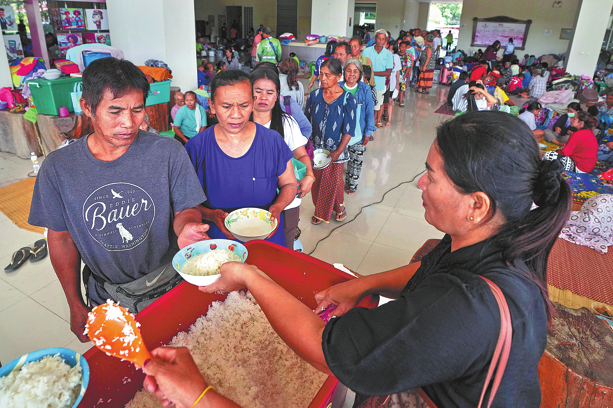
People-to-people exchanges have become closer. Nine editions of the China-Arab Dialogue on Civilization have been held, and countries such as the UAE, Saudi Arabia, Egypt and Tunisia have included the Chinese language in school curriculums.
Thanks to innovation, Sino-Arab ties have been growing on the multilateral and bilateral fronts. Since being inaugurated in 2004, the China-Arab States Cooperation Forum has grown into a major collective cooperation platform. The ninth ministerial meeting of the forum, held in 2020, approved the forum's plan for advancing cooperation and joint development between 2020 and 2022, including 107 specific measures in 20 fields such as economy, politics and energy.
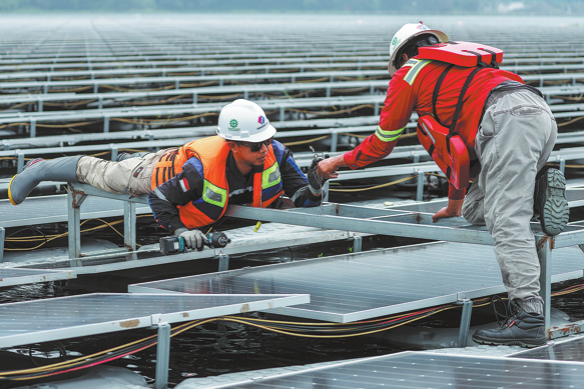
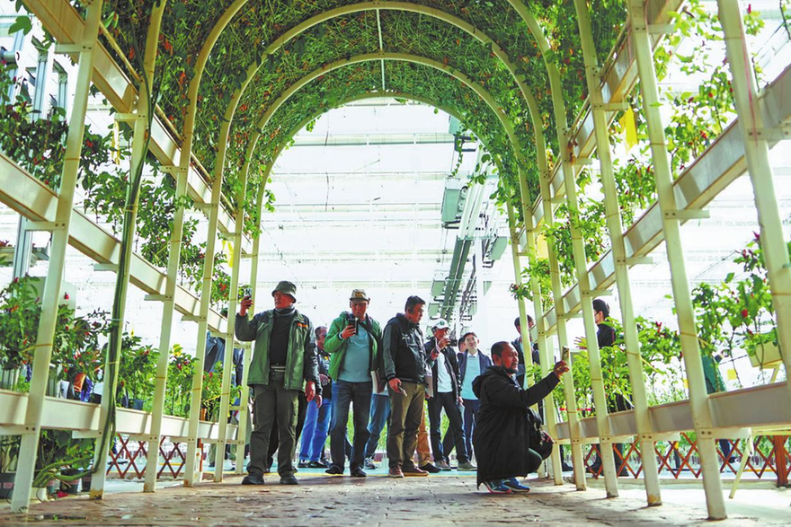
In the past decade, China and Arab countries have enhanced cooperation in high and cutting-edge technologies, such as 5G, big data, spatial information and new energy. The two sides have also carried out cooperation in desert transformation, space exploration, sea rice cultivation, the peaceful use of nuclear energy and the digital economy.
High-level exchanges have been driving the development of the traditional China-Arab friendship, the China-Arab model and China-Arab relations. The leaders of China and Arab countries have long maintained close communication.
In a world fraught with uncertainties and changes, China and the Arab world should deepen their cooperation to jointly advance the Belt and Road Initiative, make more contributions to preserving regional peace and security, and jointly tackle global challenges such as pandemics and climate change, with a view to building a human community with a shared future.
The author is former ambassador for China-Arab States Cooperation Forum affairs for China's Foreign Ministry and former ambassador to Sudan and Saudi Arabia.