Security conference shouldn't be stage just for US, NATO







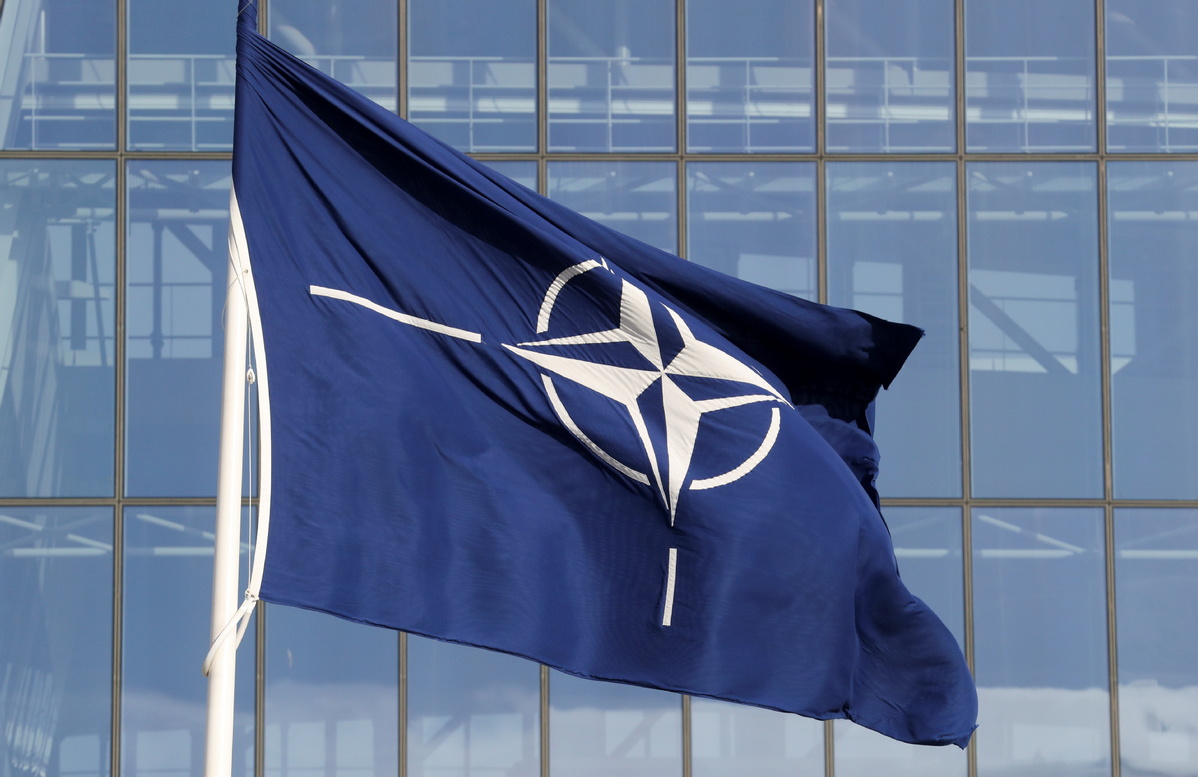
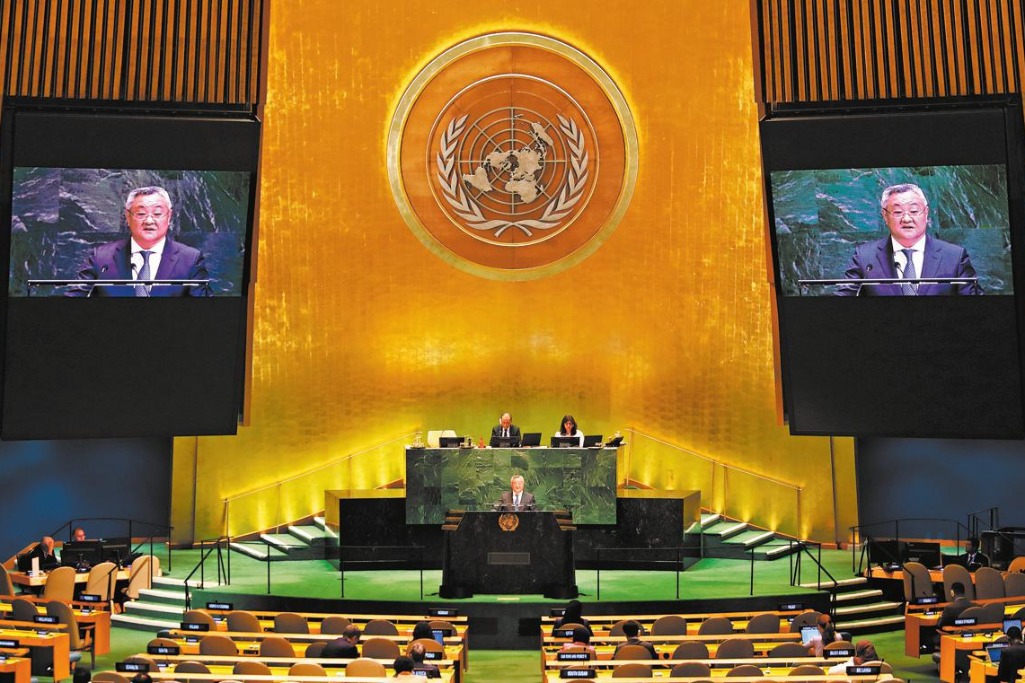
The 59th Munich Security Conference — to be held from Friday to Sunday — comes at a time when the world has reached a turning point due to not just the Russia-Ukraine conflict, whose end doesn't seem anywhere in sight, but more importantly the US' effort to divide the world.
The Munich Security Report 2023 said the Russia-Ukraine conflict would be the key focus of the meeting but the list of key participants does not include any from Russia. That itself is a flaw for the so-called Munich Rule of engaging and interacting with each other without pedagogy or ignoring one another.
The excessive representation of the United States and NATO members at the Munich conference means the rest of the world, especially the Global South, won't be properly heard during the event.
It is impossible to resolve the Russia-Ukraine conflict by turning a deaf ear to Russia's demands and instead amplifying Ukraine's or NATO's voice — whether or not NATO is involved in the conflict depends on how you define involvement.
The majority of the countries have not joined the US-led West to announce sanctions against Russia after seeing the hypocrisy of NATO member states in the bloody invasions of Afghanistan, Iraq, Libya and other countries. The developing nations are bearing the brunt of Western sanctions, which have contributed to the skyrocketing energy prices, food shortage and supply chain disruptions.
For many countries, the escalation of the Russia-Ukraine conflict and the possibility of a third world war is a real concern. Even the Munich Security Conference, which prides itself as a platform for dialogue and conflict resolution, will find it difficult to answer why there was such a lack of diplomacy and negotiations over the past year. As for the US and NATO officials, they will simply blame Russia for the conflict instead of doing some self-retrospection and correcting the mistakes such as the reckless efforts to expand NATO.
If NATO believes the resolution to the conflict is more expansion, including far beyond the North Atlantic and into the Asia-Pacific, then it is a recipe for even greater global instability.
China, which maintains good relations with both Russia and Ukraine, has been urging both Russia and Ukraine to end the conflict and resolve their differences through negotiations, which has been supported by many other countries, especially those from the Global South.
While the Russia-Ukraine conflict deserves the precious time the Munich Security Conference has dedicated to it, MSC Chairman Christoph Heusgen said that he hopes China and the US will take this opportunity to defuse bilateral tensions, which is no less urgent a task than resolving the Ukraine crisis.
The most consequential bilateral relationship of the 21st century is facing its worst crisis in half a century. But given the outsized US presence at the Munich Security Conference, to what extent can the conference reflect on the US' trade wars, tech wars and new Cold War against China over the past years is a big question.
People are more likely to hear earfuls of US clichés, clichés that paint the world in black and white and create an imaginary battle of democracy versus autocracy in a bid to deny the great diversity in the world.
The US' efforts are aimed at maintaining its global hegemony, which will help it abuse its military, economic, technological and financial power to coerce, sanction and bully other countries. But it will be an exercise in futility if Washington tries to stop the emergence of a multipolar world, where China, India, ASEAN member states, and the African, Latin American, European and Middle Eastern countries will have an equal say in global affairs.
Similarly, the underrepresentation of China and other emerging economies in the International Monetary Fund and other global organizations, too, needs to be improved to reflect the reality of the 21st century.
The author is chief of China Daily EU Bureau based in Brussels. chenweihua@chinadaily.com.cn