


A village finds its meaning







As the wealthiest man in Shawan, Chen Xiufu rented most of his fields to other villagers. Aged over 70, he could do all kinds of rural work, such as weaving straw sandals and building sheds. A village worthy, he was invited on various occasions to make decisions for villagers.
The head of the village Chen Xiugen, also a Taoist priest, was often invited to perform religious rituals at weddings or funerals. Another villager Chen Qishu kept the village's land registry document so that he knew better than the government about how many fields the villagers had and became a consultant for tax collection.
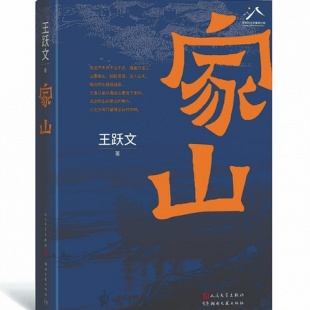
The novel includes all kinds of details about daily life — clothes in different colors, dishes for Spring Festival, offerings for deities, pickled pork over a fire pit, a villager named Xi'er walking around carrying duck eggs, from which ducklings would hatch and start honking.
"Describing daily, ordinary life in a leisurely and flowing manner, the novel presents poetic qualities and intense feelings," says Niu Yuqiu, literary researcher from China Writers Association.
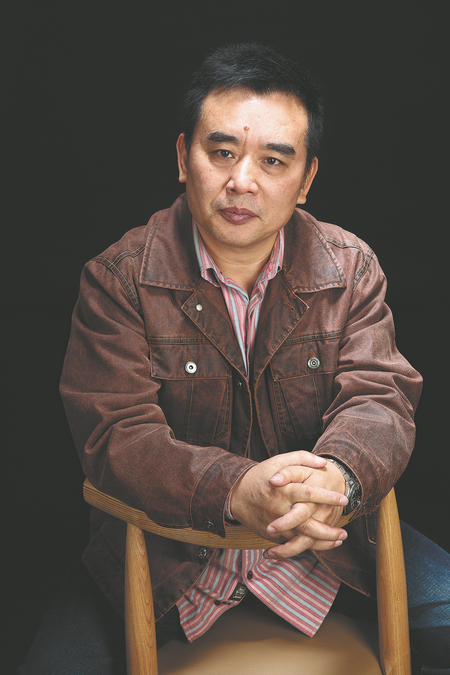
Wang, now 61, comes from Xupu county, Huaihua of Hunan province. Growing up in the countryside, he knows a lot about crops, plants, animals, farming tools and the 24 solar terms. He did not leave his village until he went to college at 19.
Although he started writing in his 20s, his rural experiences had never played a part in his work until he reached his 40s. That was after a late night reading the pedigree of his family.
"I read about the roads that people of my grandfather and father's generations had taken, especially a biology of the most famous village worthy. I was deeply touched, so I decided to write a novel that I originally named The Pedigree," Wang says.
His understanding about life then changed. He says he realized that the true root of Chinese traditional culture runs deep in the rural areas rather than in the cities. He started re-examining and understanding his village — the spiritually enriched rivers and mountains, people's implicit but honest ways of expressing feelings, their pure and sincere attitudes and nature, and the ethics in the countryside that value justice over personal gain.
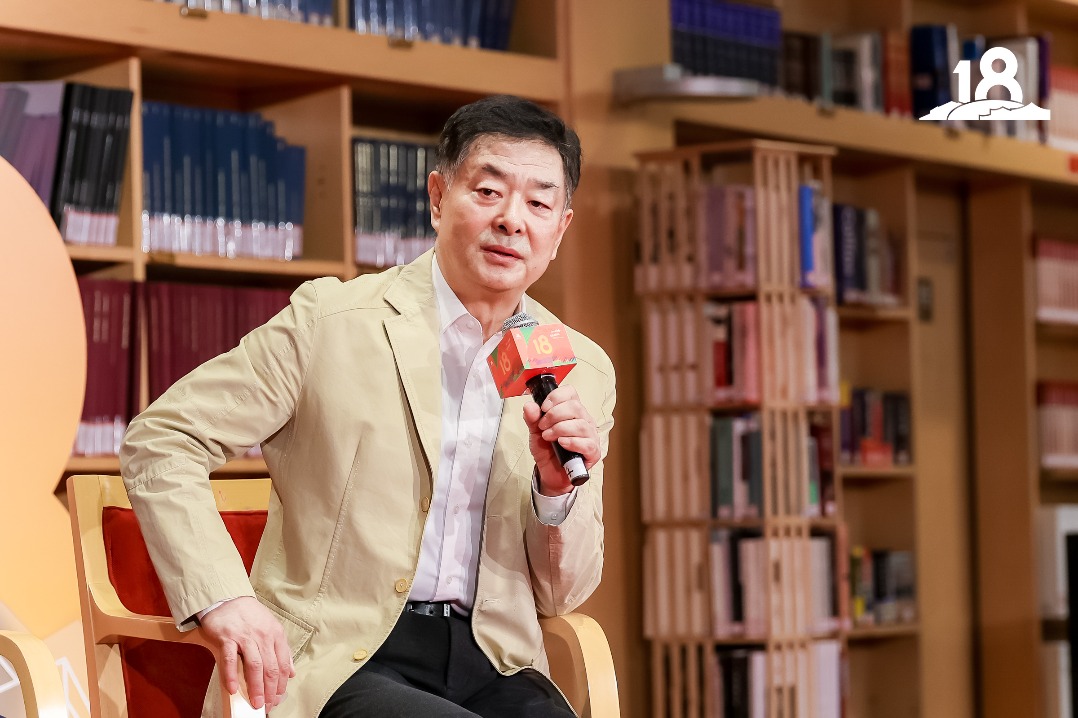
"The rural areas represent the biggest part of the country and the most authentic China," the author said at the book's launch ceremony.
About nine years ago, Wang, already a best-selling writer, stopped to collect and read a large amount of historical literature and local chronicles about the rural areas in Hunan province including registered farmland systems and tax collection systems. After some field studies, he was able to more deeply understand the local social structure and cultural practices, as well as the people.
To better represent the feelings of the characters in the countryside, Wang employs the local dialect in the work.
"If it's standard Mandarin, it's impossible," he says.
"When I use folk language, I can learn not only the vocabulary and rhetoric of the villagers, but also their countenance, accents, ways of thinking and their attitudes toward life, and so on."
Cong Zhichen, a literary critic from Peking University, says that, against the backdrop of national rejuvenation, the novel not only writes about history, but also displays a deep sense of history.
For example, Wubazi in the novel starts out as the village rascal, a troublemaker that abuses his parents. But, enlightened by Chen Shaofu, he joins the resistance against Japanese aggression.
Cong says: "Actually these people were common in the countryside, but they held a belief and a sense of ethics that helped them find meaning in life by joining in with the progress of modernist and contemporary history.
"So, this novel shows why China chooses to stick so firmly to such a modernization path. It is consistent with the country's folk ethics."
Contact the writer at yangyangs@chinadaily.com.cn