Manila shouldn't expand defense pact with Washington







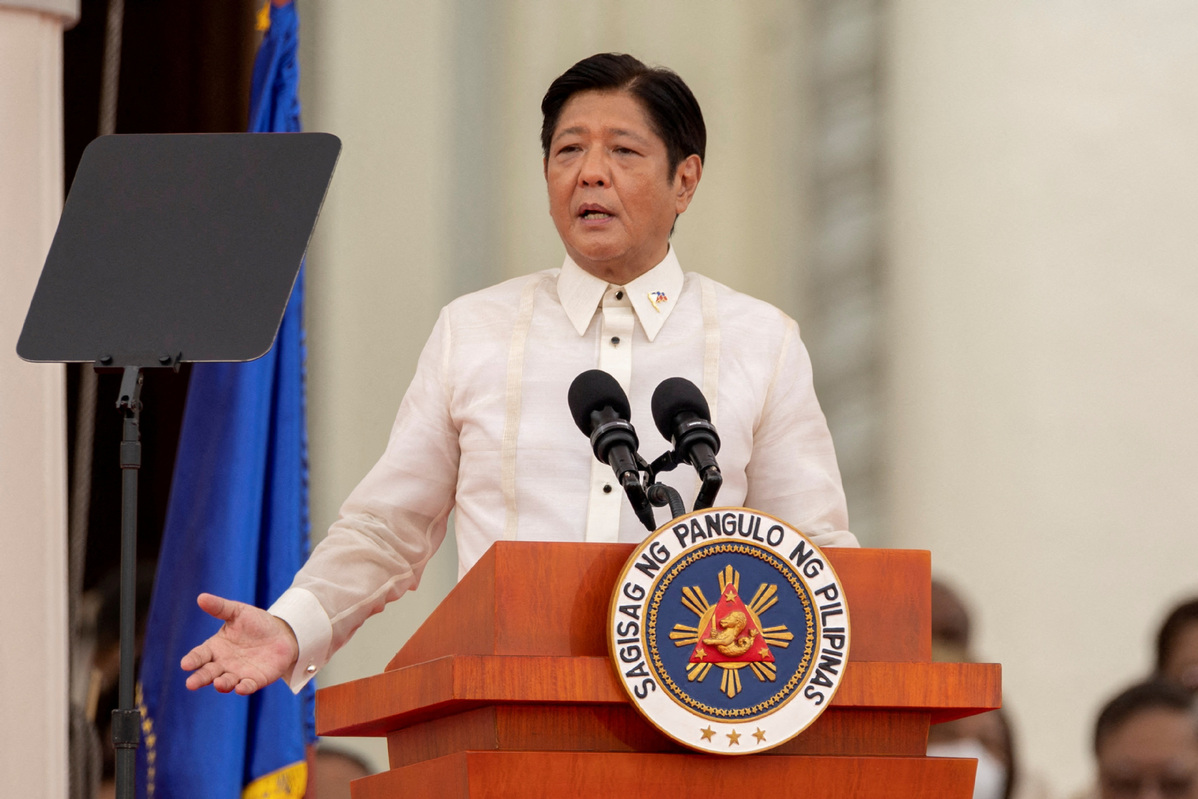
Despite some local opposition, Philippine President Ferdinand Marcos Jr recently announced his approval of the expansion of the Enhanced Defense Cooperation Agreement to allow the United States to build military facilities in four new locations in the Philippines.
Although the locations have not been announced, the ones that have been discussed are intended to provide the US military with greater operational access to the Taiwan Straits, Korean Peninsula and South China Sea.
When the Philippines and the US signed the cooperation agreement in 2014, the two countries agreed to train together in order to strengthen their interoperability in responding to natural disasters, humanitarian situations, terrorist threats and maritime security challenges.
Under the agreement, the Philippine government allowed the construction of five US military facilities: Fort Magsaysay in Nueva Ecija, Basa Air Base in Pampanga, Antonio Bautista Air Base in Palawan, Mactan-Benito Ebuen Air Base in Cebu and Lumbia Air Base in Cagayan de Oro.
Since then, Philippine and US forces have held joint and combined military exercises in the areas of humanitarian assistance and disaster response, search and rescue operations, counterterrorism cooperation and maritime domain awareness.
What has been downplayed by the Philippine and US authorities about the Enhanced Defense Cooperation Agreement is its strategic intention to counter China's growing international influence, particularly in the South China Sea.
In a joint media briefing with Philippine Senior Undersecretary and Officer in Charge of the Department of National Defense Carlito Galvez on Feb 2, US Secretary of Defense Lloyd J. Austin III admitted that the Enhanced Defense Cooperation Agreement (EDCA) is "part of our efforts to modernize our alliance, and these efforts are especially important as the People's Republic of China continues to advance its illegitimate claims in the West Philippine Sea".
Thus, the agreement's larger goal is to support US efforts to gain a strategic advantage over China amid their worsening relations.
The Pentagon has requested that the US Congress approve the $842 billion budget for the Department of Defense in order to modernize the US military as it prepares for a possible confrontation with China.
General Mark Milley, chairman of the Joint Chiefs of Staff, stressed during a recent budget hearing that China's current actions "are moving it down the path toward confrontation and potential conflict with its neighbors and possibly the United States". He added that "preparing for war is extraordinarily expensive, but it's not as expensive as fighting a war. And this budget prevents war and prepares us to fight if necessary".
Apparently, the expansion of the Enhanced Defense Cooperation Agreement is part of US access arrangements in Asia to decisively implement the US' military deterrence strategy and defense preparation plan against China. As such, the expansion of the agreement largely serves US military interests to counter China rather than catering to the national interests of the Philippines, which include coexisting peacefully with China.
Hence, the expansion of the defense cooperation agreement will inevitably harm the Philippines' security interests.
The Chinese embassy in Manila has already warned that expansion of the agreement could "seriously harm Philippine national interests and endanger regional peace and stability".
Furthermore, the Chinese embassy said, "Whereas the US claims that such cooperation is intended to help the disaster relief efforts of the Philippines, and some Americans even tout the EDCA sites as drivers of the local economy, it is plain and simple that those moves are part of the US efforts to encircle and contain China through its military alliance with (the Philippines)."
Philippine and US security officials claim that the defense cooperation agreement aims to strengthen the Philippine-US military alliance and to reaffirm the commitment of the US to defend the Philippines against external attacks. However, the agreement only deepens the Philippines' reliance on the US for its defense. Instead of relying heavily on the US for its national defense, the Philippines needs to pursue self-reliance to defend itself.
Local residents have voiced their concerns about expansion of the agreement. Governor Manuel Mamba of Cagayan Province has already conveyed the worries of his constituents that the agreement could turn his province "into a key target of the Chinese military if a conflict involving the US military breaks out over Taiwan".
Although he said that it "is the president's call, not mine", he emphasized that he is "against EDCA sites in my province", and he raised the issue of the lack of local consultations and stakeholder participation in the proposed expansion of the defense cooperation agreement.
Evidently, the US is pushing for expansion of the agreement in the Philippines as part of the Pentagon's preparations for conflict.
Rather than promoting Philippine security interests, the expansion of the agreement will only endanger Philippine interests by possibly dragging the country into a war not of its choosing.
It is imperative that patriotic and freedom-loving Filipinos oppose the cooperation agreement and its expansion to make the Philippines a zone of peace rather than the battleground for another US proxy war.
The author, a national security analyst, is president of the Philippines-China Friendship Society. The views do not necessarily reflect those of China Daily.