Western media stir up anti-China hysteria







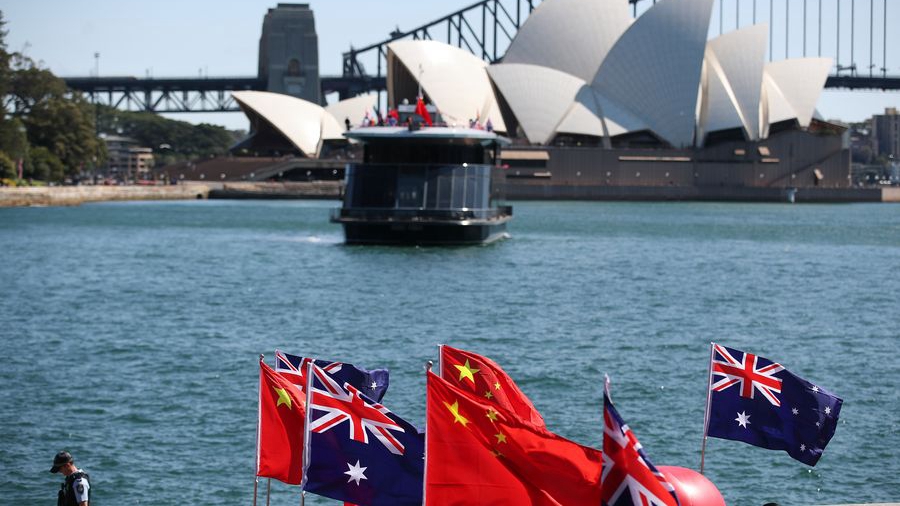
The anti-China campaign by some in the West never stops, from Hong Kong and Xinjiang to so-called debt traps, and from COVID policies that were criticized as too strict and then as too permissive, a shrinking economy that is now growing too fast, and renewed talk about Chinese influence in the South Pacific.
The "experts" in mainstream Western media say nothing, of course, about the nearly 800 United States military bases around the world, or the AUKUS security alliance between Australia, the United Kingdom and the US.
In Western media accounts, there is an assumption, never spelled out, that China will behave as aggressively and violently as the US has long done in endless foreign wars. But China is not behaving that way. It does not militarily threaten the US or its allies. However, it refuses to accept the world hegemony that the US insists on for itself.
The current anti-China hysteria posits that China could establish naval bases in the South Pacific. Does any of this stand up?
First consider some necessary background and context.
The West, including Australia, has plundered the South Pacific for centuries.
After World War II, it was time for the region to begin recovering, but France, Britain and the US each selected areas with thriving fishing industries and huge potential for future tourism for the testing of new weapons. Some parts of the region became, and remain to this day, nuclear wastelands.
The Western colonial attitude continues with soothing words but little real action on climate change and rising sea levels, problems caused overwhelmingly by rich countries such as Australia.
We patronize the people of the region by calling islanders "family "and describing the region as our "backyard".
With their experience of Westerners, it is not surprising that many South Pacific countries seek improved relations with an emerging China.
The media hype a few years ago was about the so-called Chinese debt trap, which hasn't happened. If there are debt traps, blame rests principally with the International Monetary Fund and the World Bank for their failures.
In 2018, David Wroe in the Sydney Morning Herald warned about a Chinese "naval base" in Vanuatu. It didn't happen. The Vanuatu government said that it "was not aware of any such proposal". It seems that the Vanuatu government was interested in a new wharf for cruise ships.
With the same anti-China hysteria in May this year, a report in the Sydney Morning Herald told, without any hard evidence, that "a base in the Solomon Islands or Vanuatu would bring the Chinese military within just 2,000 kilometers of the Australian mainland and upend the current balance of power in the South Pacific".
But would the Chinese really want a military base in the Solomon Islands to threaten Australia?
In fact, any threat to Australia would be minimal, because China would not be able to defend the 7,000-km-long supply line back to China. And in between are two very large US bases, in Guam and the Marshall Islands.
The worst that could happen is that China would see a military base in the region as a signal that the Pacific is no longer a US lake. But the military value to China would be minimal.
The best way for Australia to establish legitimate influence in the region is not by acting as a proxy for the US military, but by negotiating with countries in the region for entry rights to Australia for their nationals to study, work or live and to become Australian citizens.
The author is founder and editor-in-chief of the website Pearls and Irritations and was formerly secretary of the Australian Department of the Prime Minister and Cabinet and Australian ambassador to Japan.