Xi Focus-Closeup: A rural street food's recipe for success







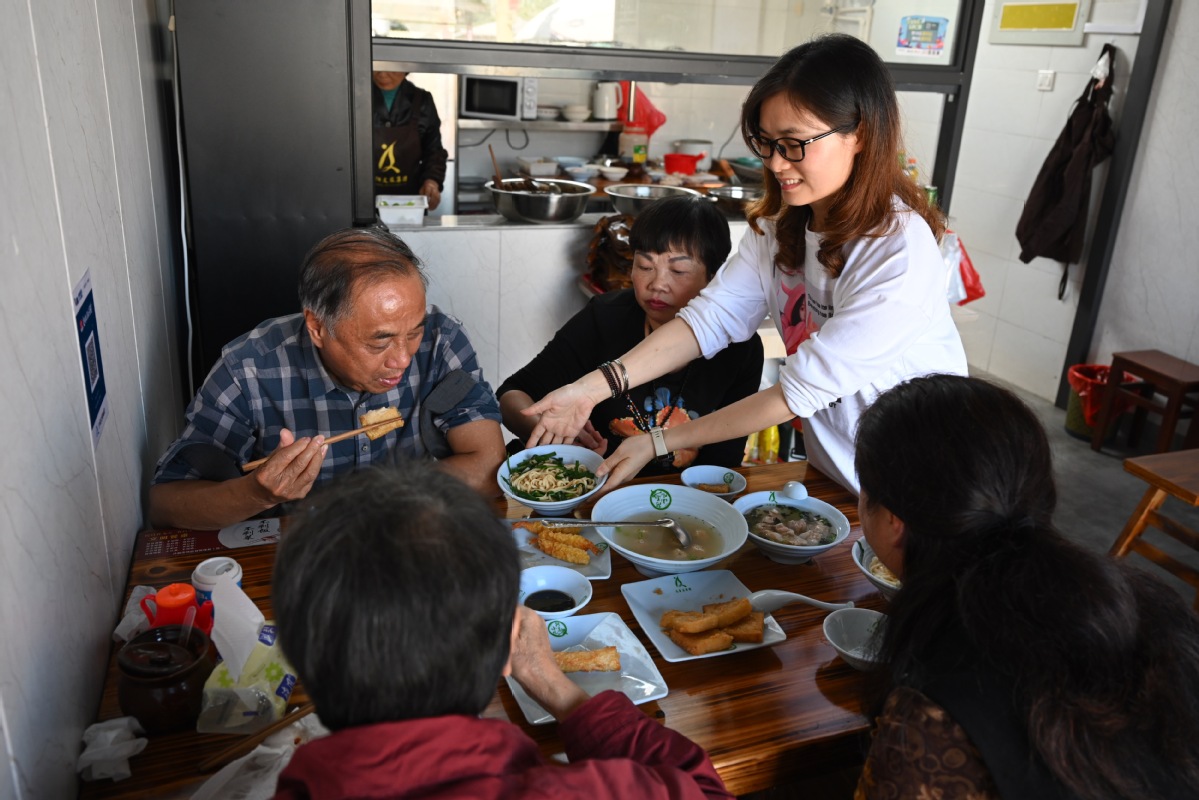
BEIJING -- Taking a stroll in a Chinese city, big or small, one is likely to encounter restaurants under a popular red Pac-Man-like logo -- Shaxian Delicacies, a sign indicating palatable foods for reasonable prices.
Originating in a rural county in Sanming, Fujian province, Shaxian food has evolved from a local street delicacy to a nationwide sensation, with franchises spread across the country.
Yu Guangqing was among the pioneering locals who ventured into taking the local snacks beyond their region between the late 1980s and early 1990s.
According to him, the remarkable rise of this unique food industry has received the support and encouragement of President Xi Jinping during his tenure as a provincial leader of Fujian.
From 1996 to 2002, Xi made 11 fact-finding trips to Sanming. During that time, the demand for affordable yet flavorful fast food surged due to the rapid increase in the migrant worker population in cities. Shaxian eateries emerged on the streets of major cities, offering dishes like peanut butter noodles, wontons, fried rice noodles, and meat soup.
In 1999, Xi visited Shaxian and recognized the niche market that Shaxian delicacies had captured. To maximize their business potential, Xi emphasized the importance of conducting extensive market research and giving increased attention to training of relevant personnel.
The following year, he visited Shaxian again. Conversing with locals, Xi said Shaxian must turn its distinctive food industry into a new economic growth engine.
"His words inspired us," recalled Lin Yingsong, who soon joined his townsfolk to run Shaxian eateries outside their home province.
In 2001, Lin traveled to the neighboring Zhejiang Province and opened a Shaxian eatery with his wife. The business was brisk. The family opened more restaurants and expanded to more provinces.
Like Lin, many locals traveled afar to populate Shaxian franchises throughout the country and even abroad. A trade guild was also founded to provide training and technique guidance for relevant businesses.
The development of the food industry also spurred the growth of the breeding industry and tourism. These all helped Shaxian's rural per capita annual income increase by nearly eight times in about a quarter of a century.
Xi had helped Shaxian by directing the right path to make the industry bigger and stronger, Yu recalled.
In 2021, President Xi, also general secretary of the Communist Party of China Central Committee and chairman of the Central Military Commission, revisited Shaxian during his Fujian inspection tour.
Xi visited a food street serving various Shaxian snacks and talked with people in the snack industry. "I came here to see how the snack industry has developed and its prospects," Xi told them.
Highlighting the role that local snacks and similar industries can play in driving rural development, Xi asked people in the industry to innovate and improve their businesses.
And it was not just Shaxian delicacies.
In 2021, while inspecting south China's Guangxi Zhuang Autonomous Region, Xi made a similar choice to visit a food-processing zone of Luosifen, an iconic dish of the region and known for its pungent smell. There, he learned about the industry's role in promoting employment and increasing local farmers' income.
Noting that developing signature industries is a practical measure to boost the real economy, Xi called for more support for private enterprises to help them grow.
The snack industry is just a part of China's rural industries, which range from planting and breeding to agricultural product processing and tourism.
Over the years, Xi has attached great importance to developing industries that fit local conditions in rural revitalization.
"The revitalization of industries is the top priority of rural revitalization," he said.
On his trip to Guangdong Province in April, he visited a lychee orchard in a village where he learned about the technicians' income and the challenges the lychee industry faces, particularly fresh-keeping techniques.
"The prospects for developing signature local industries are very promising," he said.




- Zhangjiajie National Forest Park welcomes its first snow
- Revelers celebrate New Year's Eve in Beijing
- Communist Party expels former senior Dalian official
- Yunnan rose named after uncle 'who looks like a flower'
- Changsha becomes fourth city to host Chinese-built C919 jet
- Xi delivers 2026 New Year message