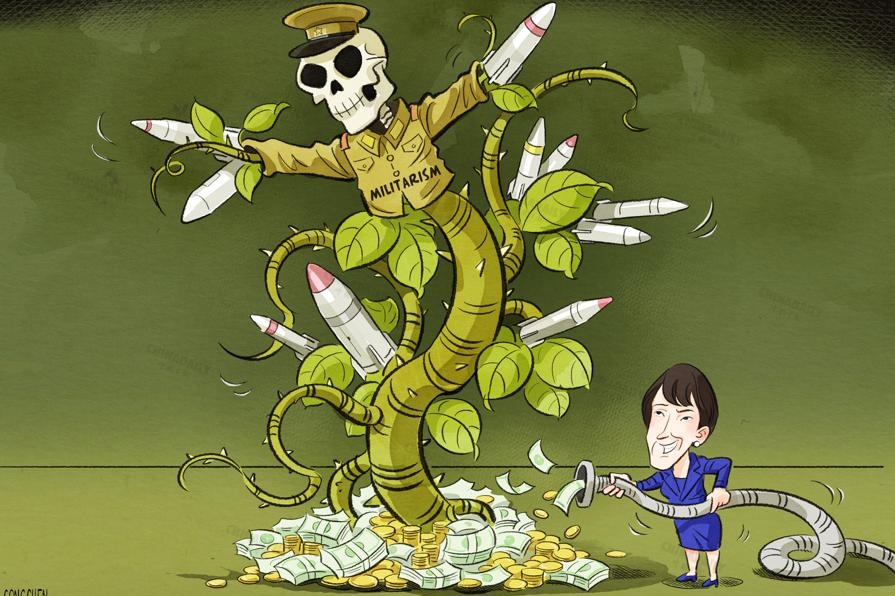
Experts' take on US debt crisis







Why nations are seeking alternatives to the dollar
By Maya Majueran
After World War II, the US dollar became the prime global reserve currency. Since then the US dollar has been dominating international trade, and has become the dominant currency in international banking and a safe foreign exchange reserve for financial institutions and businesses across the globe.
The dollar's status as the global reserve currency was paved by the Bretton Woods Conference in July 1944, where 44 countries agreed to establish the International Monetary Fund and what in 1945 became the World Bank Group. But despite being founded by more than 40 countries, the fundamental principles of the IMF and the World Bank have promoted the interests and ideology of the US and a few other Western European countries by imposing strict and additional conditions on providing assistance for other countries.
As of the end of last year, the US dollar accounted for 58.36 percent of the global foreign exchange reserves, with the dominance of the dollar giving Washington far-reaching advantages over its rivals. For example, unlike other countries, the United States can meet its international obligations, overcome budget constraints, raise expenditure, and give loans or even grants to other countries just by printing more currency notes.
The US has also weaponized the dollar to maintain its global economic and geopolitical position. It has imposed economic sanctions on nearly 40 countries, including Cuba, Russia, the Democratic People's Republic of Korea, Iran and Venezuela, affecting nearly half of the world's population, causing severe hardship for ordinary people and seriously disrupting economies.
Additionally, the US Federal Reserve's aggressive tightening policy has made the dollar a much stronger currency. The Fed policy rate is now set within a range of 5 percent to 5.25 percent, up from near zero a year ago. With the dollar continuously gaining in strength, other economies' currencies have been weakening, pushing up the prices of imported goods, including food, fuel and medicine, and exporting inflation to other countries.
A stronger dollar has also increased other countries' borrowing costs, putting more pressure on central banks to raise their respective interest rates, which incidentally will increase consumers' borrowing costs for housing mortgage, car loan and other items at a time when inflation is still very high. As a result, many developing countries with large debts have been hard hit by the strengthening dollar because their external debt stocks and debt service payments are mostly denominated in dollars, making it even harder for them to borrow in the open market to finance their budget deficits.
The emerging market economies are outraged by the dollar's dominance as a reserve currency, and are searching for viable alternative currencies. And with an increasing number of countries choosing to use their own currency to settle bilateral trade payments, the trend of de-dollarization is gaining momentum.
Countries want to diversify their foreign exchange reserves away from the US dollar. Although the dollar accounted for 58.36 percent of the global foreign exchange reserves in the fourth quarter of last year, that share has been falling gradually. On the other hand, the euro accounted for about 20.5 percent of the global foreign exchange reserves at the end of 2022 while the Chinese yuan accounted for nearly 2.7 percent.
Many developing countries have been working to internationalize their currency and promote its use in international trade and investment, and more and more countries are calling for global trade to be conducted in currencies other than the US dollar.
As for China, it has been promoting the use of the yuan in bilateral trade and investment over the past years. In fact, the yuan has become the third-largest currency used for trade settlement and fifth-largest reserve currency.
India, too, is taking steps to promote the use of the rupee in international trade as part of its efforts to boost exports and slow down the depreciation of the rupee, which highlights the pressure a strong dollar has put on the foreign exchange reserves of economies such as India.
Moreover, Saudi Arabia, the world's largest crude oil exporter, is open to discussing oil trade settlement in currencies other than the US dollar, which could put the petrodollar in danger — and the end of petrodollar will inevitably weaken the US dollar.
And Brazilian President Luiz Inacio Lula da Silva has called on developing countries to take measures to replace the US dollar with their own currencies in international trade and urged BRICS member states to decide on an alternative currency for conducting trade. This could have a huge impact on the US dollar, as BRICS members — Brazil, Russia, India, China and South Africa — account for one-third of the global economic output, with their combined output being higher than that of G7 economies.
A common BRICS currency could be a game-changer; it could even break the US dollar's global hegemony. Given the desire of the emerging economies to conduct free trade in currencies other than the dollar, ideally the world should have five reserve currencies with equal weight — the US dollar, the euro, the yuan, the rupee and a common BRICS currency — with countries having the freedom to conduct trade in any currency they like.
The author is director of Belt and Road Initiative Sri Lanka, an independent and pioneering Sri Lanka-based think tank. The views don't necessarily reflect those of China Daily.