Experts' take on US debt crisis







Bipartisan politics in Washington threatens world
By Ni Yueju
After the two serious debt ceiling crises in 2011 and 2013, the United States was once again caught in a debt ceiling crisis for over a month, causing widespread concern among the international community over the prospects of the US and global economies.
According to media reports, the House of Representatives passed a bill on Wednesday that would suspend the debt ceiling through to 2025, avoiding a federal default at the last minute. The bill will now go to the Senate.
It is hoped that the US administration will not take its own economy and credit rating lightly, considering that US Treasury Secretary Janet Yellen has said the US has "no good reason to generate a crisis of our own making".
But what is the debt ceiling? A system unique to the US, the debt ceiling is a limit on the total amount of government borrowing. It was first put in place during World War I and gave the Treasury Department blanket authorization to borrow money up to a certain amount to help fulfill the federal government's payment obligations. Its purpose is to prevent the federal government from issuing national debt without limit, thereby helping it avoid "insolvency".
The Treasury Department's authority to borrow money ceases once it reaches the limit, meaning the federal government can no longer issue new debt. The US government would then face a shutdown if the debt ceiling is not raised and defaults on its maturing debt and interest payments.
Due to its moderate fiscal deficit policy, which can increase government spending and market liquidity and promote economic growth, raising the US' debt ceiling has long been a norm. Since US Congress passed the piece of legislation in 1917, every instance of potential default has been resolved in the final moments or at the last minute by raising the debt ceiling.
In fact, since 1960, the Congress has raised or suspended the debt ceiling 78 times, and the debt limit has increased from about $300 billion to $31.4 trillion, roughly a 105-fold increase.
The recurring "debt crises" in the US can be attributed to several factors. As the scale of the US government's borrowing continues to increase and US politics becomes increasingly polarized, the debate over the debt ceiling has become an important bargaining chip between the Republicans and the Democrats in Congress. Both parties test each other's limits and seek to gain more political leverage out of it. In order to reach a consensus on raising the debt ceiling, the Democrats and Republicans must agree to significantly reduce the deficit in the future.
The main disagreement between the two parties lies in the approach to reducing the deficit. Should it be achieved by "increasing revenue", that is, by raising government income, or by "cost-cutting", meaning reducing government spending?
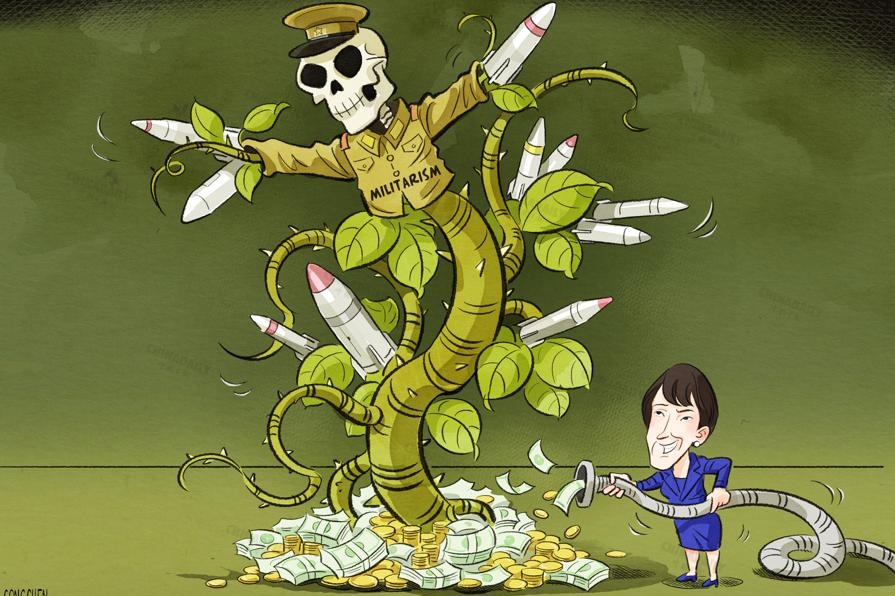
The Democratic Party, in order to please its traditional low-income supporters, aims to maintain a certain level of social security for them. So the Democrats are reluctant to make significant cuts to their social security and the healthcare programs. Instead, they usually propose to address the fiscal crisis by reducing the defense budget and/or increasing taxes on the wealthy.
On the other hand, the Republican Party, which tends to enjoy more support among the middle class and the rich, opposes any increase in taxes and focuses primarily on budget reforms.
The fact that the two parties have agreed in principle to raise the debt ceiling will prevent the crisis from becoming a "black swan event "affecting the global economy this time. However, the continuous raising of the debt ceiling by Congress means the US government can overdraw in the future without restraint, continuing the cycle of borrowing more to pay off old debts. While this approach can balance the interests of the two parties, their game of brinkmanship poses significant risks, particularly in an era of increasing political polarization and divisions.
If it spirals out of control even once, it will not only severely impact US politics and the US economy but also drag the world economy into a deep economic recession. Therefore, the world must remain vigilant against the US' internal power game.
The author is a researcher at the Institute of World Economics and Politics, Chinese Academy of Social Sciences. The views don't necessarily reflect those of China Daily.
If you have a specific expertise, or would like to share your thought about our stories, then send us your writings at opinion@chinadaily.com.cn, and comment@chinadaily.com.cn.