Cozy coffee house blends into Tibetan life







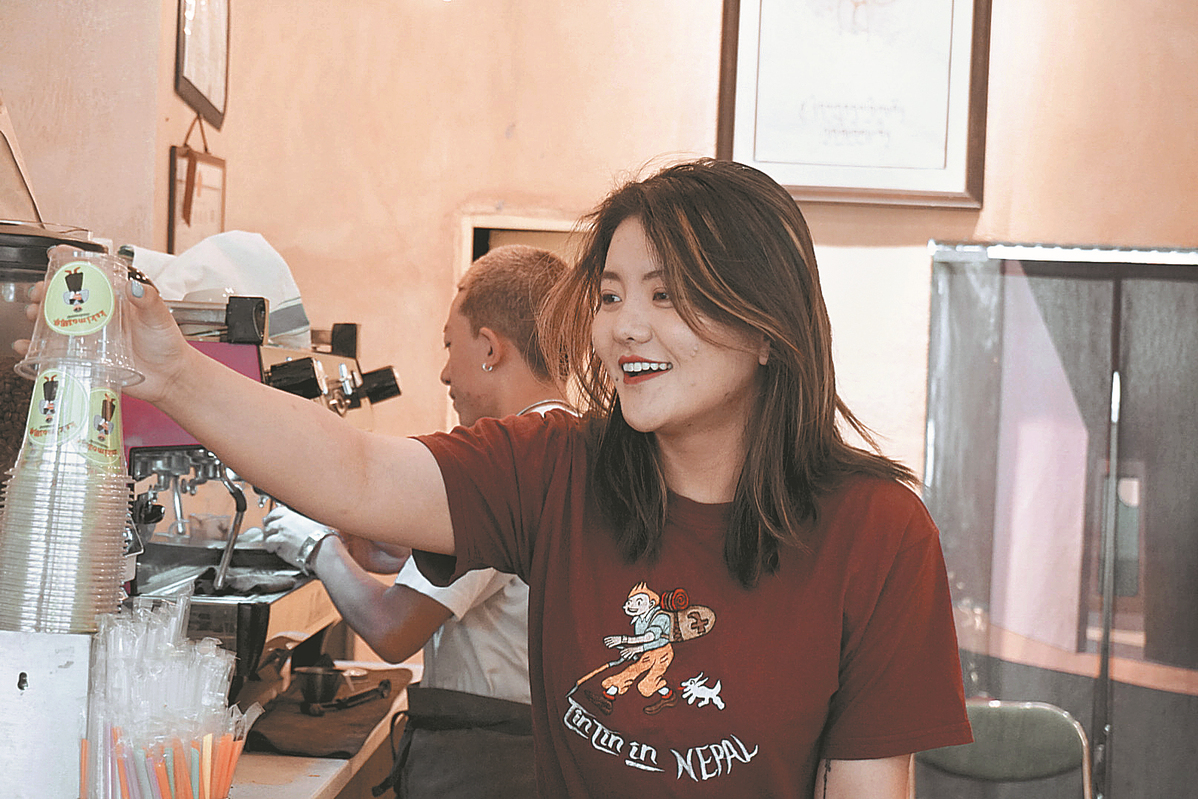
One sunny morning in Lhasa, capital of the Tibet autonomous region, Gongsang Dekyi, owner of the Kakimo Cafe, was busy preparing to open for the day. The cozy environment and tasty coffee have made the cafe a popular hangout for young residents in the city.
Gongsang Dekyi is a business owner now, but she used to work in the public sector.
After completing her studies, she returned to work in Tibet, as have many of her peers — and as her parents expected. However, she felt uneasy about doing a job in which she could be replaced by anyone on a moment's notice.
"I have studied in other provinces outside Tibet since I was very young. During my time at college in Beijing, I got a chance to participate in an overseas exchange program for further study," she said.
Those years of study shaped her in many ways and gave her a strong sense of independence. "For me, a stable job is another form of instability," Gongsang Dekyi said.
Breaking away from the boredom of mundane work, she began to share her life on social media. She opened a snack bar and nursed her dream of opening a coffee shop, which had been on her mind for a long time.
Tibet's unique tea culture, coupled with the slow pace of the city, once sent many residents of Lhasa to its traditional sweet tea houses in their free time. With the change of times and the impact of new cultures, coffee has entered the picture. The aromatic beverage has gradually infiltrated daily Tibetan life, especially among the young. "I have loved the cafe atmosphere since the very first time my mother took me to drink coffee," she said. "I thought it would be nice if I could open one that was different from the others, and which embodied my own ideas."
After careful preparation, she opened the Kakimo Cafe in August 2020 in her own neighborhood. "Bringing coffee back to a daily routine" is her philosophy.
"While traditional sweet tea houses are everywhere in Lhasa, coffee shops should play the same role — to serve nearby residents," Gongsang Dekyi said.
During peak season, sales revenues at the cafe can reach 3,000 ($420) to 4,000 yuan a day.
"My study time outside Tibet has deepened my knowledge and expanded my horizons, and now I would like to bring that back to my hometown and give back in my own way," she said.
She is not alone. Tibetan middle schools in other provinces and municipalities have become an important education platform for Tibetan children, bringing precious opportunities for better career prospects.
Like Gongsang Dekyi, many who have graduated from Tibetan middle schools across the country have chosen to return to work in Tibet.
Yangkyi, a 26-year-old lawyer, was taking a leisurely lunch break with a colleague at the Kakimo Cafe. She opted for two Americano coffees from the menu.
Frequently burning the midnight oil, hard-working young people often regard coffee as a vital and invigorating necessity. Yangkyi said she has attended schools in Shanghai since she was 12. Her first encounter with coffee was at a Starbucks, and she thought it was "so foreign".
When she returned to Tibet after graduation, she chose not to enter the governmental system. She joined a private company as a litigator. "In Tibet, many people still feel that working in a company is an unstable job. But I think the system of doing more work for more pay will stimulate my enthusiasm," she said, adding that 10 years of study experience in provinces outside Tibet allowed her to envision a different life.
Since Tibetan middle schools were set up in other provinces in the 1980s, many people with talent have been educated, and most of them have returned to Tibet. "There are many ways to give back to our hometown, and we can choose the way we like most," Yangkyi said.


- Hundreds gather in Guangzhou for ninth Understanding China Conference
- Landmark reached in construction of Jintang Undersea Tunnel
- Shanghai Disney Resort hosts disability inclusion forum
- Guizhou university campus evacuated over suspected gas leak
- China launches online platform for drug price registration
- Beijing enters peak flu season with adolescents most affected