Freeing money from hegemon's grip
BRICS can play an important role in the construction of a new global monetary order








Observing the history of the 20th century, in 1901, the United States was already the largest economy in the world, but only in 1945, after World War II, did it become the hegemonic power in the world. In almost half a century, the international order was marked by the political, economic and military decay of the United Kingdom, by military conflicts that culminated in two major wars, and by the accelerated process of decolonization in Asia and Africa.
Only with the Bretton Woods Conference in 1944, when the US dollar became the leading international currency, did the US secure an essential tool for its power over global finance. Since then, major international economic institutions such as the International Monetary Fund, the World Bank, and the World Trade Organization have developed under the immense influence of the US government. It is worth remembering that the US maintains veto power in all measures taken by the IMF and the World Bank. On the other hand, the WTO remains paralyzed because the US government blocked the Appellate Body by not appointing new members.
Even with the end of fixed parities, when the dollar fell sharply against gold, the US currency maintained its importance in the international system. It is worth mentioning that, in 1971, a troy ounce of gold was worth $35. Currently, the price of a troy ounce is close to $2,000. Even today, despite the substantial decline of the dollar in international reserves, most commercial transactions are carried out with this currency.
The conditions that ensured the hegemony of the US over the past 80 years are being challenged. There are three critical structural changes underway. The first concerns the decline of the Atlantic economic axis. The world's economic dynamism is rapidly shifting toward the Eurasian and "Indo-Pacific" axis.
The second concerns the weight of developing countries in global governance. With the end of colonialism, the countries of the Global South recovered their political independence to choose their paths and increase their political and economic importance in the world order. International forums, such as the G20, were created to express these new geopolitical and financial features.
Third is the emergence of the renminbi as a currency that has exponentially increased its use in international finance. For example, in March 2023, the renminbi surpassed the euro and became the second-largest international reserve currency in Brazil, according to a report by the Brazilian Central Bank.
In this sense, it is worth paying attention to the words of Brazilian President Luiz Inacio Lula da Silva. In April, on his trip to China, he stated: "We can't continue to rely on one currency that you can't print. I hope that the central banks of the BRICS will create a new currency, like the euro. We can do it." Lula repeated this idea at the last G7 meeting, held on May 30 in the Japanese city of Hiroshima, where he stressed the importance of creating monetary mechanisms that are not subject to the interests of a single country.
The issue of creating a new international monetary arrangement is necessary to face the structural changes mentioned earlier. Currency must express the value of goods and the relative changes resulting from different levels of productivity in each country. In addition, it is necessary to strengthen the financial data transmission system, so it is not subject to unilateral sanctions by any government.
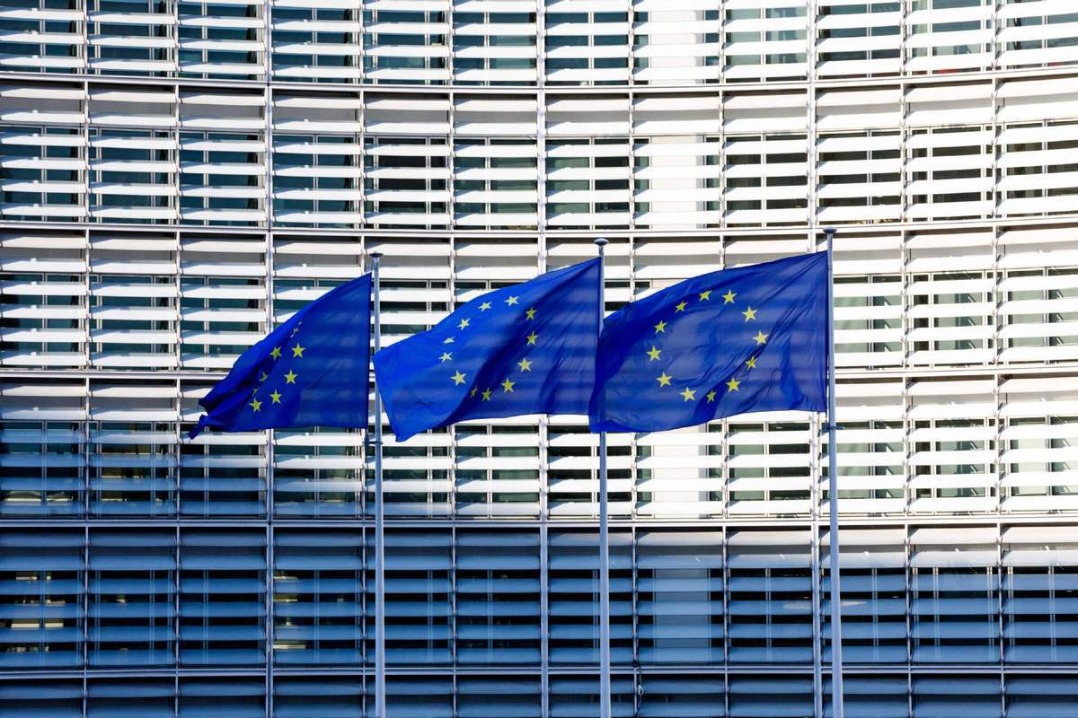
Creating a single currency for different countries is not an easy task. As we can learn from the experience of making the euro, the process lasted decades, from the creation of the European Payments Union (EPU) to setting up a compensation arrangement, in September 1950, through the design of a floating system of parities in 1979, the so-called European Monetary System, until arriving at the Maastricht Agreement, in 1991, which defined the steps for the launch of the first euro bank notes on Jan 1, 2002.Even so, the trajectory of the euro has been quite troubled. The crisis in Greece between 2009 to 2012, when the Greek Parliament had to approve several austerity packages, exposed the problems of economic coordination because, despite having the same currency, each country in the EU organized different fiscal and budget policies. In the Greek case, there was a crisis of balance of payments and a huge budget deficit. The problem that emerged in Greece spread to Portugal, Spain, Italy, and Ireland.
In the case of the BRICS group, despite the political interest in moving away from the conditionalities related to the use of the dollar, it is necessary to initiate long-term studies to plan the stages of an eventual creation of a common currency. A first step toward a new monetary arrangement would be the creation of a compensation fund formed with the currencies of the member countries to make commercial exchanges viable and help the countries in experiencing a crisis of the balance of payments. This fund would have a different role from the Contingent Reserve Arrangement, created by the BRICS in 2014, foreseen to be activated only in case of crisis and in line with IMF guidelines.
A BRICS compensation fund should guarantee the freedom of member countries to carry out currency swaps according to the bloc's trade and financing needs. This would be the first step toward increasing mutual trust, a necessary condition for creating a new currency.
This step forward by the BRICS would be a significant move to adjust the superstructure of global governance to the new infrastructure emerging from the ascension of developing countries.
The author is a professor of international political economy at the Sao Paulo State University. The author contributed this article to China Watch, a think tank powered by China Daily.
Contact the editor at editor@chinawatch.cn