Old Man'e and the tea: Many flavors of transformation







Southwest China's Yunnan province expected to expand its annual production of sector to 500,000 metric tons by 2025
KUNMING — Though spring, the peak time of year for tea harvesting, has passed, farmer Yan Yanjiao finds himself still busy, navigating his SUV along narrow dirt roads leading to tea gardens on mountain slopes.
The 31-year-old heads the village of Old Man'e in the Blang Mountain ethnic township, located in Menghai county, Yunnan province, along the China-Myanmar border. Home to a little over 1,000 people, the village boasts large acreage of Pu'er tea plantations at an elevation of 1,500 meters above sea level.
Pu'er is a variety of fermented tea traditionally produced in Yunnan. In Old Man'e, tea bushes blend with lush tropical flora and are somewhat hard to spot, presenting a starkly different scene from neat rows of tea bushes.
"April is the busiest period. About 3,000 to 4,000 people flood into our village to pluck, make and buy spring tea. The village is filled with cars from almost everywhere, and buyers definitely need to place orders early for good-quality leaves," said Yan, Party chief of the village.
Cash crop
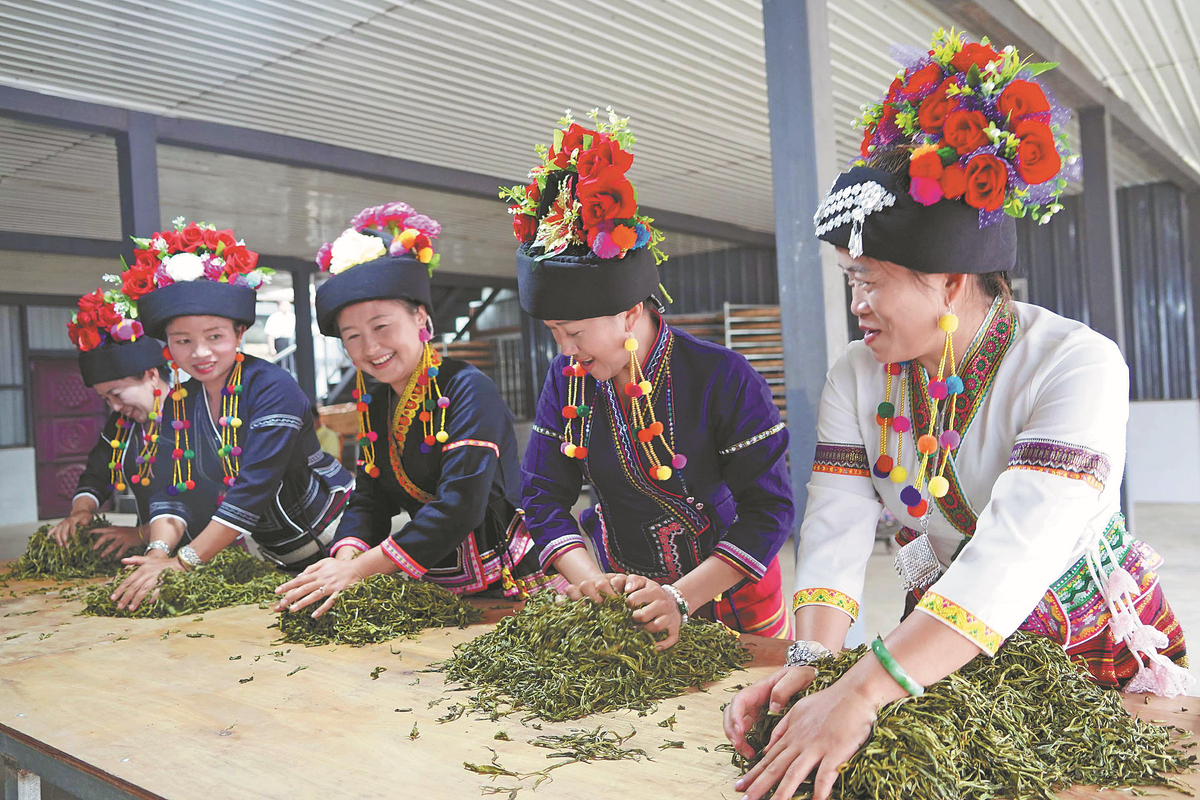
Old Man'e village has a history of over 1,300 years and its tea-planting and drinking culture has been passed down through generations. Most villagers are members of the Blang ethnic group, one of the 56 ethnic groups in China. As descendants of the ancient Pu people, the Blang live at high altitudes and practice agriculture, cultivating primarily rice, cotton, sugar cane and tea in the rich soil of the tropical climate. Tea has become an important ingredient in their cultural life. Local sacrificial activities, weddings and other rituals often require the use of tea in related ceremonies.
A tearoom and a room for drying leaves are fixtures in almost every household.
"Pu'er tea in this village has an overbearing bitter taste, but the bitterness does not linger and a certain sweetness comes back soon," said Zeng Tieqiao, deputy director of the Tea and Green Food Industry Development Center in the county, who is also a tea expert.
The average price of tea can fetch 2,000 yuan ($276) to 3,000 yuan per kilogram, becoming a "cash cow" for villagers, he said.
Old Man'e is catching up with Old Banzhang, a village already famous for its tea trees, located about 15 kilometers away. "These centuries-old villages are now believed to offer premium quality tea, and their village names are becoming de facto brand names," said Zeng.
The Blang mountain villages' tea business took off over the past decade. Poverty-relief campaigns have allowed tea enterprises to market tea for farmers, build roads and other infrastructure, and improve lives in the once-impoverished villages.