New system to chart way to low-carbon future







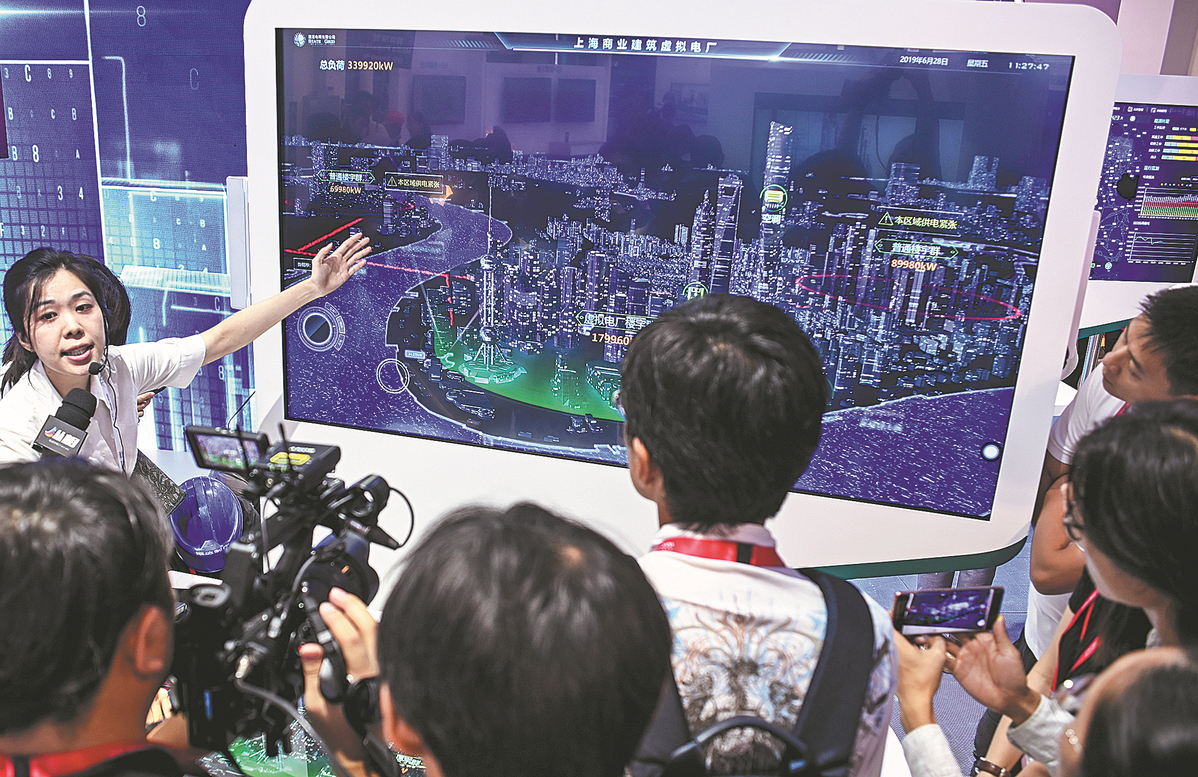
Greater efforts are needed to advance the technologies of market entities such as solar and wind energy generators, electricity storage facilities and virtual power plants to accelerate their transition into a new power system, experts said.
Meanwhile, mechanisms that allow electricity users to take responsibility for their carbon emissions should also be introduced, they said.
Compared to traditional methods, the new system envisages a move away from reliance on fossil fuels to one based on new energy sources to generate electricity.
It involves gradually increasing the proportion of renewable energy, such as solar and wind power, in electricity generation.
At the same time, an upgrade to the transmission grid will ensure that the new power system will efficiently harness new energy sources and facilitate a smoother integration of various power loads, as well as enhance electrification use, the experts said, adding that these are essential to achieving China's green goals.
Zhang Jieqing, China program director of the Natural Resources Defense Council, said the current power system is hampered by the large-scale integration of power generated from renewable energy sources and extreme weather.
"The evolving supply-demand dynamic is making power system operations more complex, with issues arising from intermittent new energy sources, insufficient system flexibility, and heightened difficulties in load control. Urgent low-carbon transformation of the power system is imperative to combat climate change," Zhang said.
She said the power sector is a major carbon emitter with a 2.6 percent year-on-year growth in 2022, despite a slight slowdown in emissions growth.
The concept of a new power system was first introduced in March 2021.
In the first half of this year, the National Energy Administration released a blue book on the development of the new power system, specifying the framework and key tasks for its establishment with an emphasis on technological and systematic innovation.
As renewable energy experiences a leap in development — transitioning from a supplementary to a primary energy source for newly installed power generation facilities — it is crucial to enhance the resilience, flexibility, and reliability of the new power system, said Shi Yubo, chairman of the China Energy Research Society. The system should involve market entities like solar and wind power generators, energy storage and virtual power plants for stable operations, Shi added.
China has comprehensively accelerated the development of the new power system, said Yang Kun, executive vice-chairman of the China Electricity Council.
The country has become a global leader in wind and solar installations, its electrification rates are ranked among the top in the world, and its energy market vitality has improved significantly, Yang said.
"Meanwhile, challenges remain, such as demanding breakthroughs in key technologies and the improvement of cost adjustment mechanisms. It is critical to improve relevant mechanisms, promote synergy between the electricity market and the carbon market, and coordinate between power system standards and digital applications," Yang added.
According to data from the NEA, China's installed renewable energy capacity reached 1.32 billion kilowatts as of June, a year-on-year increase of 18.2 percent, surpassing coal-fired power and accounting for 48.8 percent of the country's total.
Wind and solar power generation have grown rapidly.
In the first half, renewable energy generation reached 1.34 trillion kilowatt-hours, of which wind and solar power contributed 729.1 billion kWh, representing a 23.5 percent yearly increase.
Jiang Yi, director of Tsinghua University's Building Energy Research Center, proposed the establishment of a carbon emissions responsibility mechanism to allow more power users to participate in the management of carbon emissions.
Jiang said there are abundant flexible power sources on the user side, such as electric vehicles, buildings, and industrial power loads. However, they cannot directly connect to the grid and are therefore, hard to manage.
A carbon emission responsibility mechanism can track their carbon footprint, specify what they would have to pay in carbon trading markets — just like power generators and grids do — and facilitate the low-carbon development of all entities involved in the new power system, Jiang said.