Japan's release of water puts world in peril







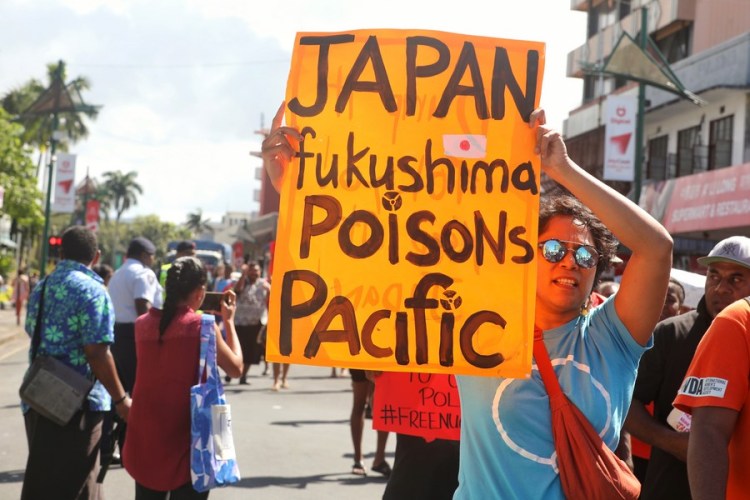
The international community was taken aback by Japan's action to discharge nuclear-contaminated water from Fukushima plant into the Pacific on August 24, 2023. This move occurred despite the widespread protests and oppositions from nations across the Asia-Pacific.
Japan's unilateral action is seen as a display of extreme self-interest and irresponsibility, with the potential to inflict immeasurable harm upon the ocean ecosystem. The consequences are far-reaching, extending to heightened safety risks in our food chain, the emergence of novel illnesses, and an increased likelihood of cancer cases among humans. Ultimately, such a course of action jeopardizes the fate of our planet, casting a shadow of uncertainty over its future.
The truth of Japan's nuclear water dumping
The radioactive water is discharged into the Pacific resulting from the Fukushima nuclear leakage caused by submarine earthquake in 2011. Japan's 2011 nuclear leak disaster ranks among the gravest nuclear incidents in history, resulting in substantial leakage of radioactive substances.
Addressing its aftermath by oceanic discharge lacks historical precedence, and no technology has yet emerged from rigorous scientific testing and practical validation as "safe and harmless."
However, on August 24, the Tokyo Electric Power Company, responsible for the Fukushima Daiichi nuclear power plant, initiated the water discharge process through remote operation from the plant's monitoring room. This marked the commencement of releasing nuclear-contaminated water into the ocean. As outlined in Tepco's discharge plan, about 460 tons of such water will be released daily for 17 days, with a gradual increase planned thereafter.
The target for 2023 is to discharge over 30,000 tons of nuclear-contaminated water, equivalent to draining 30 water storage tanks. Presently, the Fukushima Daiichi nuclear power plant stores around 1.34 million tons of such water, and fresh contamination is still generated each day. The timeline provided by the Japanese government and TEPCO indicates that this oceanic discharge process is anticipated to span at least 30 years.
Japan's pursuit of sea discharge, absent a comprehensive demonstration of the long-term safety and dependability of existing methods, lacks widespread consensus from relevant stakeholders if only based on a paper report from the International Atomic Energy Agency.
The absence of a robust international oversight and compensation framework further compounds the issue. Japan's insistence on initiating oceanic discharge under these conditions is laden with significant risks and unforeseeable dangers.
Ocean stands as the shared-home crucial for the survival of humanity, prompting all nations to uphold their duty under international law to safeguard and preserve its fragile ecosystem. Regrettably, in the face of widespread skepticism and opposition both domestically and internationally, Japan has chosen to transfer the burden of nuclear contamination risk onto neighboring countries such as China and the global community at large.
This choice is based on Japan's immediate self-interest. This perilous decision places an unwarranted gamble on the health of the worldwide marine environment and the world people's well-being, disregarding the larger collective interests and leaving us all to grapple with the consequences.
Different reactions toward the same action
It's intriguing to observe the diverse range of opinions held by different nations and their citizens regarding Japan's negligent disposal of radioactive water. Strikingly, while some countries voice their concerns, the West countries such as the US and Canada maintain silence on Japan's eco-crime even on the second day after a large amount of nuclear water dumping into the ocean and do not adopt any opposition against Japan's self-interested action.
Even more perplexing, Antony Blinken, the US secretary of State, endorsed Japan's plan, citing compliance with international standards – a stance that many find incredulous. Most of the West people and environmental activists know nothing about this. One of the main reasons is that the Western media did not report Japan's discharge nuclear water into the sea. The West countries' TV, radio and other new media are flooded with the news of the Russian plane crash.
South Korea's government shifted from active opposition to a subdued silence, a shift that elicited public protest within the country. Recent polling conducted by Kyodo News reveals that more than 80 percent of Japanese respondents find the Japanese government's explanation regarding nuclear-contaminated water to be "insufficient."
In stark contrast, the Chinese government has displayed unequivocal opposition, vehemently condemning Japan's profoundly self-serving conduct. China has pledged and is undertaking comprehensive measures to safeguard the public health of its citizens. This intricate array of reactions underscores the conflicting of the state interests between the Western countries and Asian-Pacific countries.
The damage caused by Japan's dumping
The Japanese government and Tokyo Electric Power Company assert that, apart from tritium, all radioactive elements in the nuclear wastewater treated by the Advanced Liquid Processing System adhere to discharge standards. However, this declaration has not garnered international recognition or trust.
Back in 2019, concerns were raised about the persistence of radioactive constituents such as iodine-129, strontium-90, tritium, ruthenium-106, and carbon-14 in the Fukushima nuclear plant's wastewater. These elements can infiltrate the human body through the food chain and bond with human tissues, leading to radiation-induced harm.
The release of nuclear wastewater into the ocean would unavoidably result in marine organisms absorbing the discharged material. Once within the human body, these radioactive materials disperse throughout various organs via the bloodstream, potentially causing radiation-related ailments including cancer, genetic mutations, and immune system dysfunction.
Furthermore, the discharge of nuclear wastewater would inflict severe damage upon the marine ecosystem. The growth, reproduction, and distribution of marine life would be disrupted, potentially leading to species extinction, a decline in biodiversity, and reduced marine resources. The consequences encompass a broader ecological imbalance, posing significant threats to both marine life and human well-being.
For Japan, the act of directly releasing nuclear wastewater into the sea might appear inconsequential. Yet, the ramifications of this choice extend far beyond its borders, demanding a global toll. The repercussions of Japan's actions will reverberate across nations and impact humanity at large. In the face of this, a pivotal question arises: What lies ahead for the fate of our planet?
The author is PhD candidate China Foreign Affairs University& visiting researcher University of Exeter. The views don't necessarily reflect those of China Daily.
If you have a specific expertise, or would like to share your thought about our stories, then send us your writings at opinion@chinadaily.com.cn, and comment@chinadaily.com.cn.